Article · Personal websites and publishing
What is the IndieWeb movement?
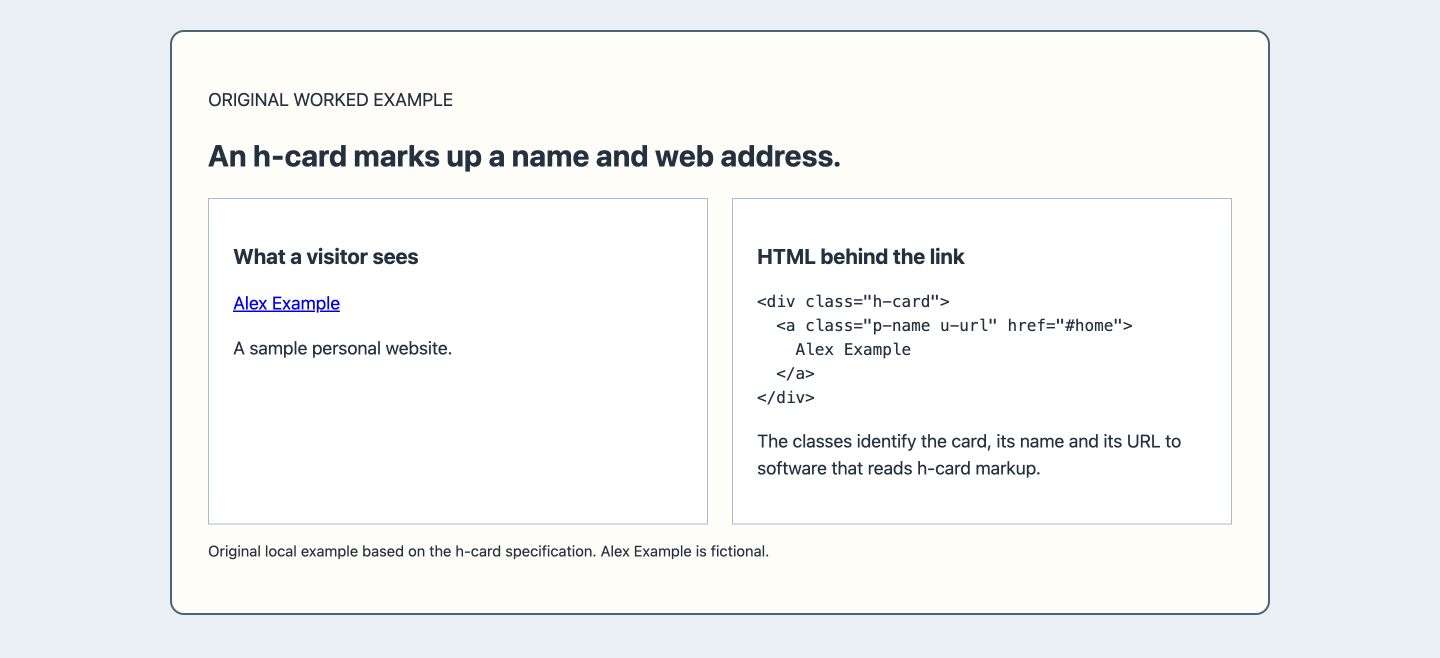
Learn how the IndieWeb movement connects personal websites, domains and tools such as Webmention and h-card.
Published
Visual culture, internet history and practical guides to making a more personal digital world.
Learn how the IndieWeb movement connects personal websites, domains and tools such as Webmention and h-card.
Use a Carrd Embed or Rentry Markdown to add a linked blinkie, with platform limits and image sizing explained.
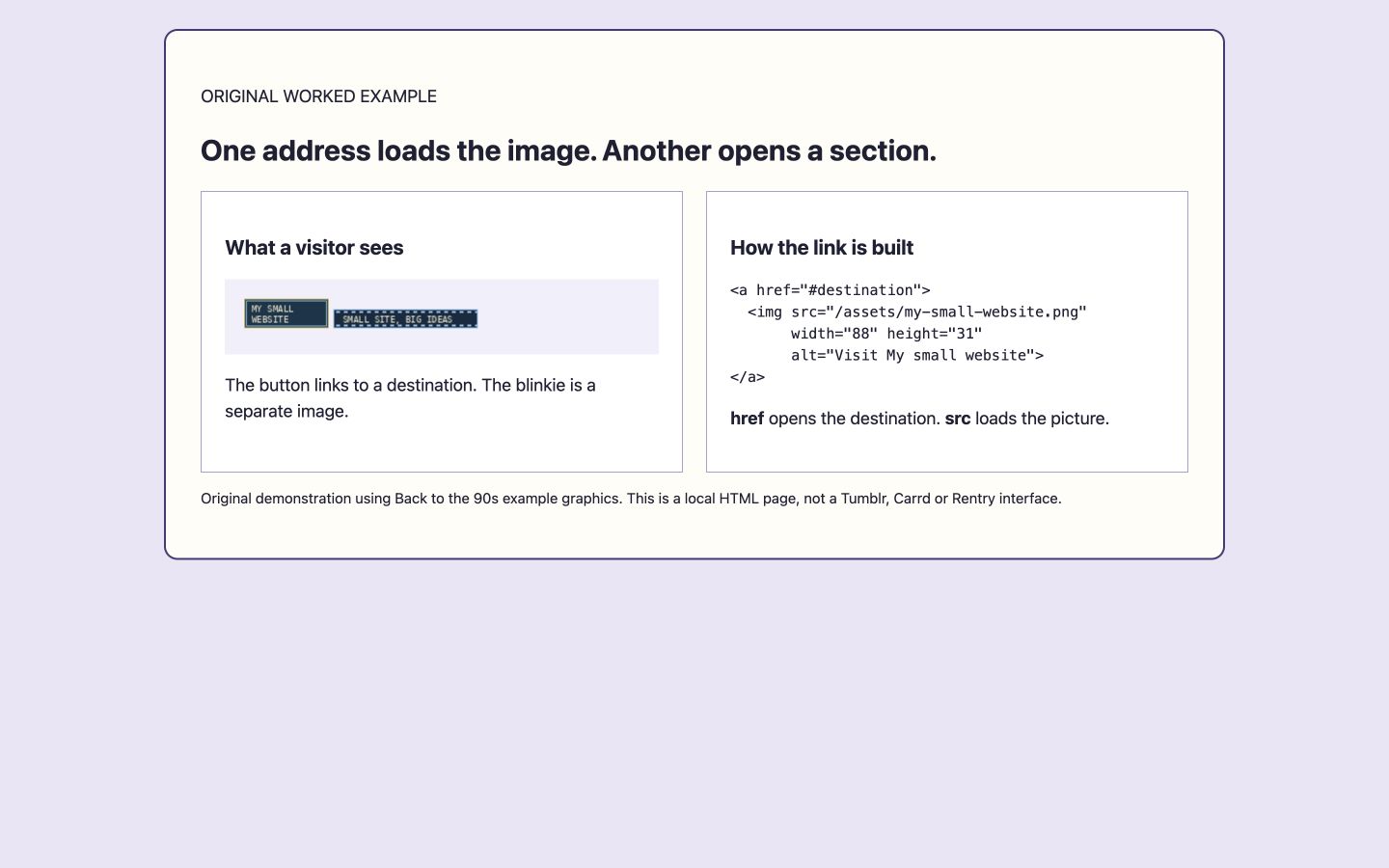
Add an 88x31 button or blinkie to a Tumblr custom theme, including where to put the HTML and how to check the image.
Explore Webcore through personal homepages, tiled backgrounds, GIFs and tiny buttons. Follow archived examples and customize your own downloadable page.
Explore the digital Y2K aesthetic through the iMac, iBook, Aqua and Winamp skins. Compare McBling and Aero, then choose fonts and wallpapers for your design.
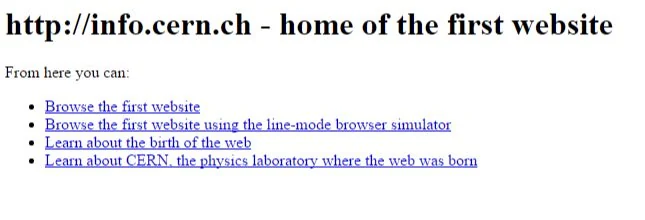
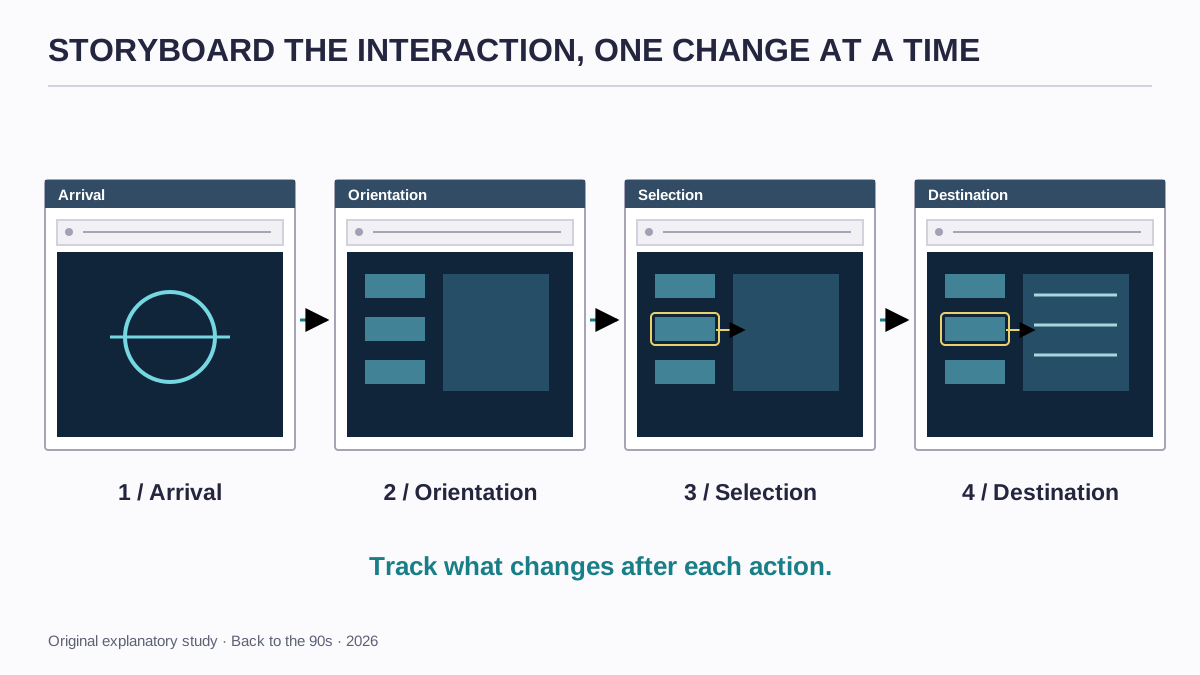
Visit Space Jam, CERN, FogCam and DPGraph, browse rescued GeoCities pages and explore modern homages. Each stop identifies the version you can visit today.
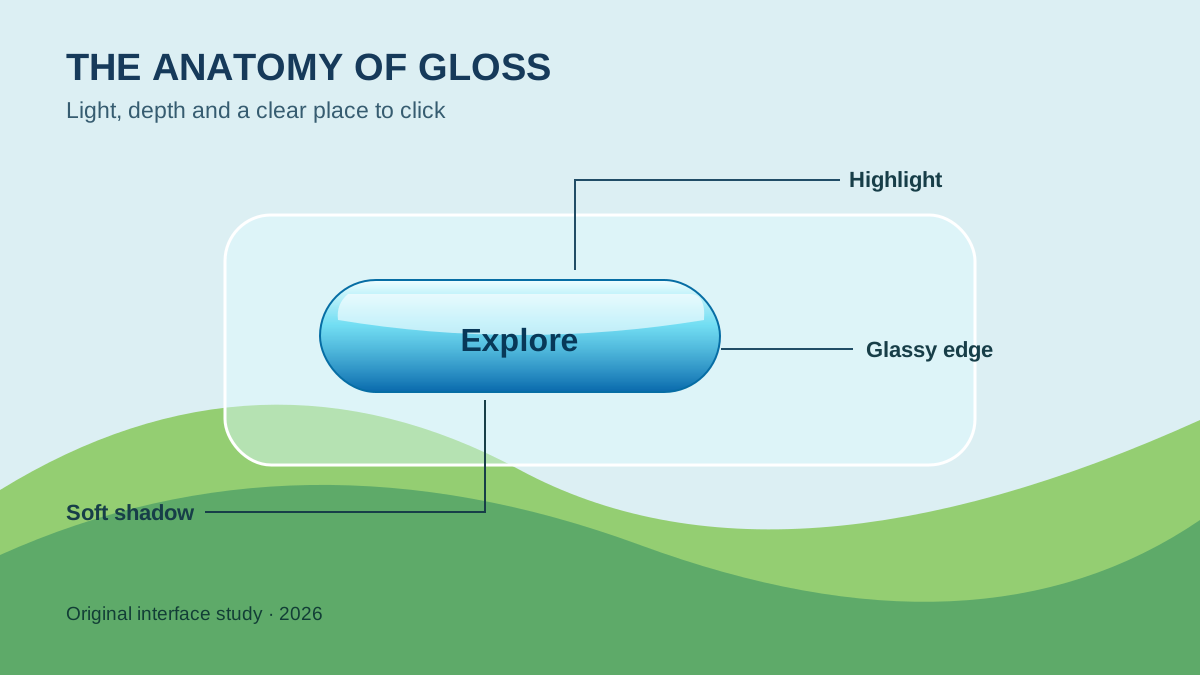
Identify Frutiger Aero through Aqua, Windows Vista and nature imagery. Compare neighboring styles and make a readable glass-and-gloss study.
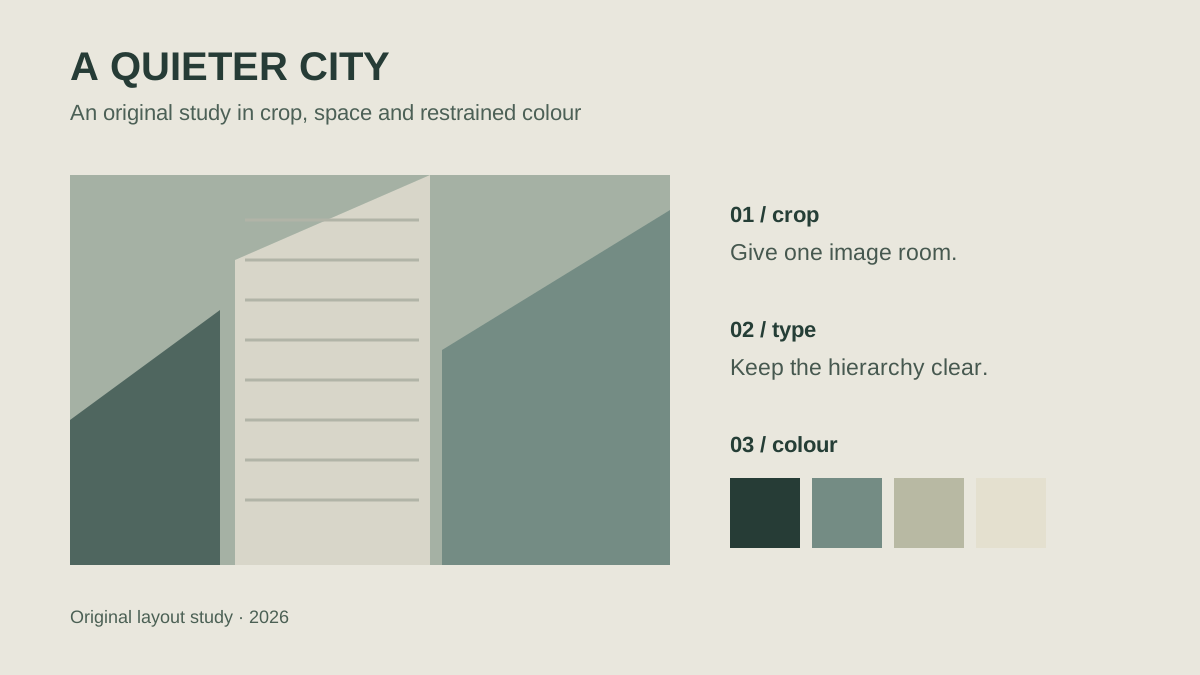
Recognize Gen X Soft Club through AIR, Mike Mills, muted photography and spare type. Compare it with Y2K, Frasurbane and coffeehouse graphics.
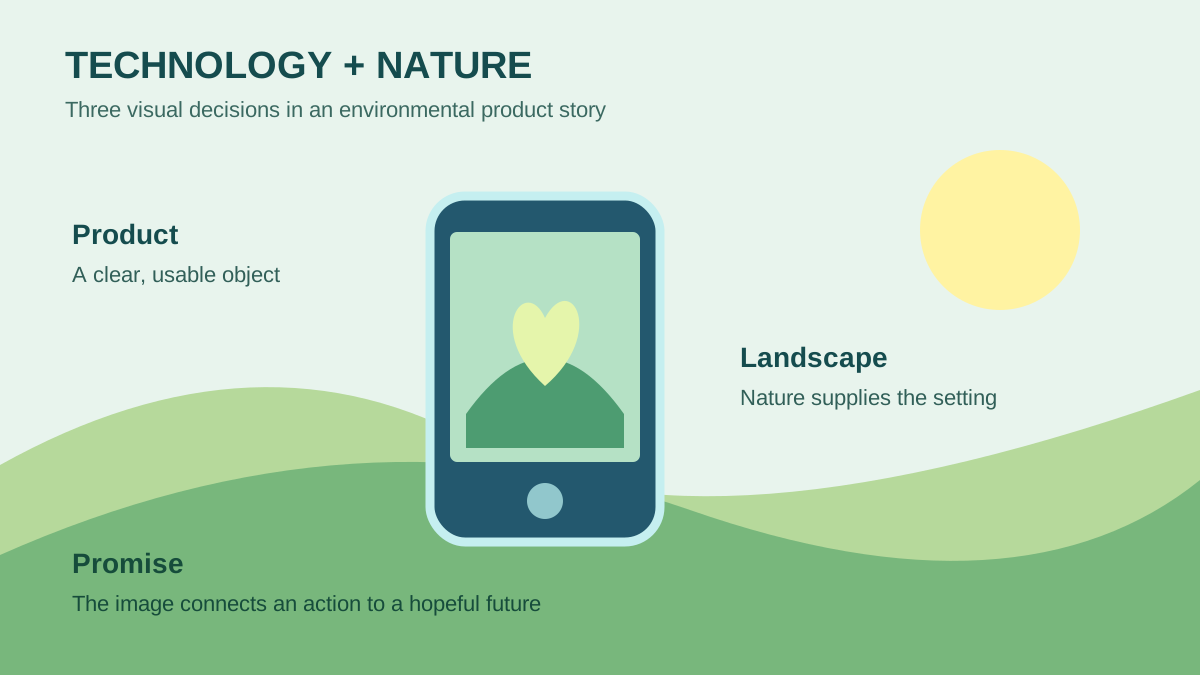
Explore Frutiger Eco through Samsung Blue Earth, solar imagery and environmental messaging. Learn how it differs from glossy Frutiger Aero.
Trace Metalheart through its 2001 namesake book and Depthcore’s 2002 Cataclysm chapter. Learn to combine abstract 3D forms, metal and tiny type.
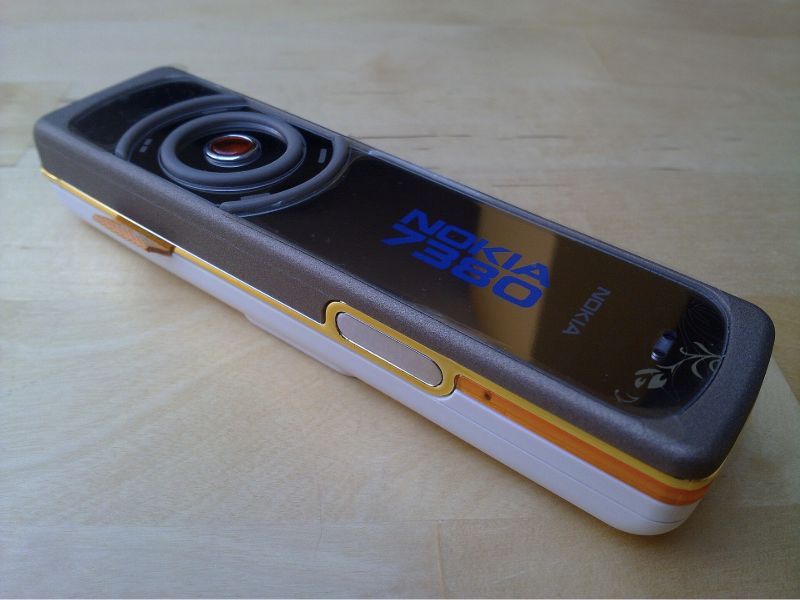
Compare McBling with digital Y2K using a Juicy Couture tracksuit, Nokia 7380 and Motorola RAZR. Identify rhinestones, reflective finishes and ornament.
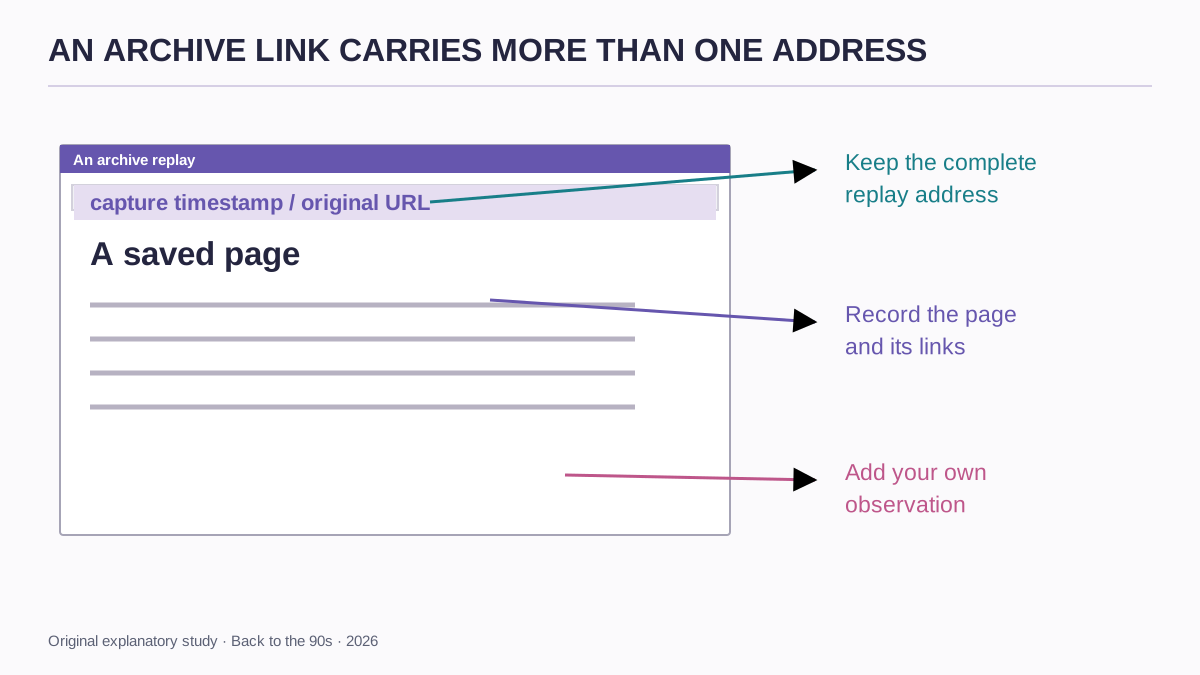
Find GeoCities GIFs through archived homepages and web collage. Trace original URLs, distinguish capture dates from display dates and record image credits.
Make a 90s-style website with a complete HTML and CSS starter. Add a clear menu, tiled background, personal graphics and a useful links page.
Make a 150x20 blinkie with readable text and two simple frames. Download our original GIF, still image and source frames, then add your badge to a page.
Design an 88x31 website button, add a useful destination and share it with other makers. Includes an original PNG, editable SVG and linking example.
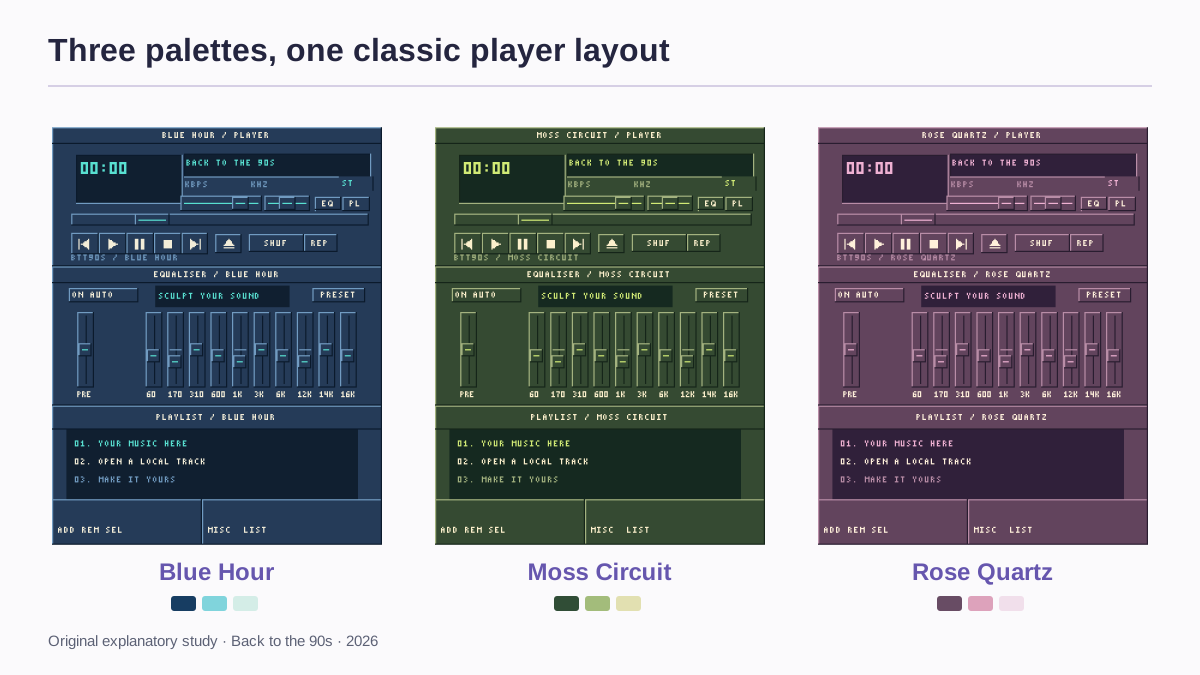
Browse the Winamp Skin Museum, match classic WSZ or modern WAL skins to a player, and inspect three original palettes before making your own.
Meet the 1995 eSheep desktop companion, its Stray Sheep origins and modern DesktopPet revival. Choose a Windows, macOS-source or browser route.
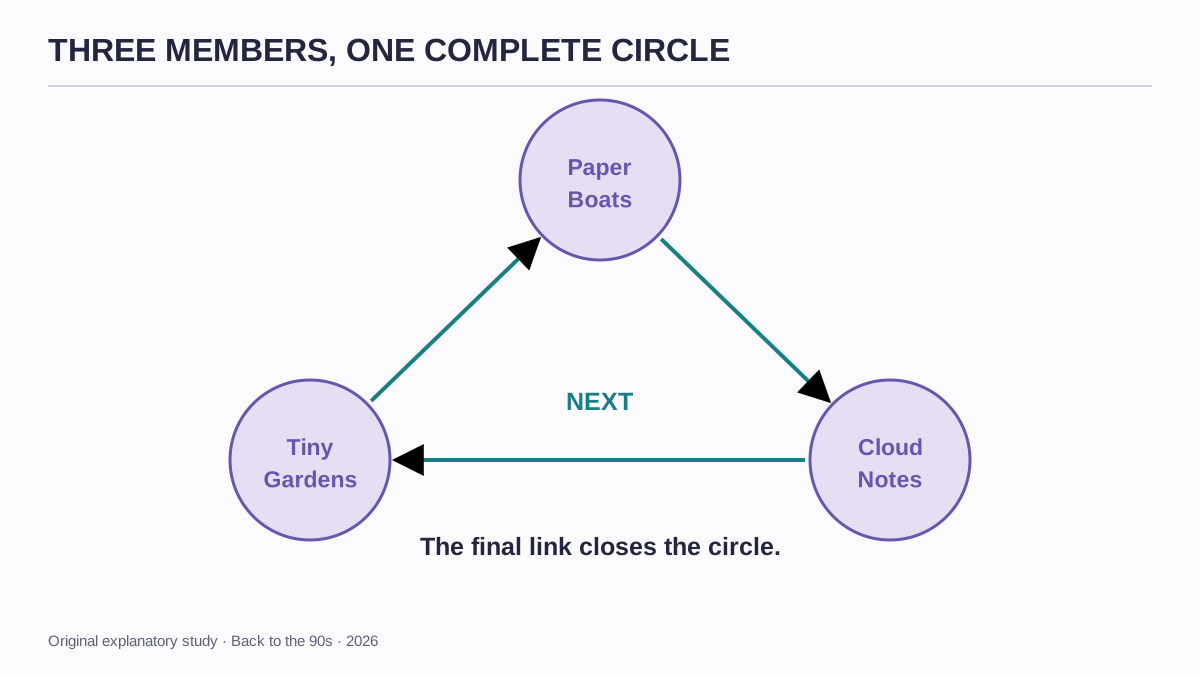
Find a webring, check its current joining rules and build a three-site circle with ordinary links. Includes a working original demo and download.
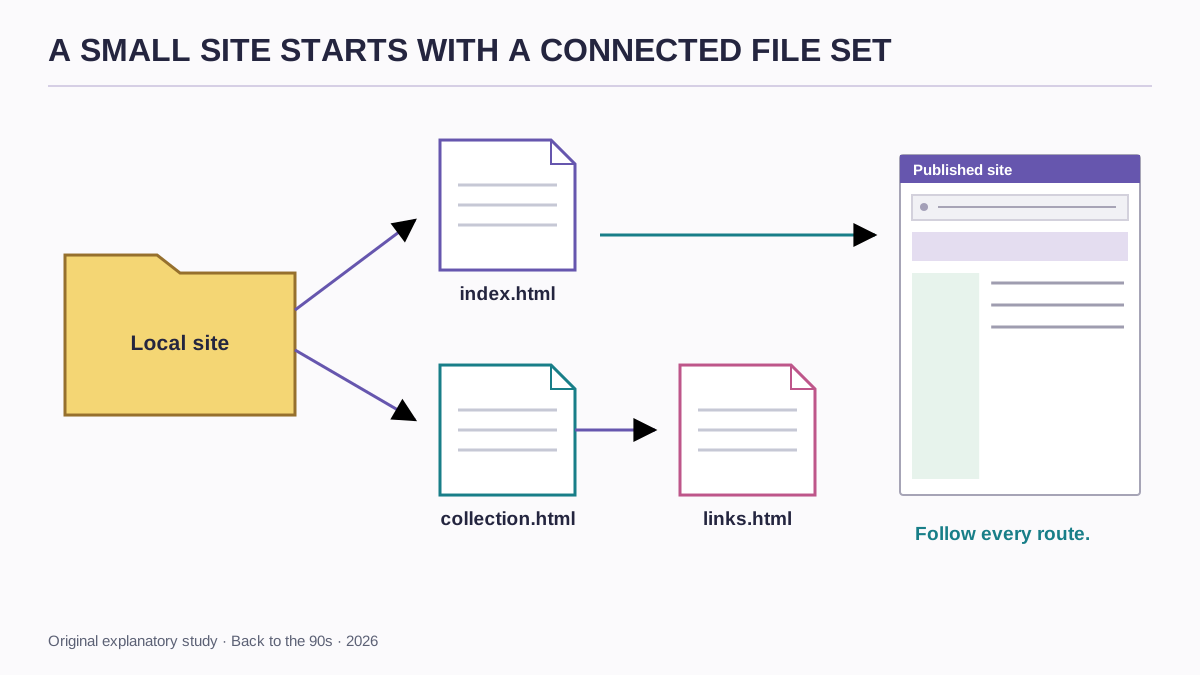
Build and publish a three-page Neocities site with our original HTML starter. Edit the homepage, upload the right files and connect your pages.
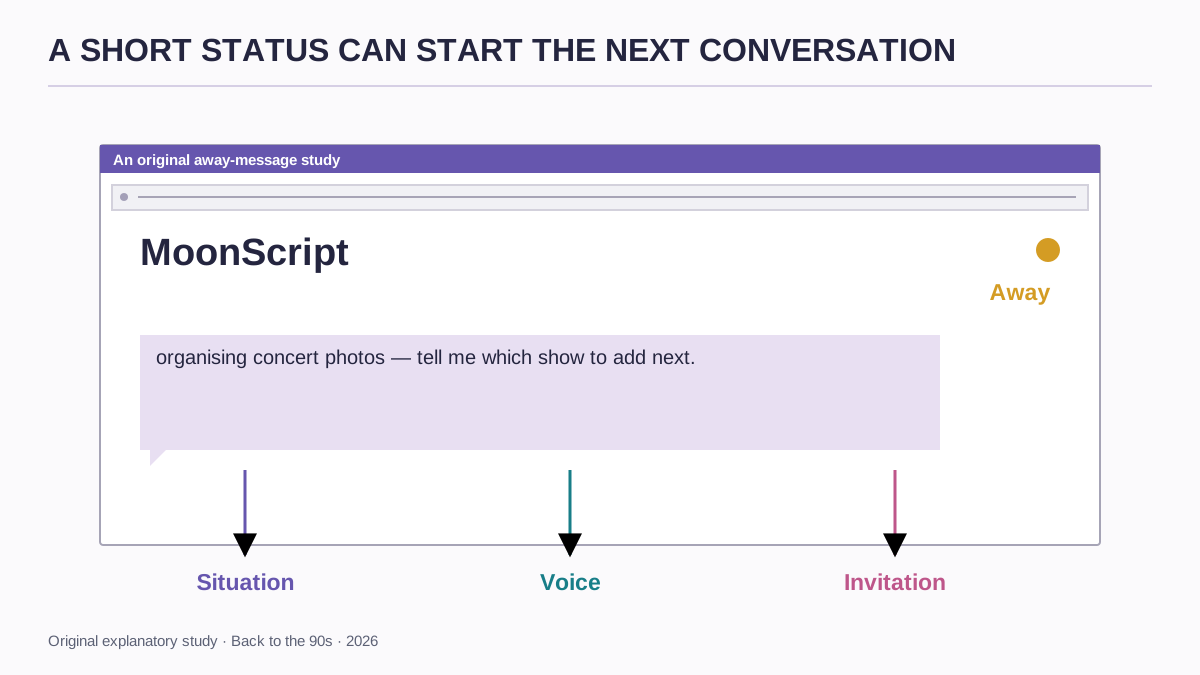
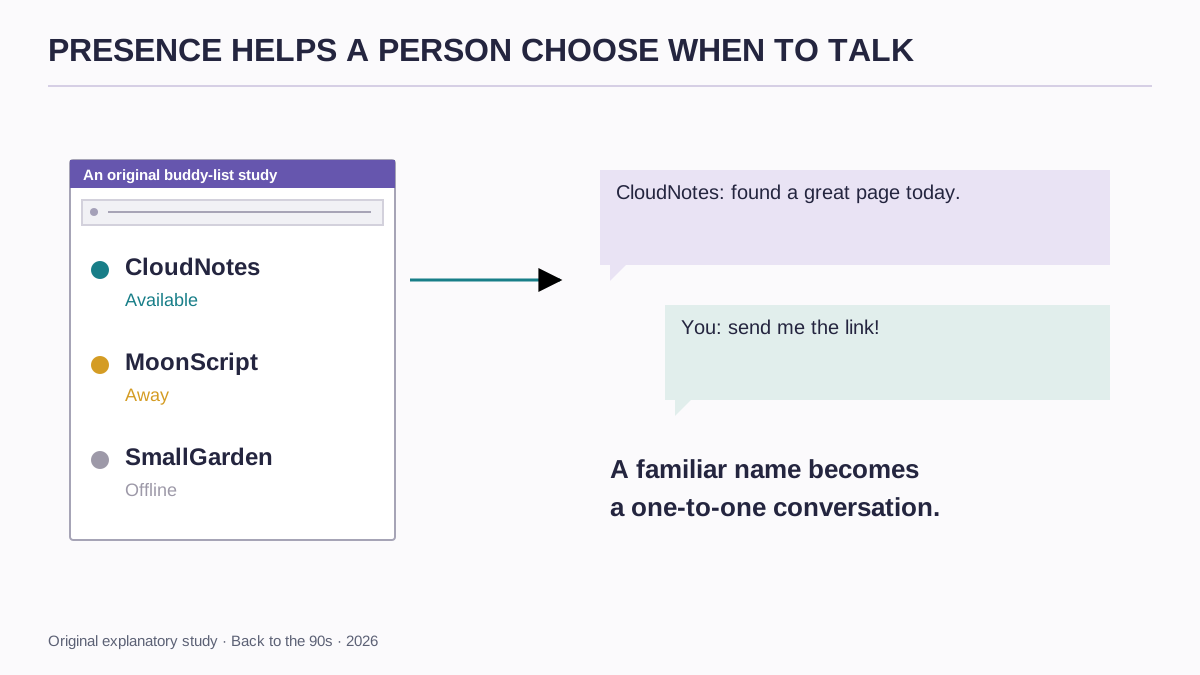
Explore how AIM away messages mixed availability, mood and personal writing. Try three original examples and a downloadable typography exercise.
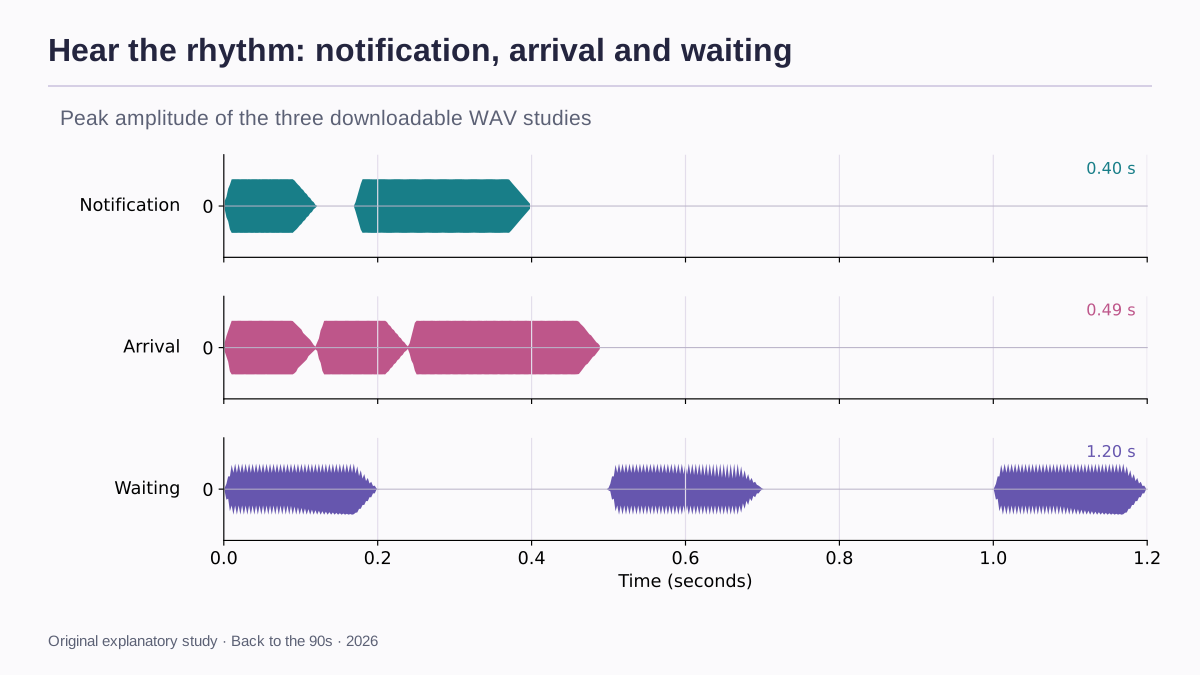
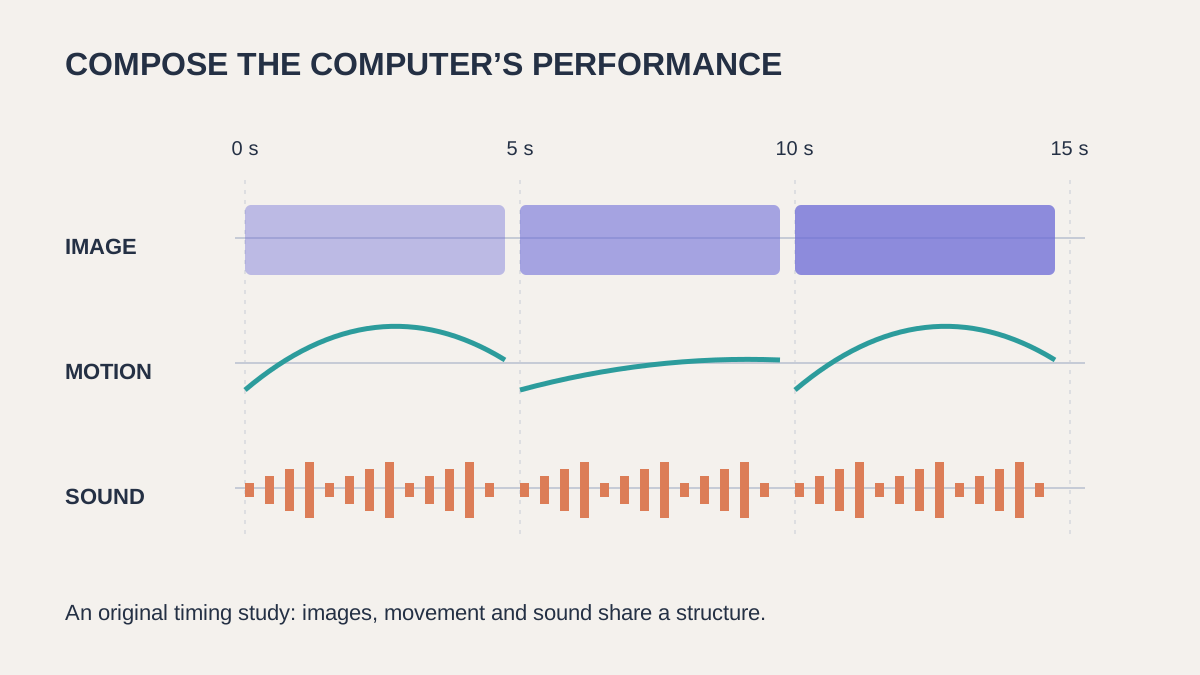
Listen to modem handshakes and discover Brian Eno’s Windows 95 sound brief. Compare three original notification, arrival and waiting sounds.
Recognize Global Village Coffeehouse through earthy color, hand-drawn marks and Remedy type. Learn how its lettering and patterns work together.
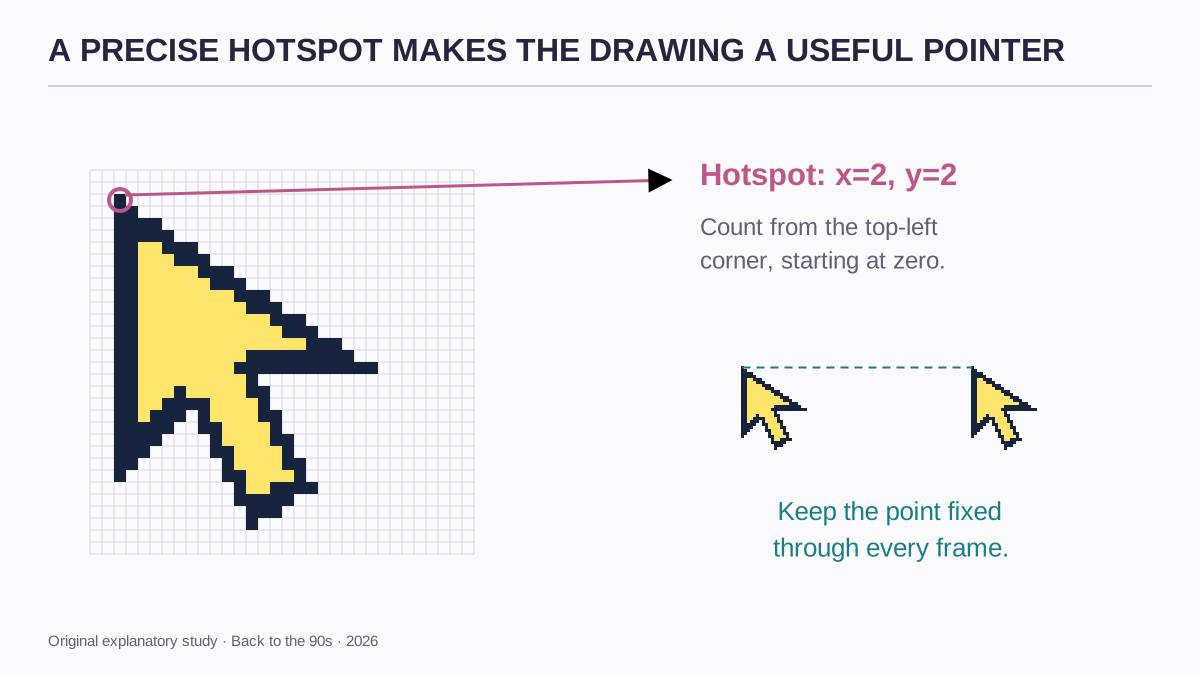
Choose PNG, CUR or ANI cursors, draw a precise hotspot and follow the Windows or CSS setup steps with an original downloadable pixel-arrow pack.
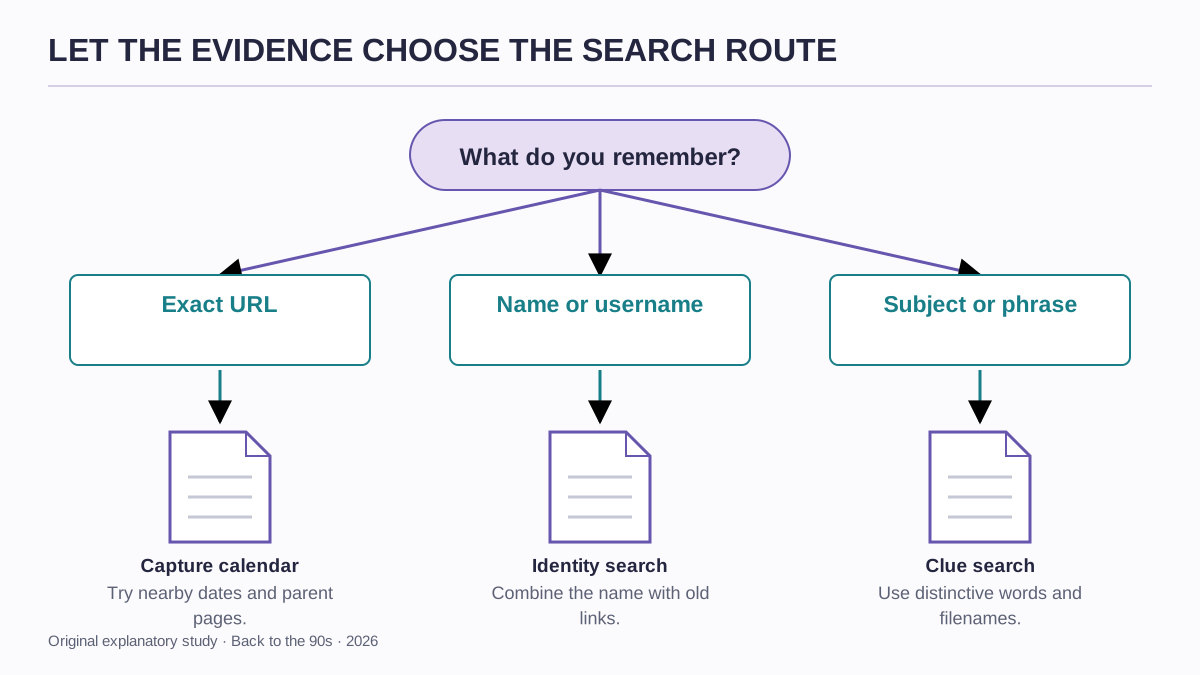
Find an old website, compare dated captures and recover missing images. Learn what Wayback search can find and how to follow a site across changed URLs.
Recover a GeoCities page from its URL, username or subject. Search the Wayback Machine and Arquivo.pt, trace missing files and save the right capture.
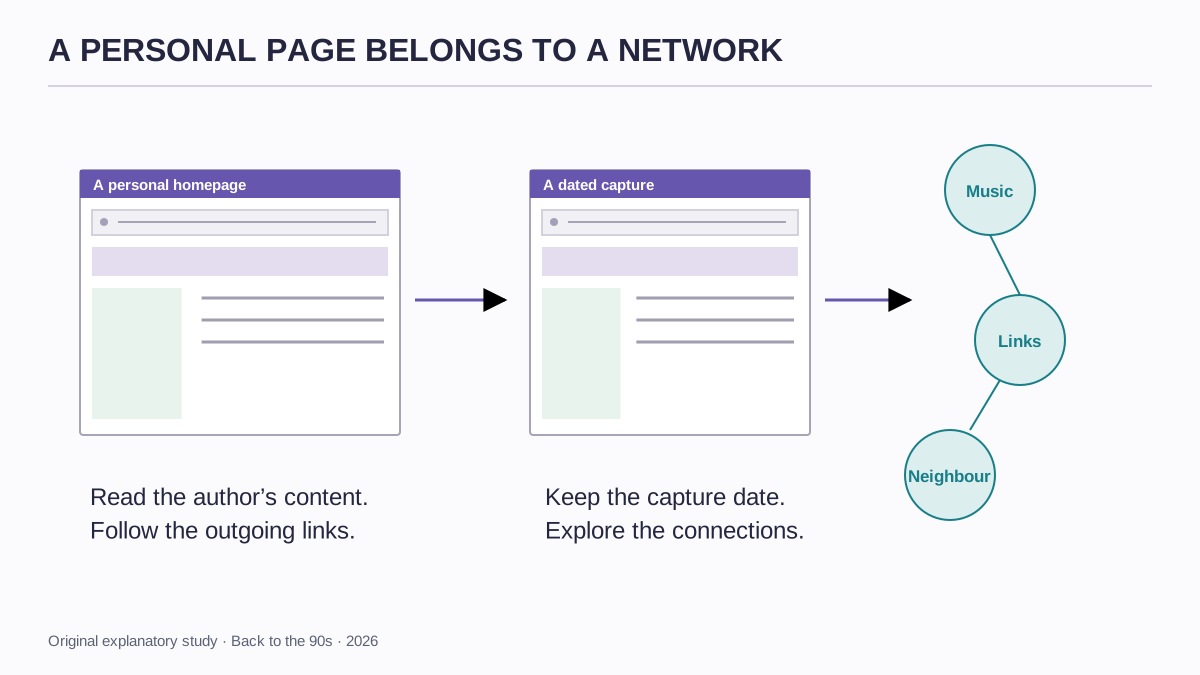
Trace GeoCities from its 1994 beginnings to Yahoo and the 2009 rescue. Explore neighborhood addresses, archived homepages and surviving search routes.
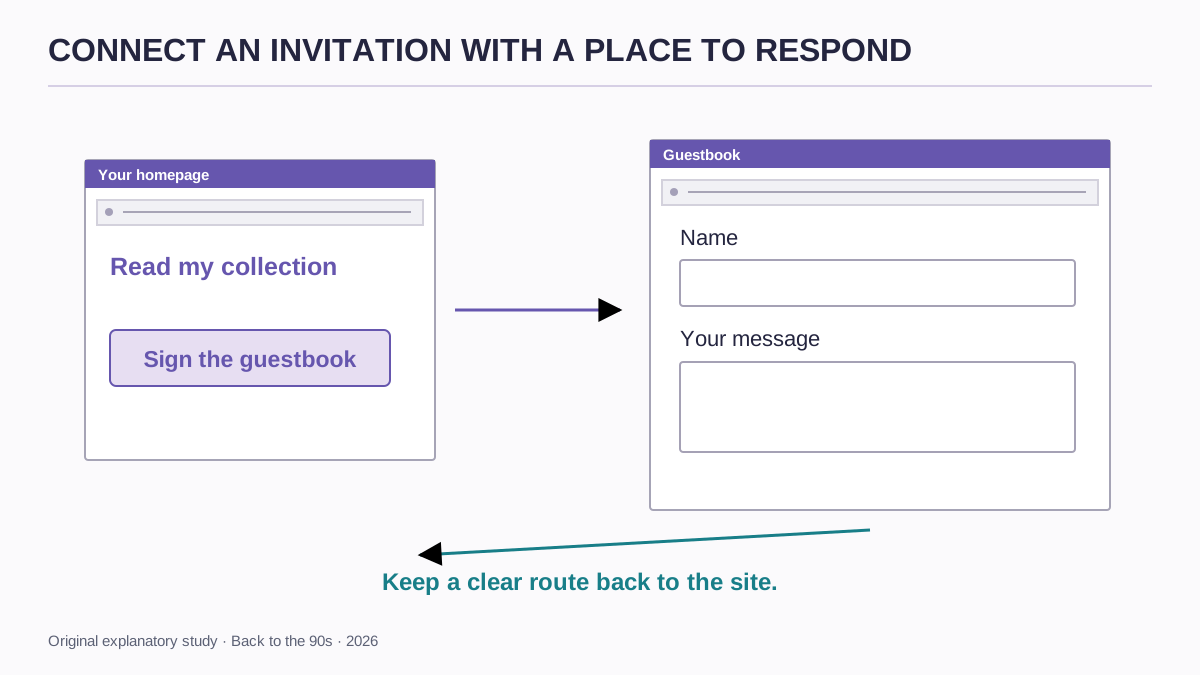
Set up an Atabook guestbook, choose message review and link it from your homepage. Includes an original HTML invitation panel and practical writing tips.
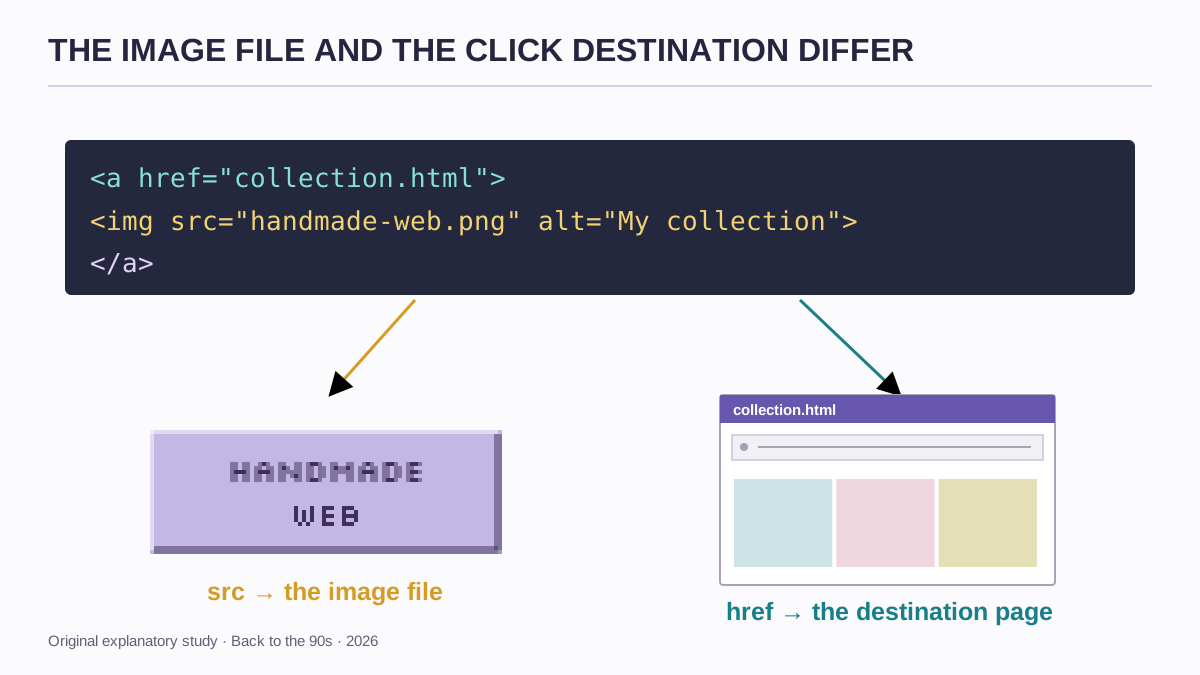
Add blinkies and 88x31 buttons with working HTML examples. Set image paths, dimensions and alternative text, then arrange badges on a site or SpaceHey profile.
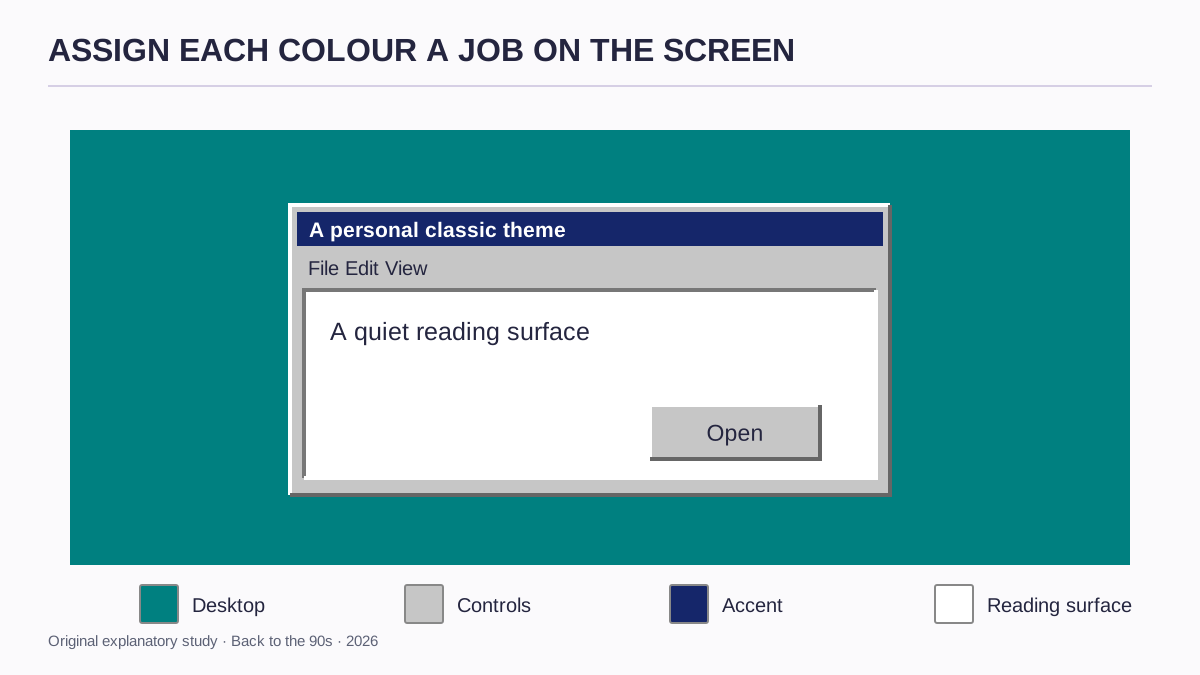
Build a Windows 95 or 98-inspired theme on Windows 11 or 10 with teal wallpaper, accent colors and a custom pointer, then save or share the theme.
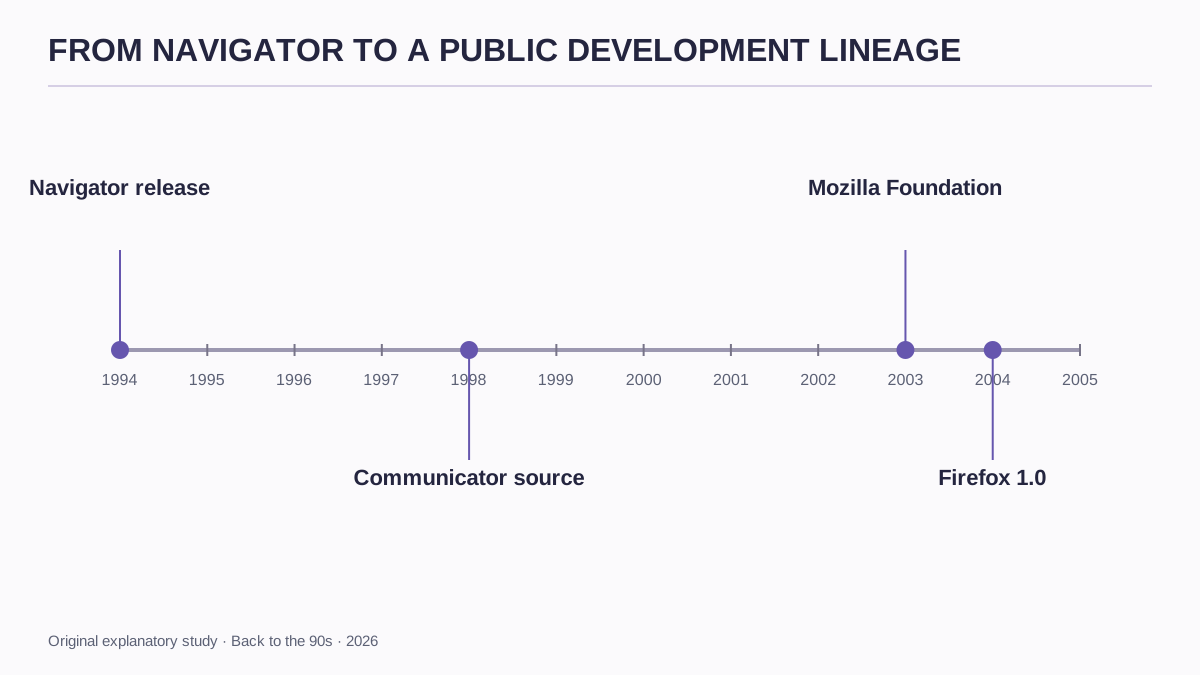
Trace Navigator’s December 1994 release, the browser wars and Mozilla’s 1998 source release. Open a Netscape environment and separate browser from webpage.
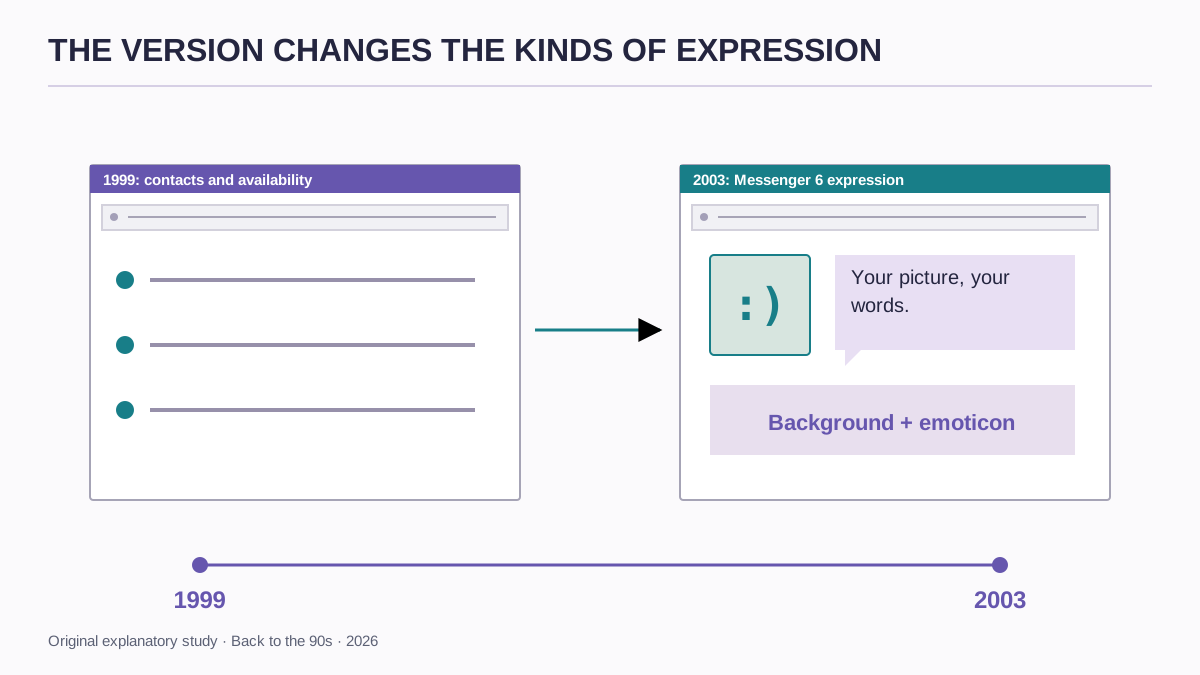
Trace MSN Messenger’s July 1999 launch, Messenger 6 features and 2013 Skype migration. Learn how the independent Escargot service supports old clients today.
Follow AIM from its 1997 launch to the 2017 closure. Understand screen names, buddy lists and away messages, then distinguish NINA from the original service.
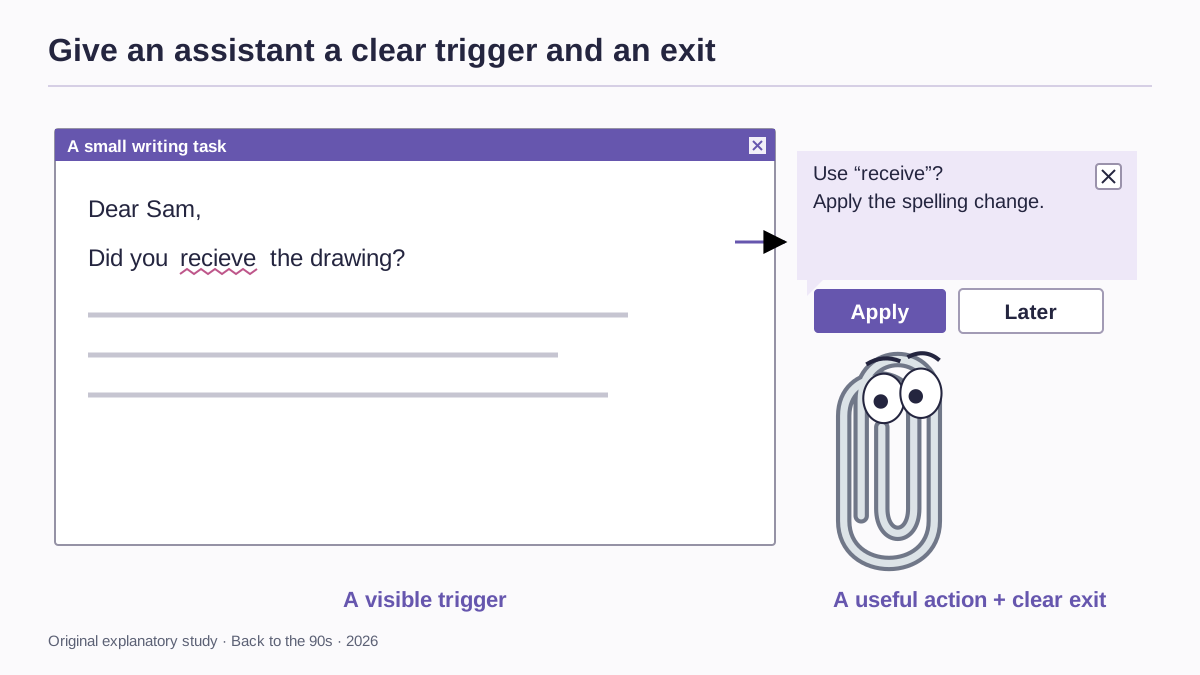
Meet Clippy’s creator Kevan Atteberry, place Office Assistant in the 1997 launch, and see how Microsoft reused the paperclip as an emoji in 2021.
Start with Macintosh Plus’s 2011 Floral Shoppe, then examine repetition, commercial imagery and the differences between vaporwave, Y2K and early CGI.
Explore Silicon Dreams through The Mind’s Eye and early computer animation. Study reflective objects, camera movement and artificial landscapes.
Compare Stylish, Stylebot, Dark Reader, Midnight Lizard and more.
History, privacy, users and price compared.
Point-and-click editing versus user styles.
Night Eye, Midnight Lizard, built-in options and more.
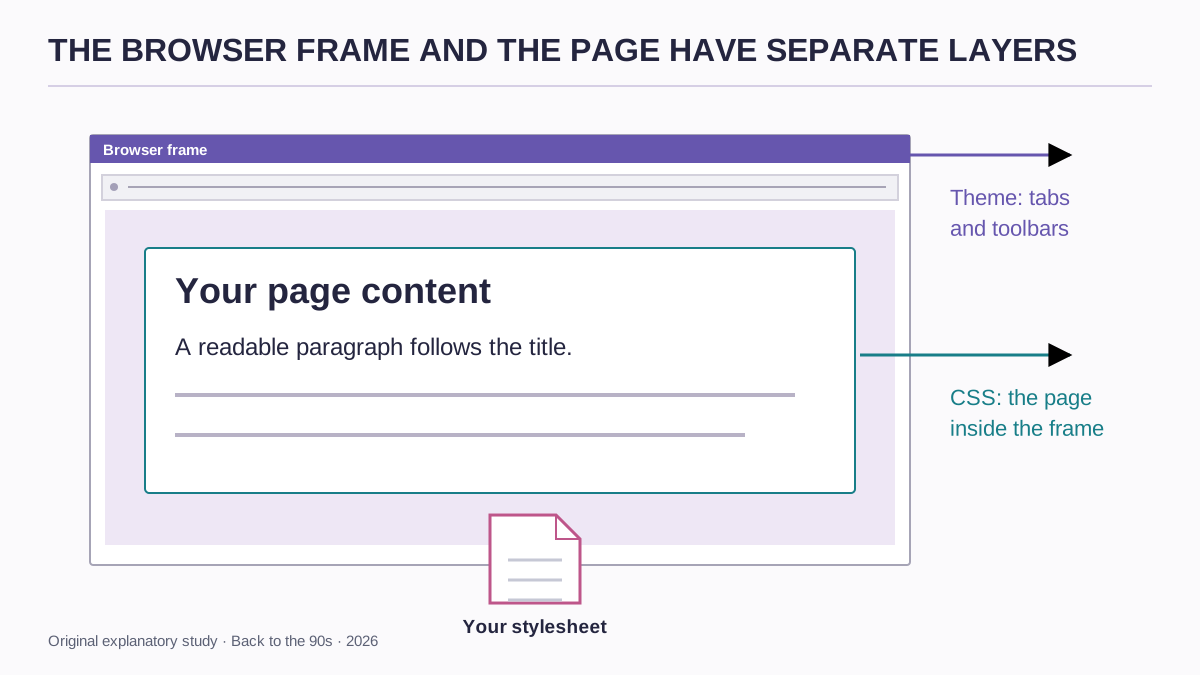
Change a website’s fonts, colors and width in your browser. Try CSS in DevTools, save it with Stylebot and restrict the style to the pages you choose.
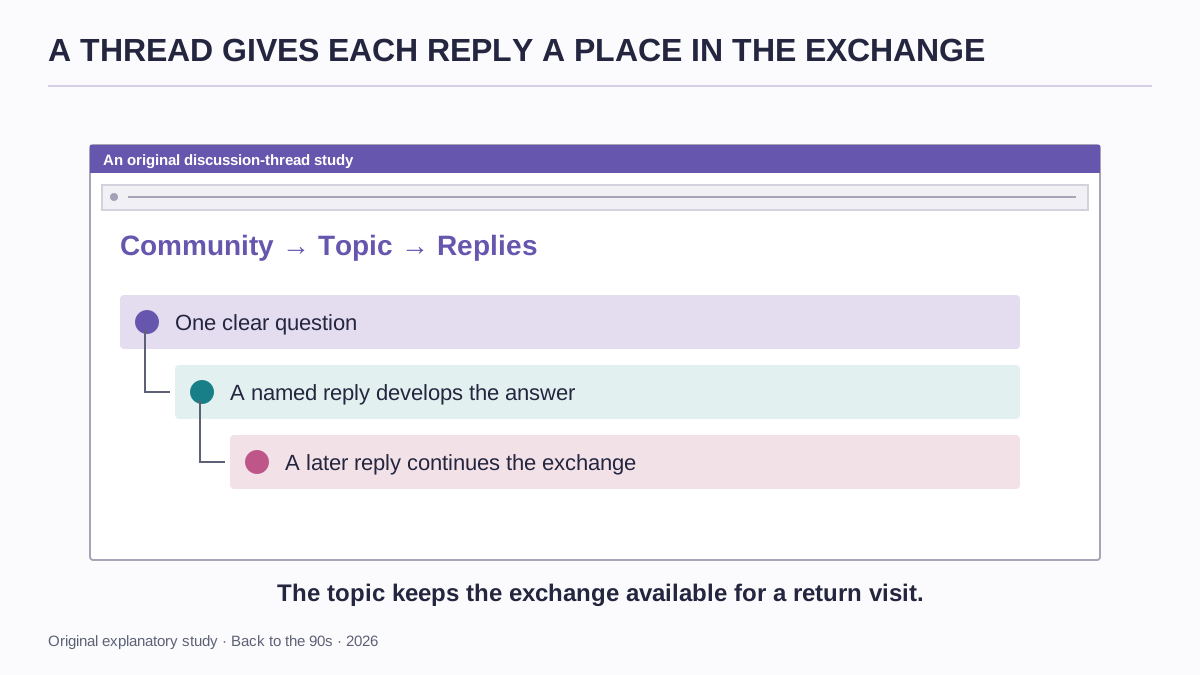
Explore The WELL’s 1998 web conferences and phpBB’s 2000 debut. Learn how topics and replies worked, then recover a discussion through its full thread URL.
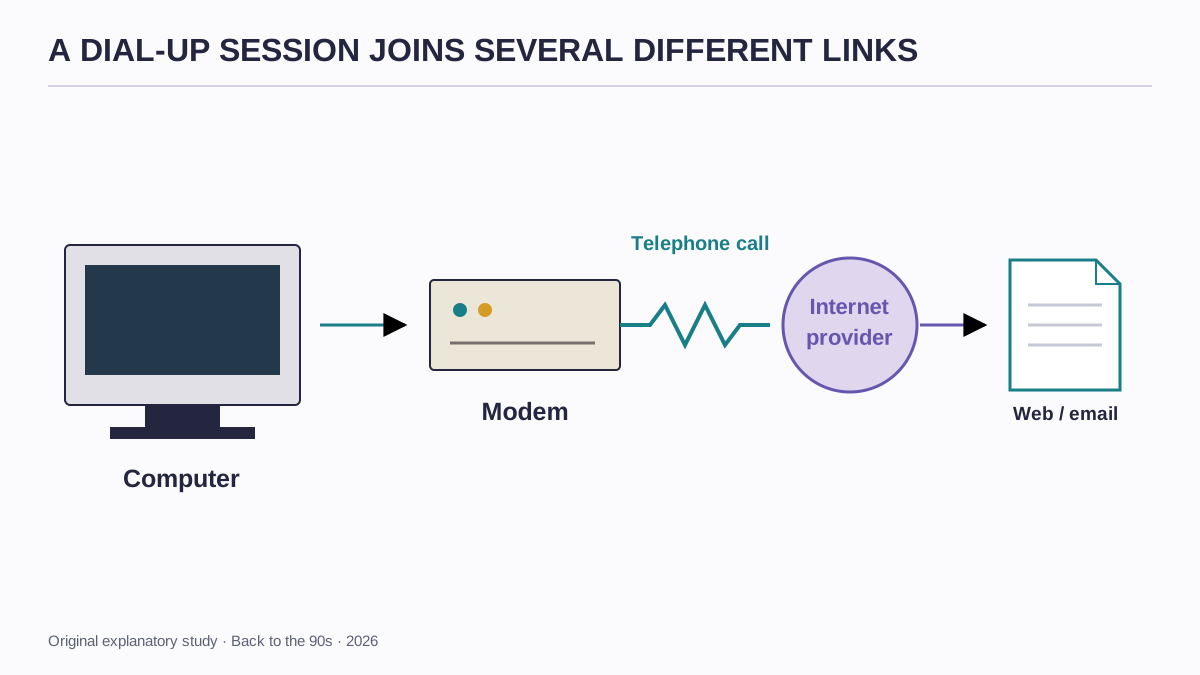
Follow a dial-up session from modem to internet provider. Compare BT’s 1990s services, AOL’s 1998 US fee and the separate costs hidden in old access plans.
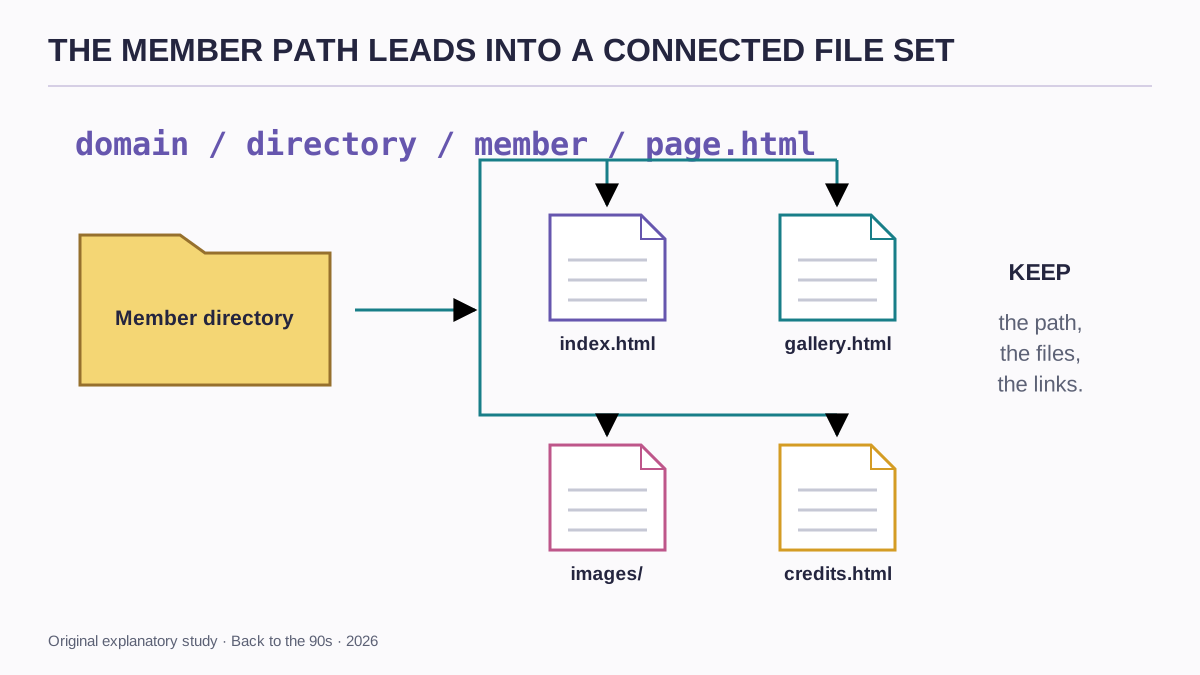
Trace Angelfire through Lycos’s 1998 acquisition record, then recover personal pages and their files. Learn how to read a complete archived site address.
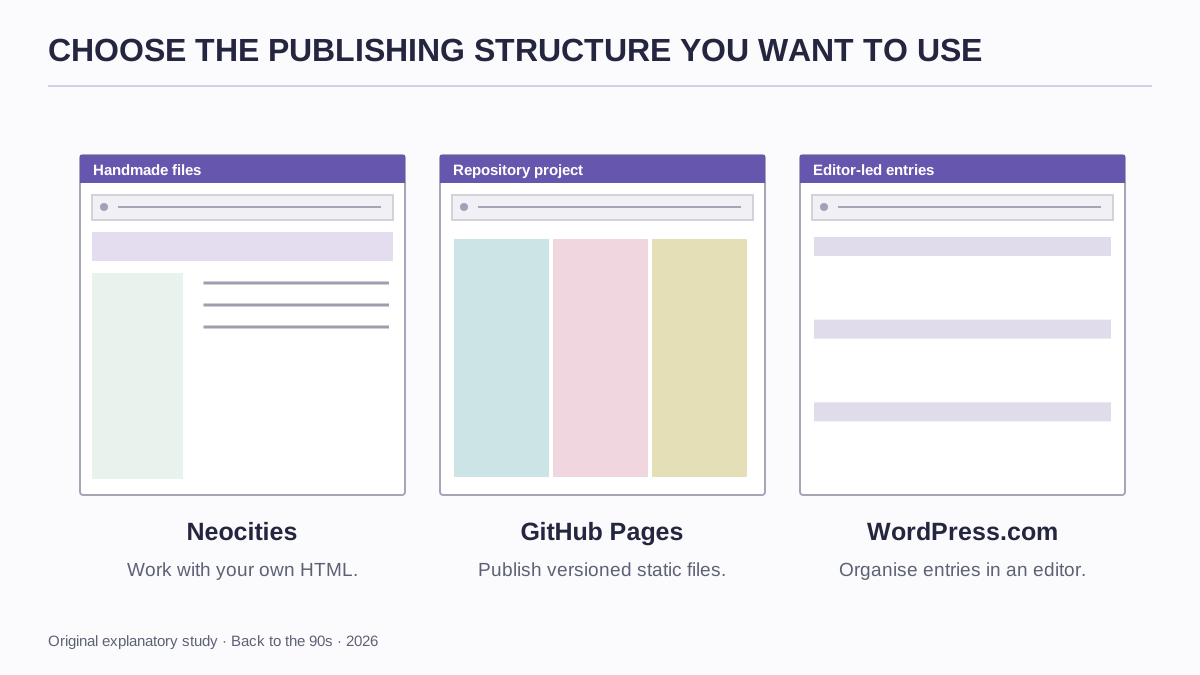
Compare Neocities, GitHub Pages and WordPress.com for a personal website. Choose by editing workflow, file control, address structure and publishing needs.
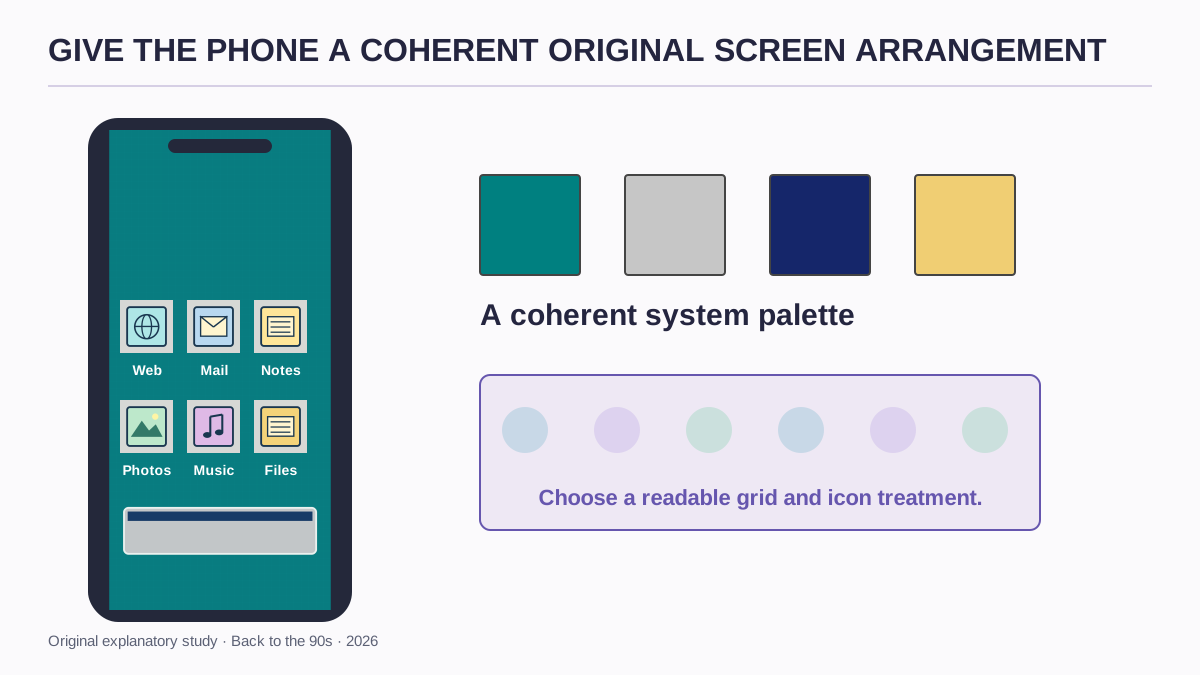
Give a Pixel phone a retro home screen with teal wallpaper, color and grid settings. Choose system icon styling or PNG artwork for a compatible launcher.
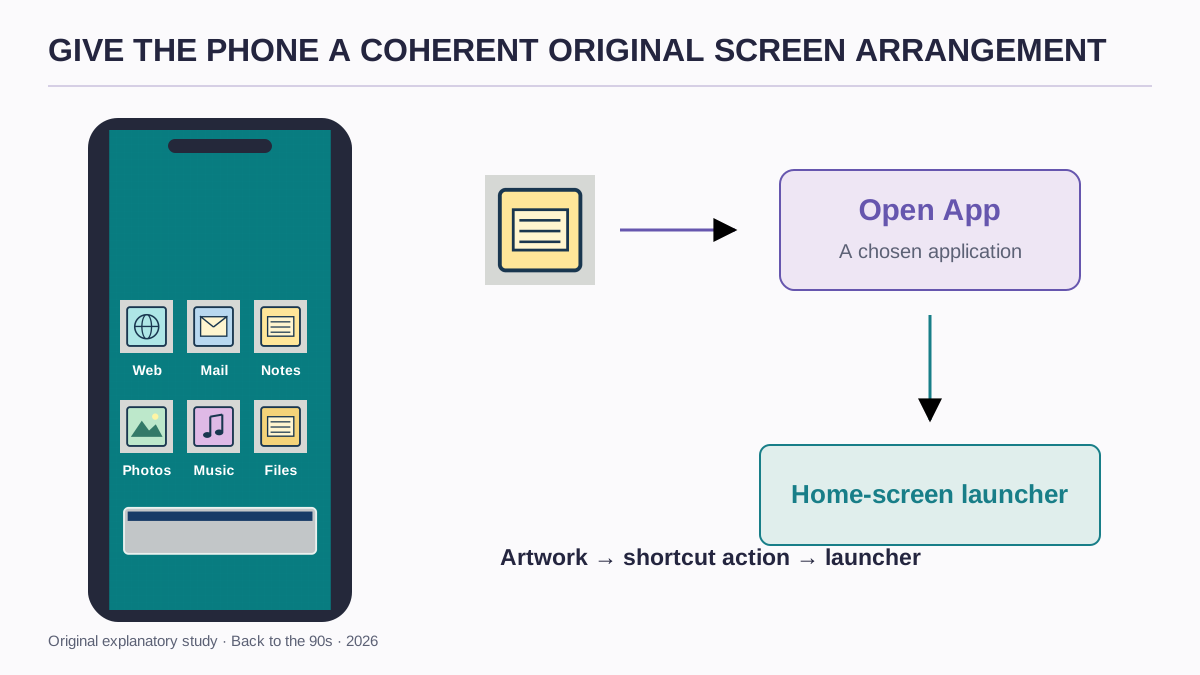
Create retro iPhone app launchers with Apple Shortcuts and original PNG icons. Set the destination, label and image, then fix duplicated or incorrect icons.
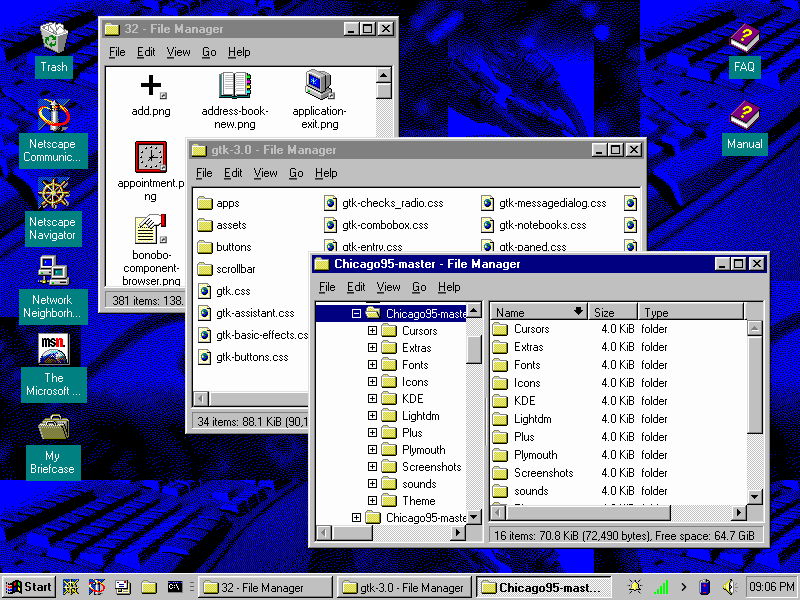
Install Chicago95’s theme and icons for one Linux user, select the Xfce layers and resolve an application that keeps a different GTK appearance.
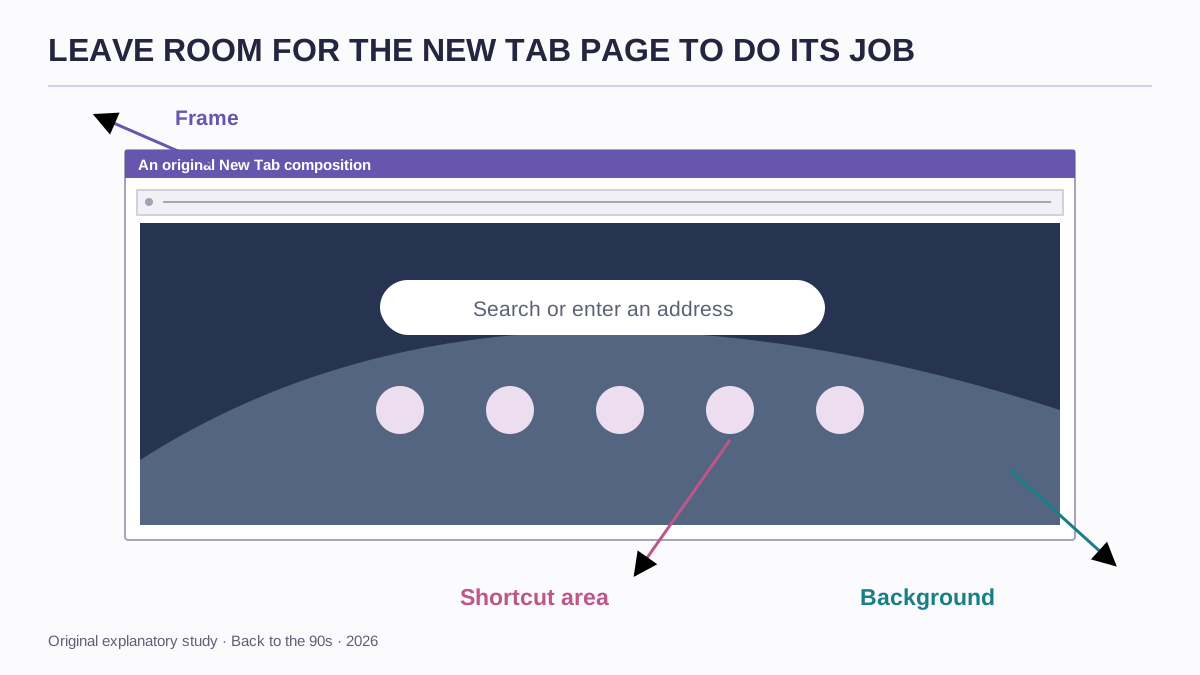
Add a retro background to Chrome, change the toolbar color, choose your shortcuts and reset the theme through the New Tab customization panel.
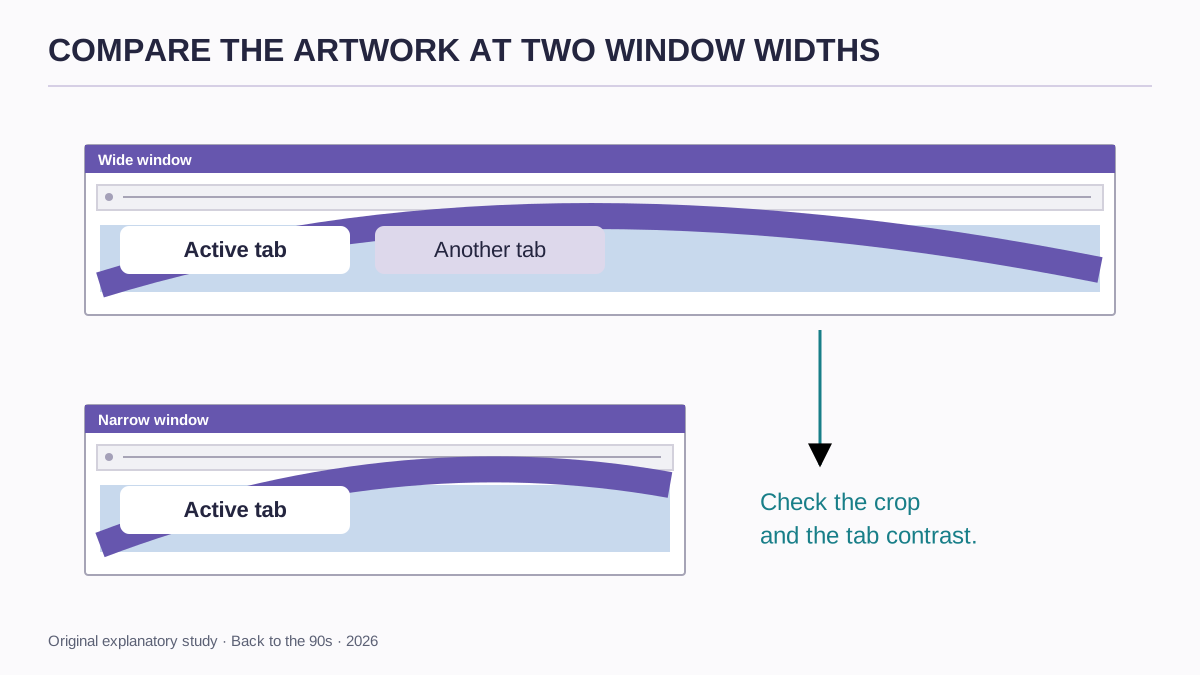
Install a Firefox theme, change tab and toolbar colors with Firefox Color, and switch or remove designs through the Add-ons Manager.
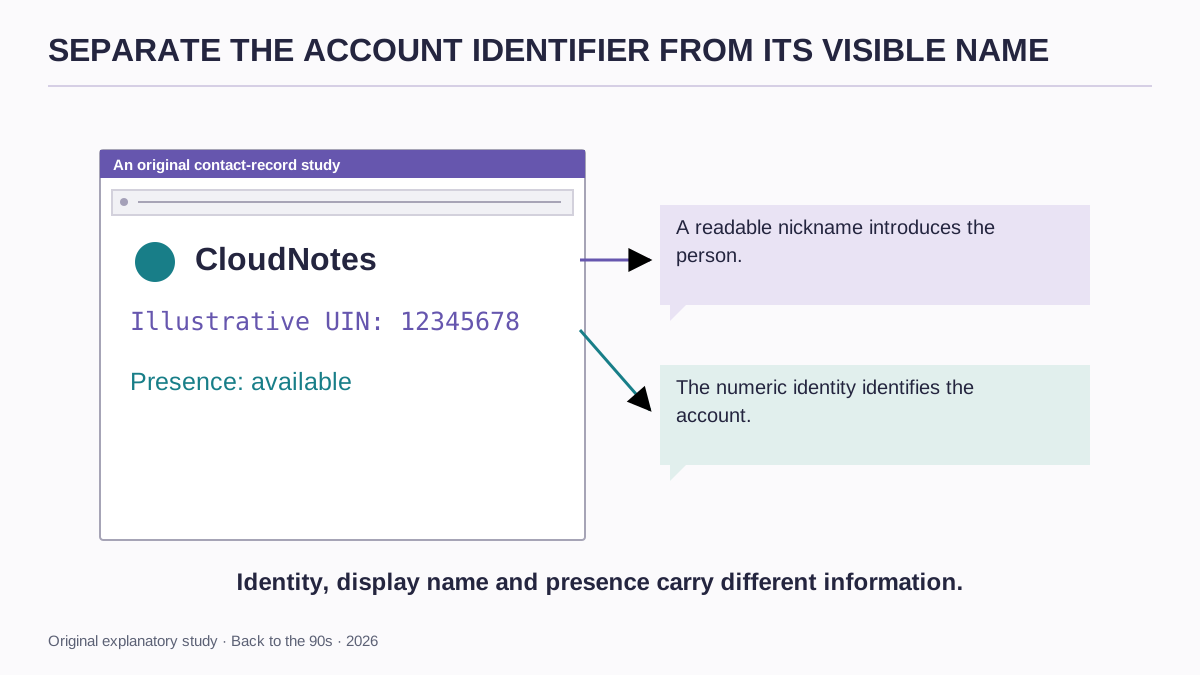
Explore ICQ’s numeric accounts, contact lists and message sound. Follow Mirabilis, AOL and the June 2024 closure, then check NINA’s separate revival route.
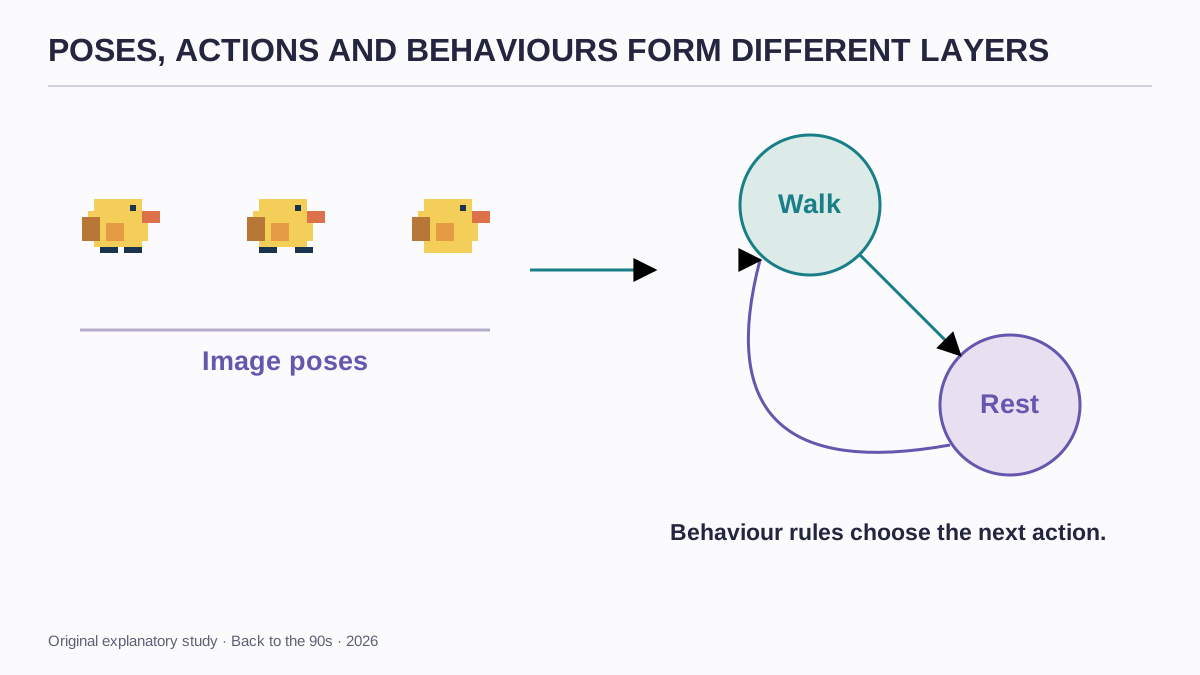
Understand Shimeji-ee’s image sets and XML behaviors. Choose the right runtime, recolor a copied character and trace missing or misaligned poses.
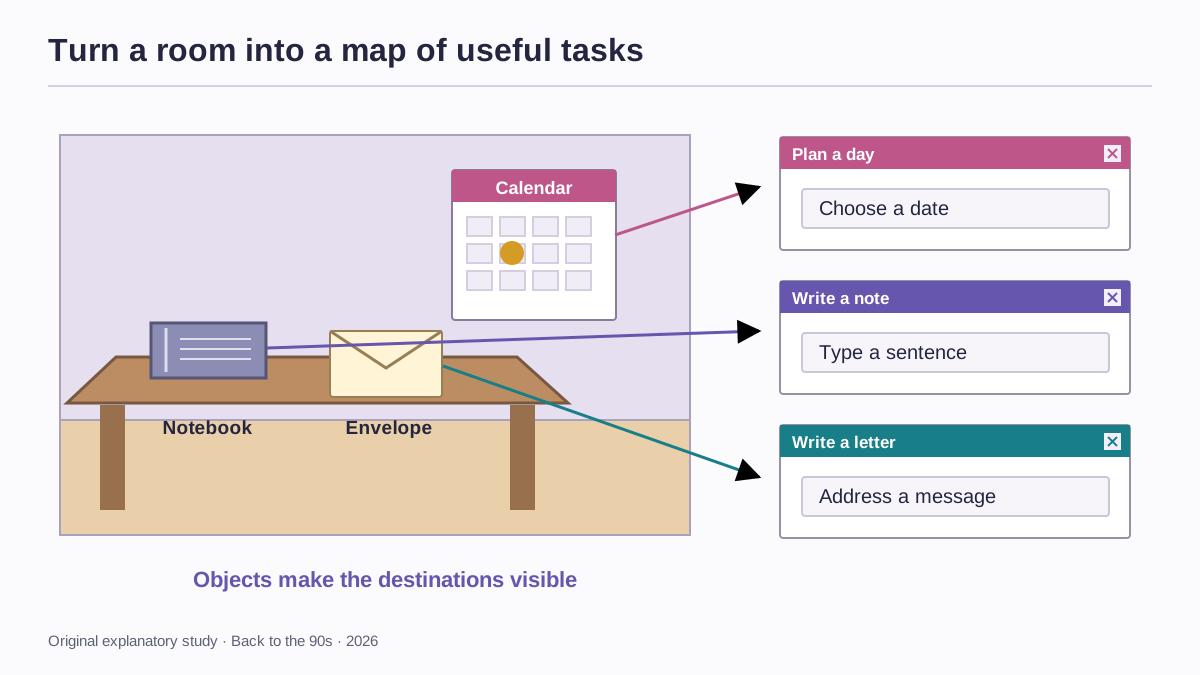
Explore Microsoft Bob’s household tasks, room navigation and animated guides, including its magazine-style manual and an original interactive room study.
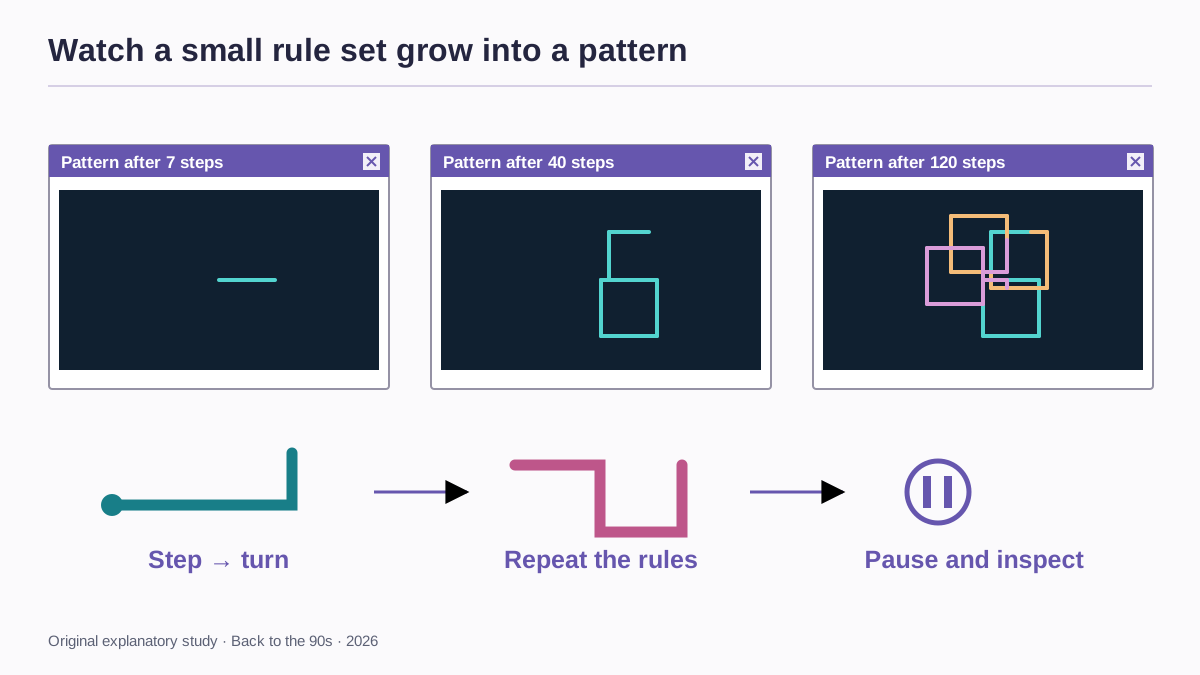
Discover how Windows Pipes gained its hidden teapots, why XScreenSaver began in 1992, and how to edit an original browser pattern one rule at a time.
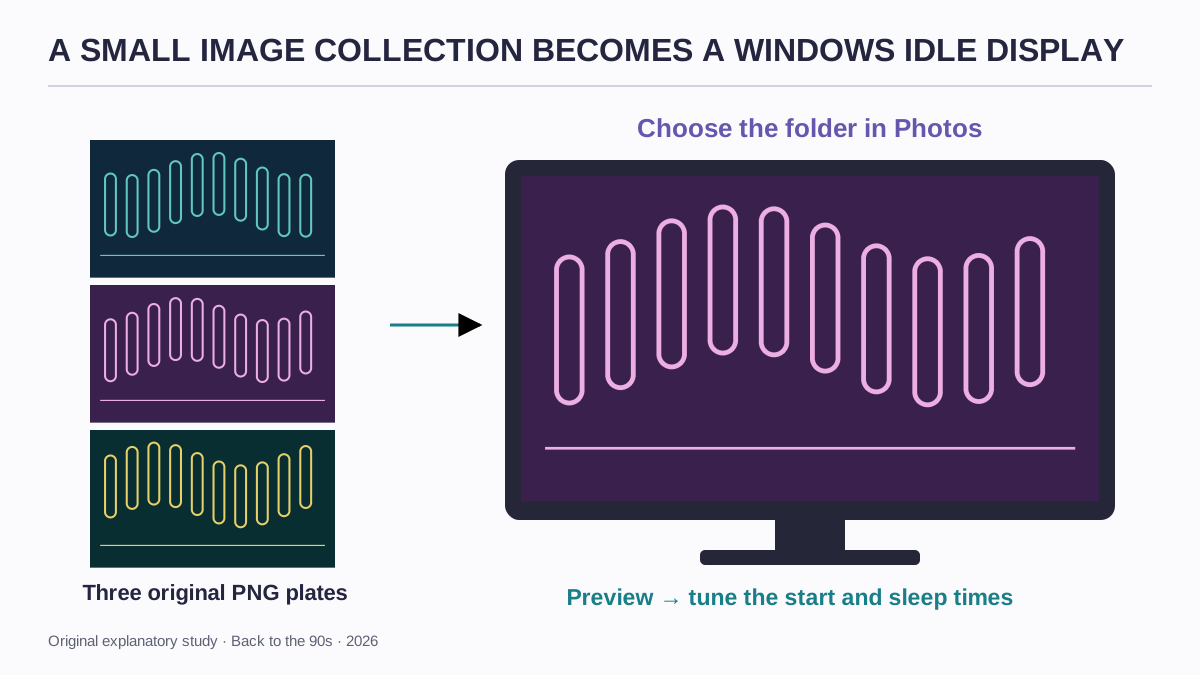
Choose Windows 3D Text or a Photos screensaver, select its source folder and set the idle, display-sleep and sign-in timings in the right order.
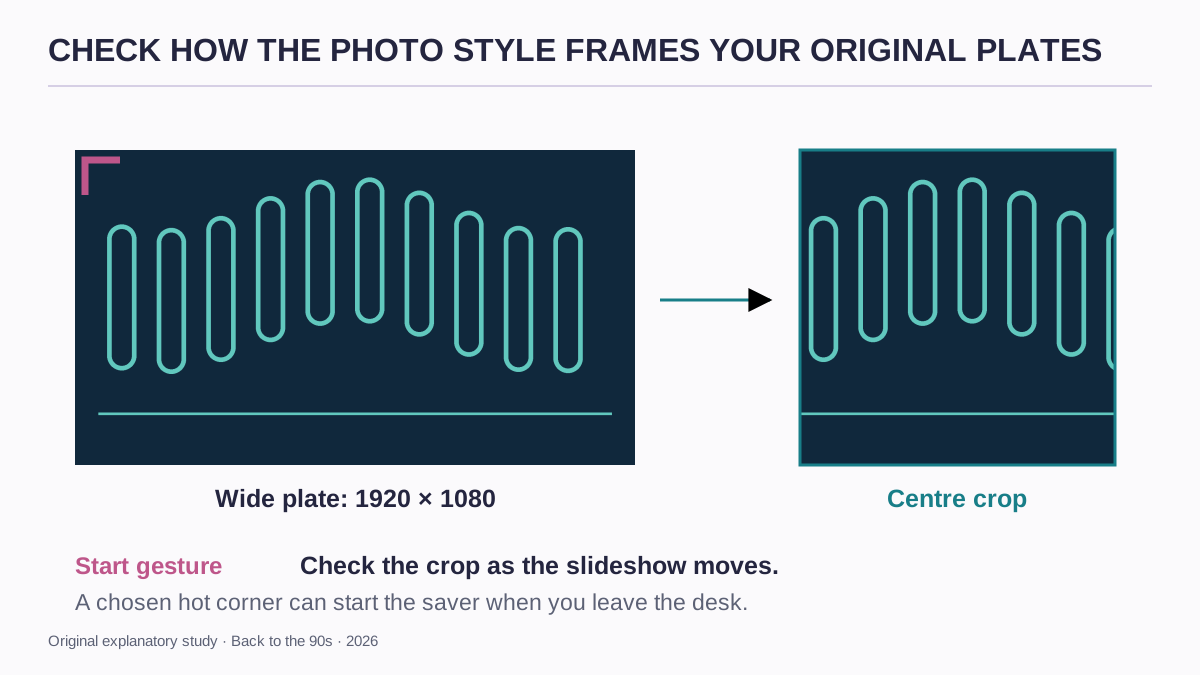
Choose your own Mac screensaver photos, set the folder and style, and add a modifier-key hot corner that starts the saver when you intend.
Games and virtual worlds
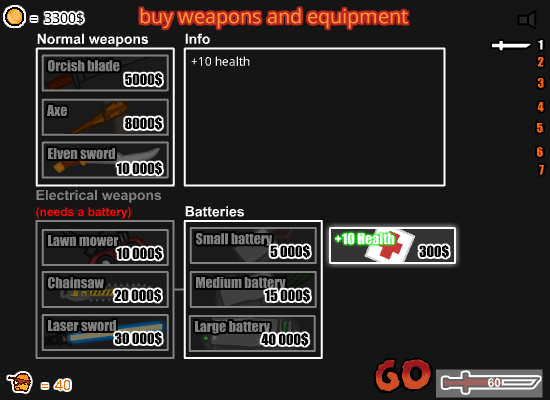
How Staggy went from a Flash score chase to a sequel with timed rounds and a shop, and how both games came back.
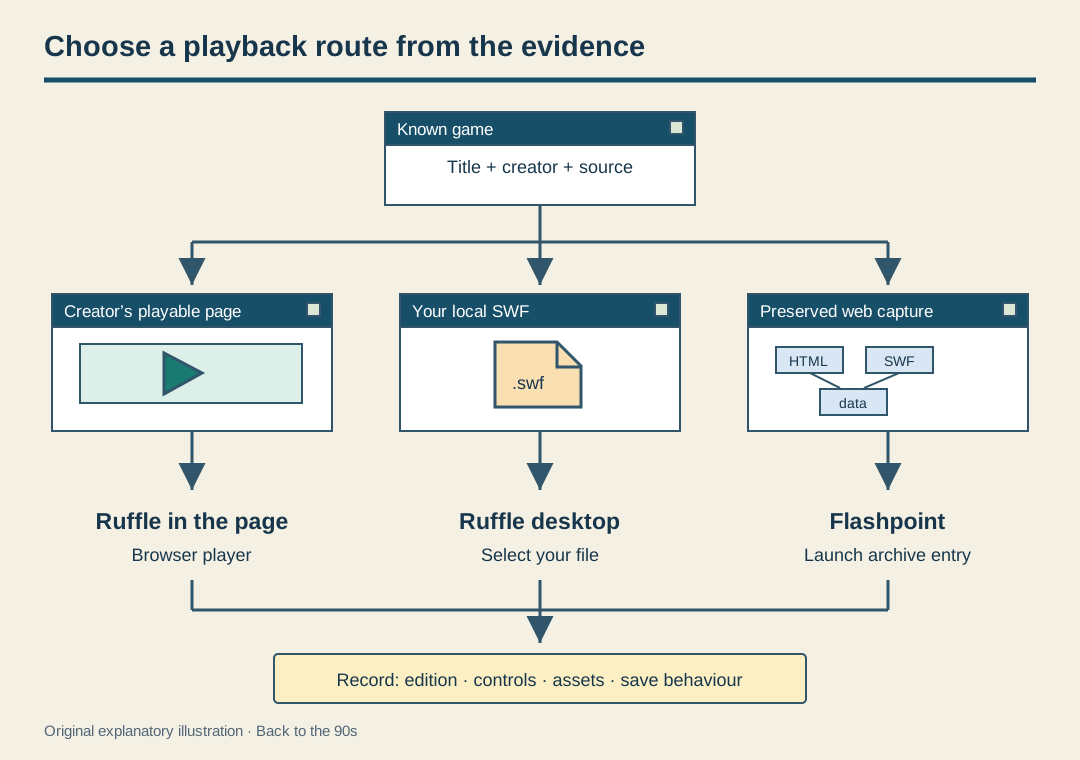
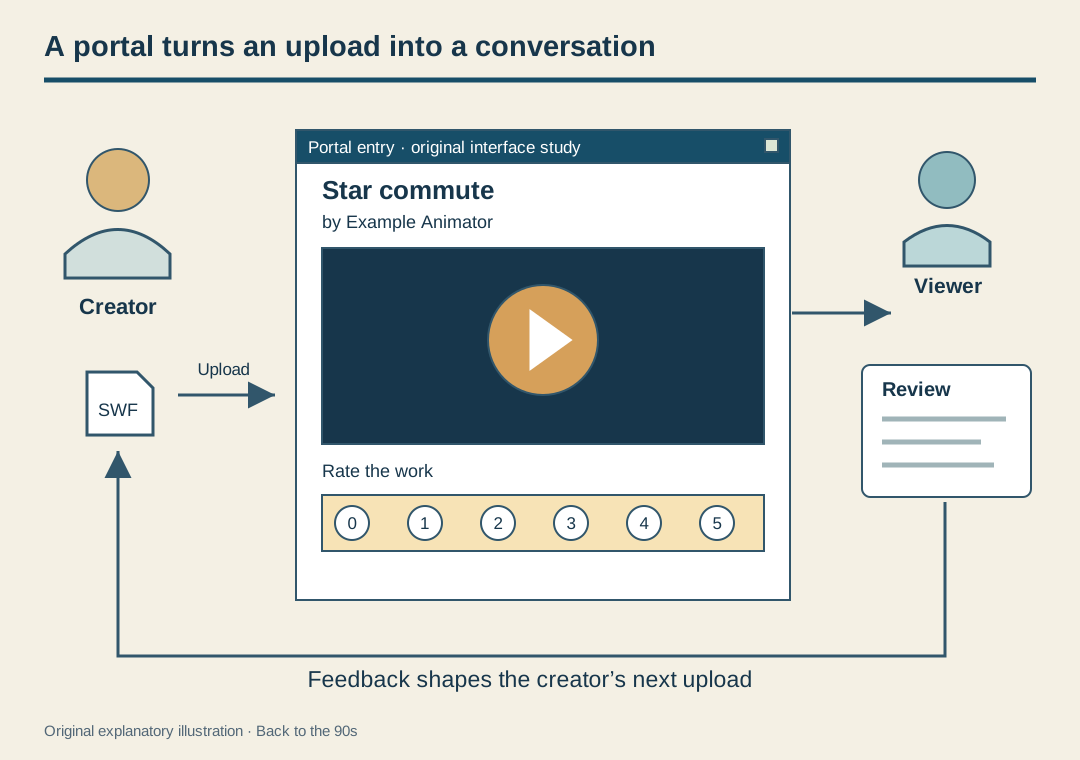
Choose a creator’s page, Ruffle or Flashpoint to play an old Flash game. Learn which route handles a local SWF, missing assets and site-locked games.
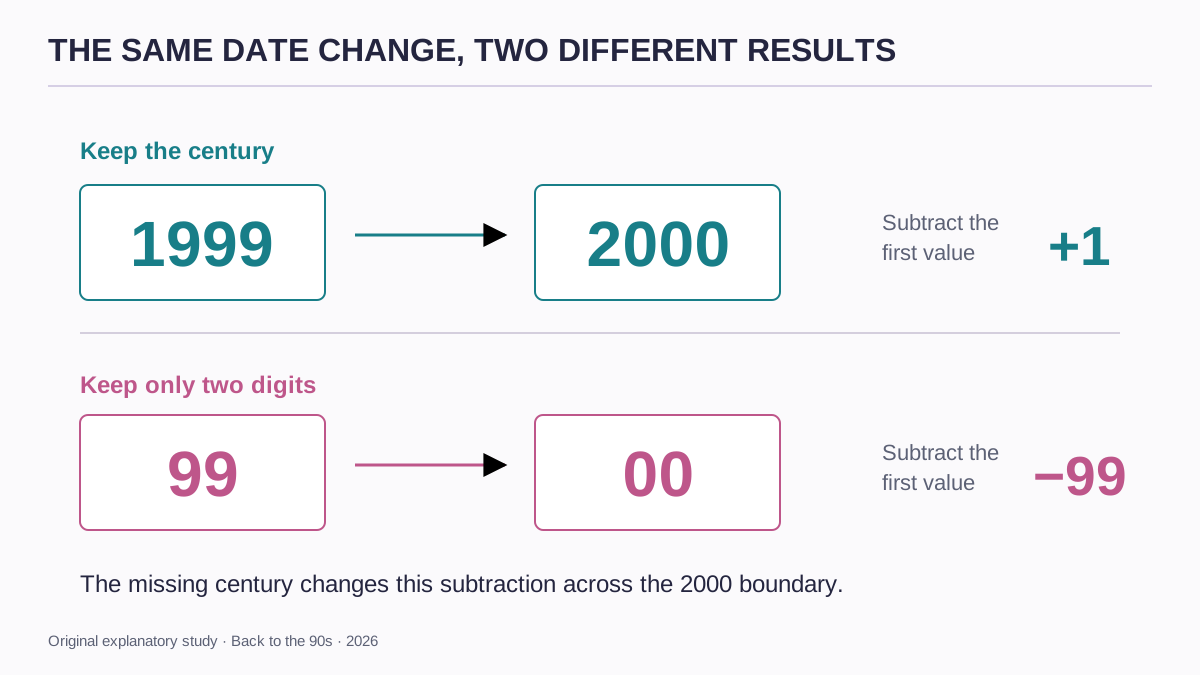
See how 99 became 00, why two-digit years caused errors, and how teams repaired and tested systems before 2000. Includes an interactive date example.
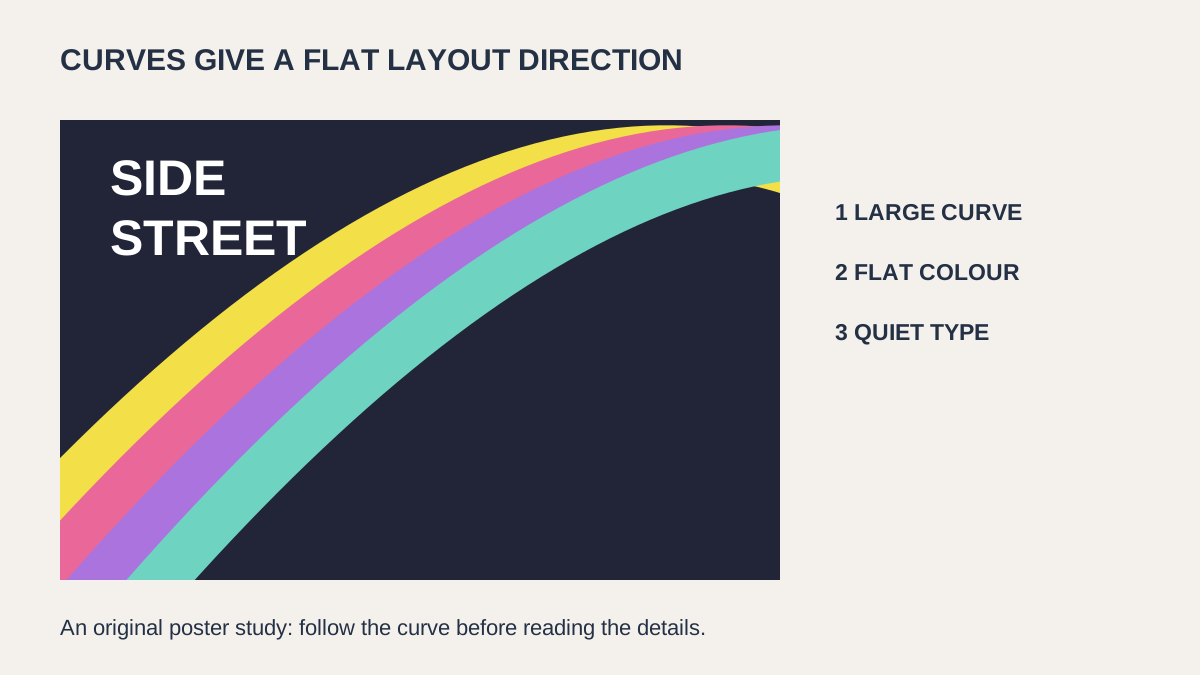
Recognize Frutiger Metro through sweeping curves, silhouettes and music graphics. Compare dated iPod and Samsung references and build a flat composition.
Explore Vectorheart through The Designers Republic, Bionic Systems and Wipeout. Build a coherent system of flat symbols, technical type and color.
Explore Utopian Scholastic through DK Eyewitness and Encarta. Learn how object photography, clear captions and multimedia turn information into discovery.
Trace Early Cyber through April Greiman’s 1986 Design Quarterly and Emigre. Examine visible pixels, mixed scales and the tools behind early digital layouts.
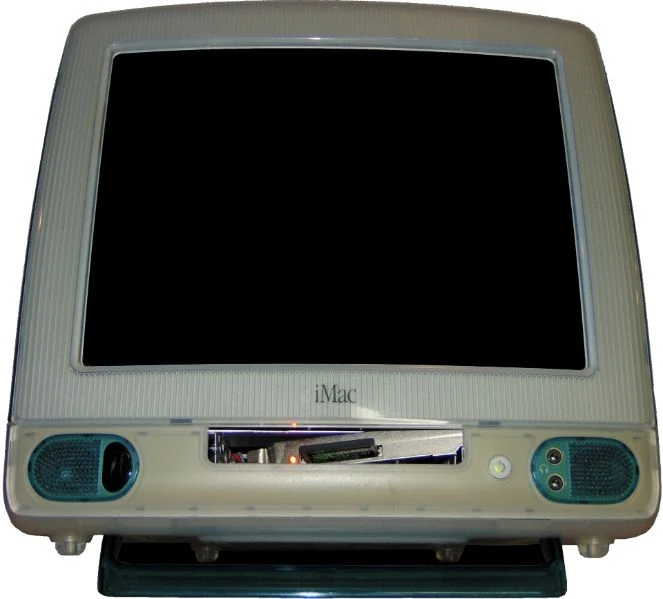
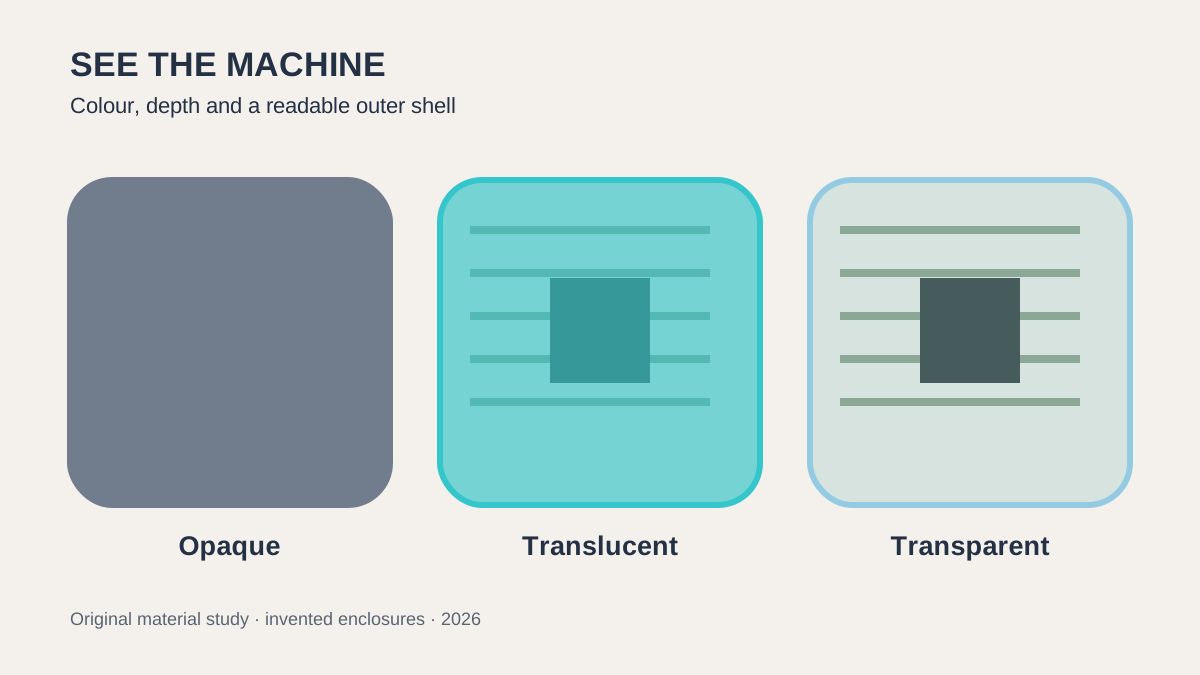
Explore Clear Tech through the 1998 iMac and 1999 iBook. Compare transparent, translucent and opaque materials and draw a readable enclosure.
Understand skeuomorphism through Aqua and Winamp skins. Separate material effects from familiar controls and assess what a visual cue helps users do.
Explore glitch art through Rosa Menkman’s A Vernacular of File Formats. Compare genuine file changes, software errors and deliberate visual simulations.
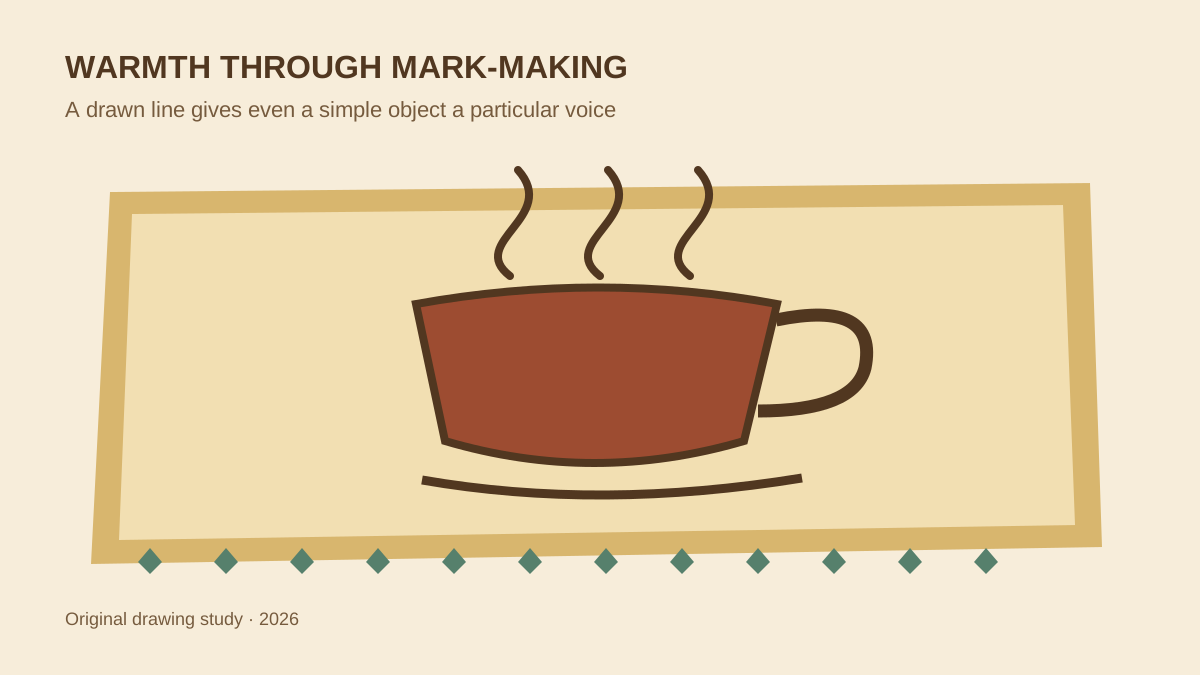
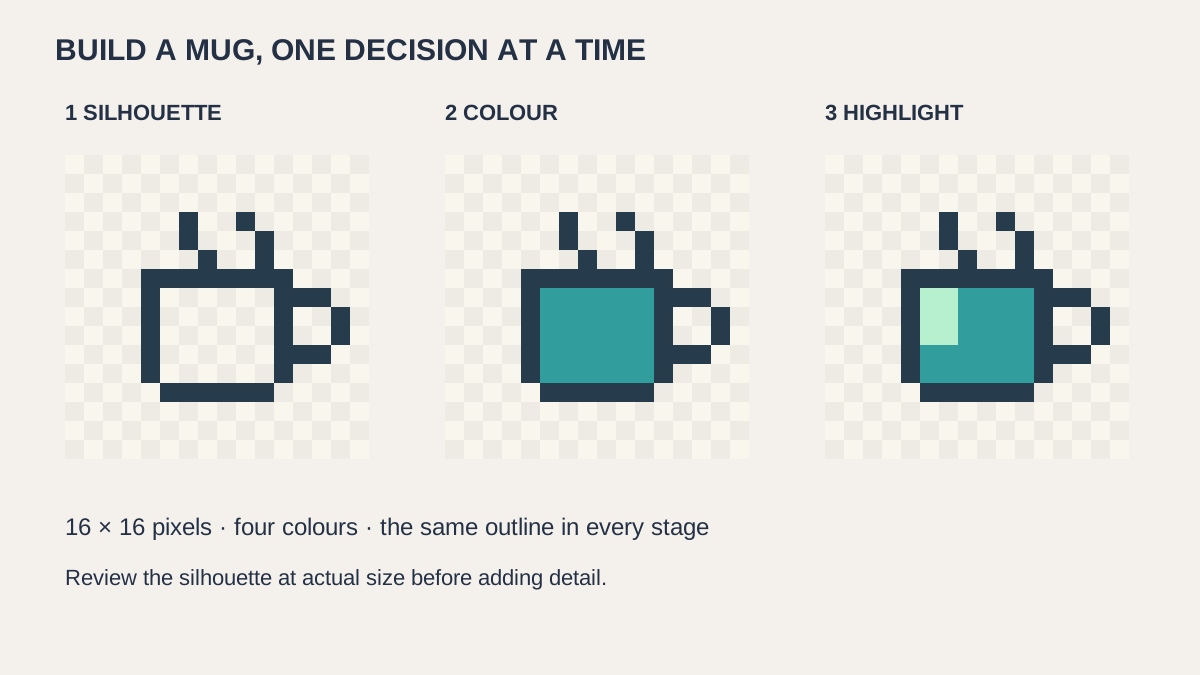
Draw a small pixel-art mug with a clear silhouette, connected color clusters and clean exports. Learn from Susan Kare’s early Macintosh icon sketches.
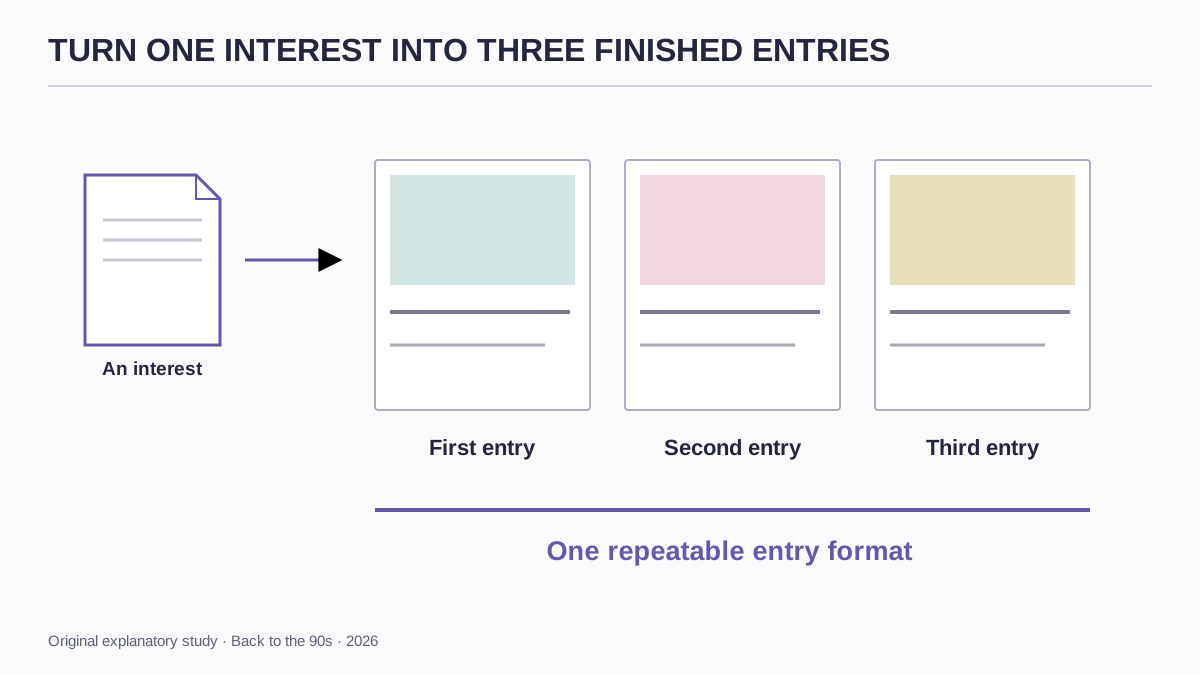
Choose a weekend website: a fan guide, tiny museum, collection, recommendation shelf, making diary or field notebook. See what to put on its first pages.
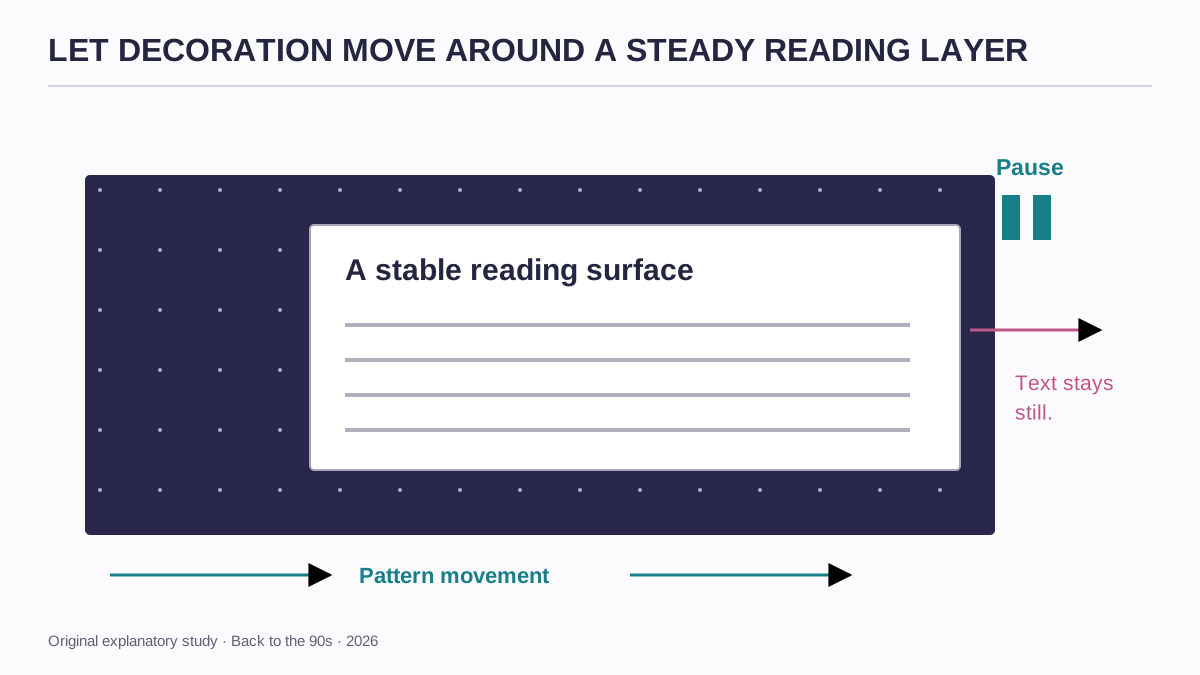
Build a slow CSS background around steady, readable text. Use our original demo with a pause button, reduced-motion support and advice for GIF alternatives.
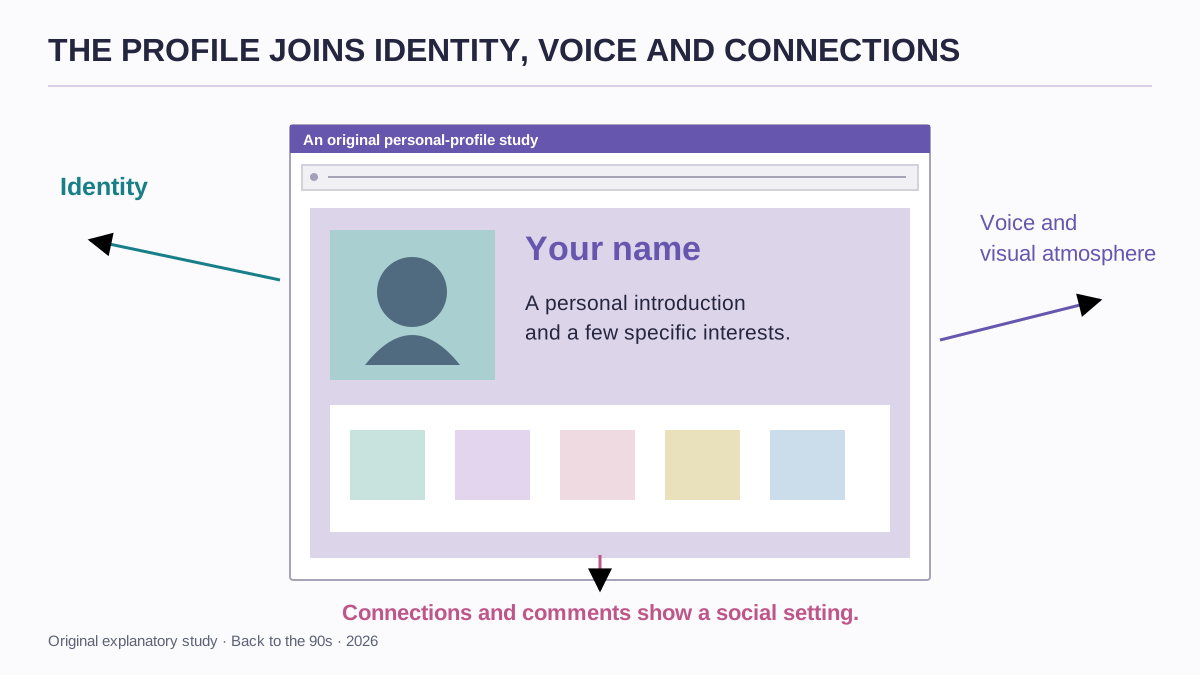
Explore MySpace profile customization through danah boyd’s research, shared layout code and Top Friends. Try an original annotated HTML profile study.
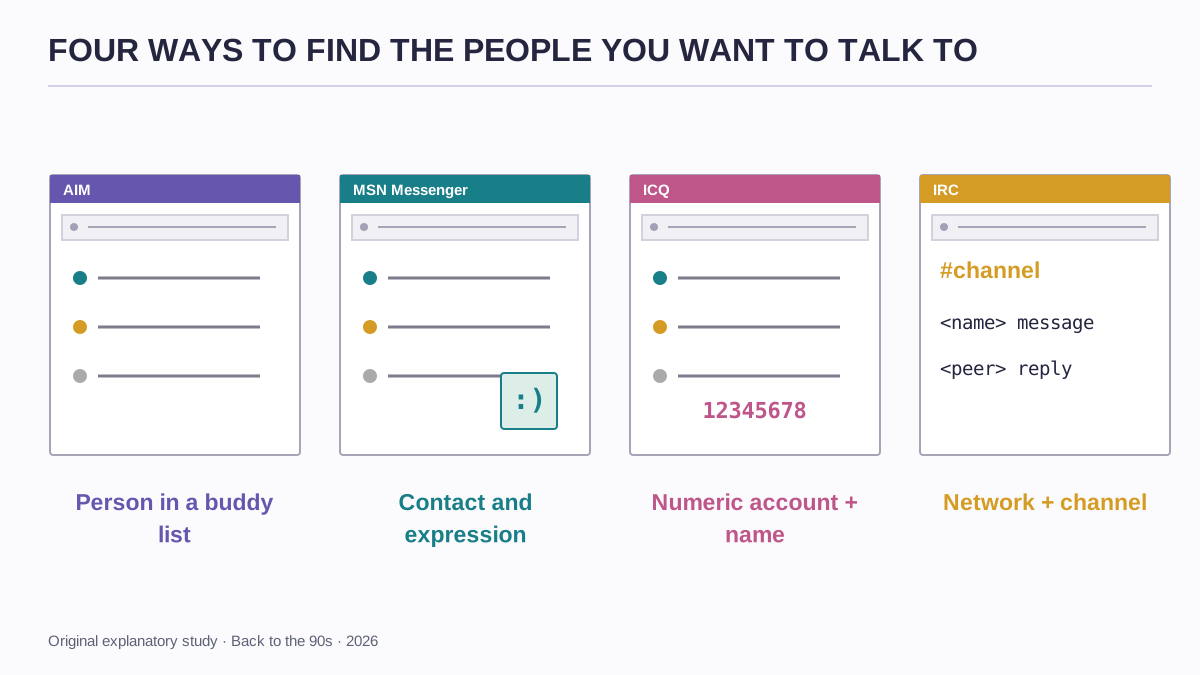
Compare AIM, MSN Messenger, ICQ and IRC by identity, contact discovery, presence and conversation. Separate the original services from current revival projects.
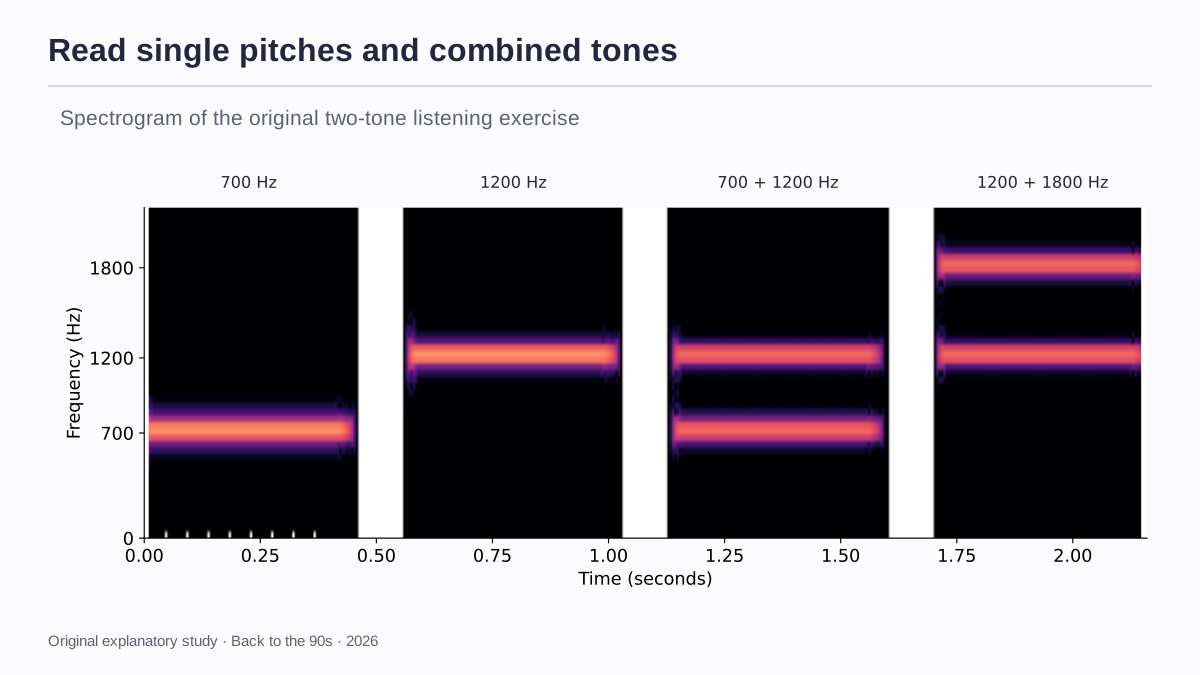
Follow a dial-up modem from telephone tones to line training. Learn what the noises mean, why the speaker goes quiet and what 56k actually measures.
Understand Windows 95 and 98 through raised buttons, inset fields, title bars and focus. Compare the releases and edit a working classic-window example.
Explore Windows XP’s Luna appearance, rounded controls and translucent icon shadows, with a surprising development story and original design exercises.
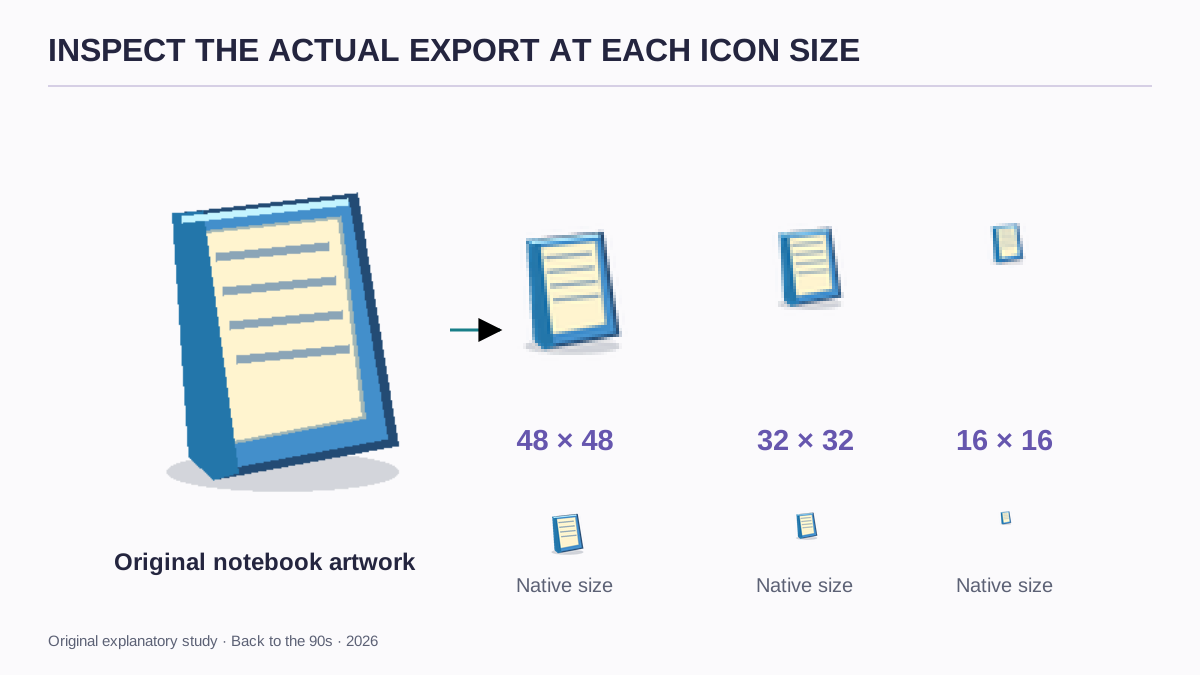
Draw an original XP-style notebook, refine it at 16, 32 and 48 pixels, and choose SVG, PNG or ICO files for a website or Windows shortcut.
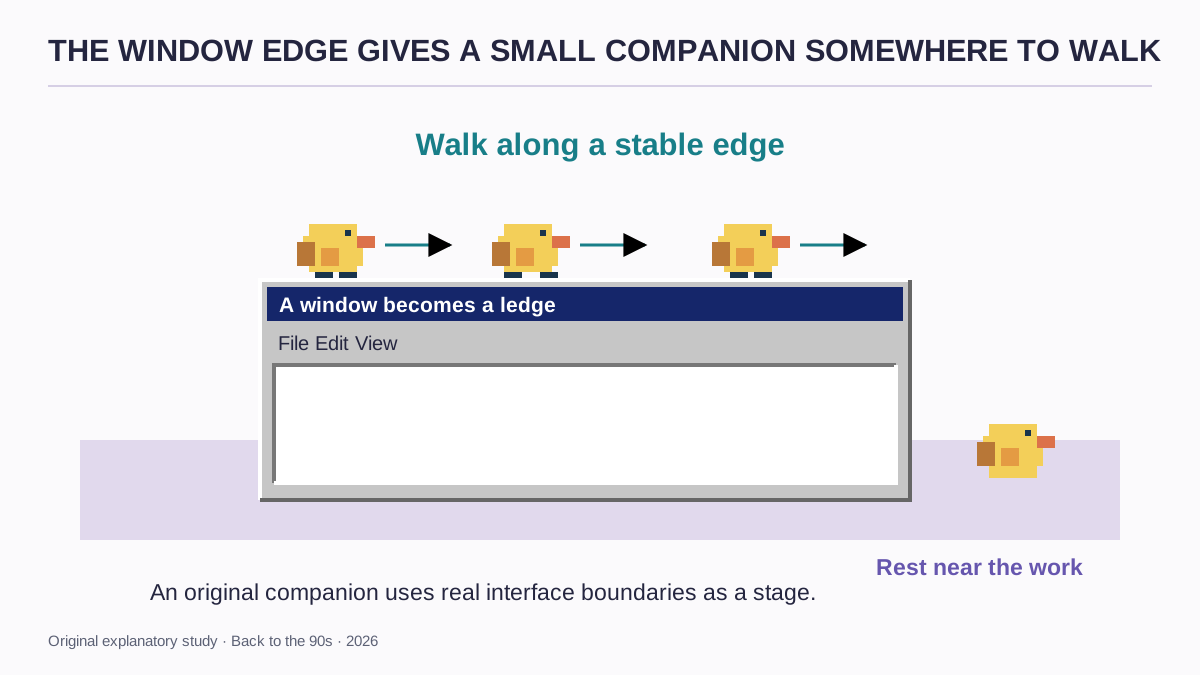
Build a four-frame browser pet from a downloadable bird example. Edit sprite offsets, walking speed, turn boundaries and the walk–blink–rest cycle.
Edit the original Blue Hour Winamp skin, map normal and pressed bitmap states, change playlist colors and package the files as a classic WSZ archive.
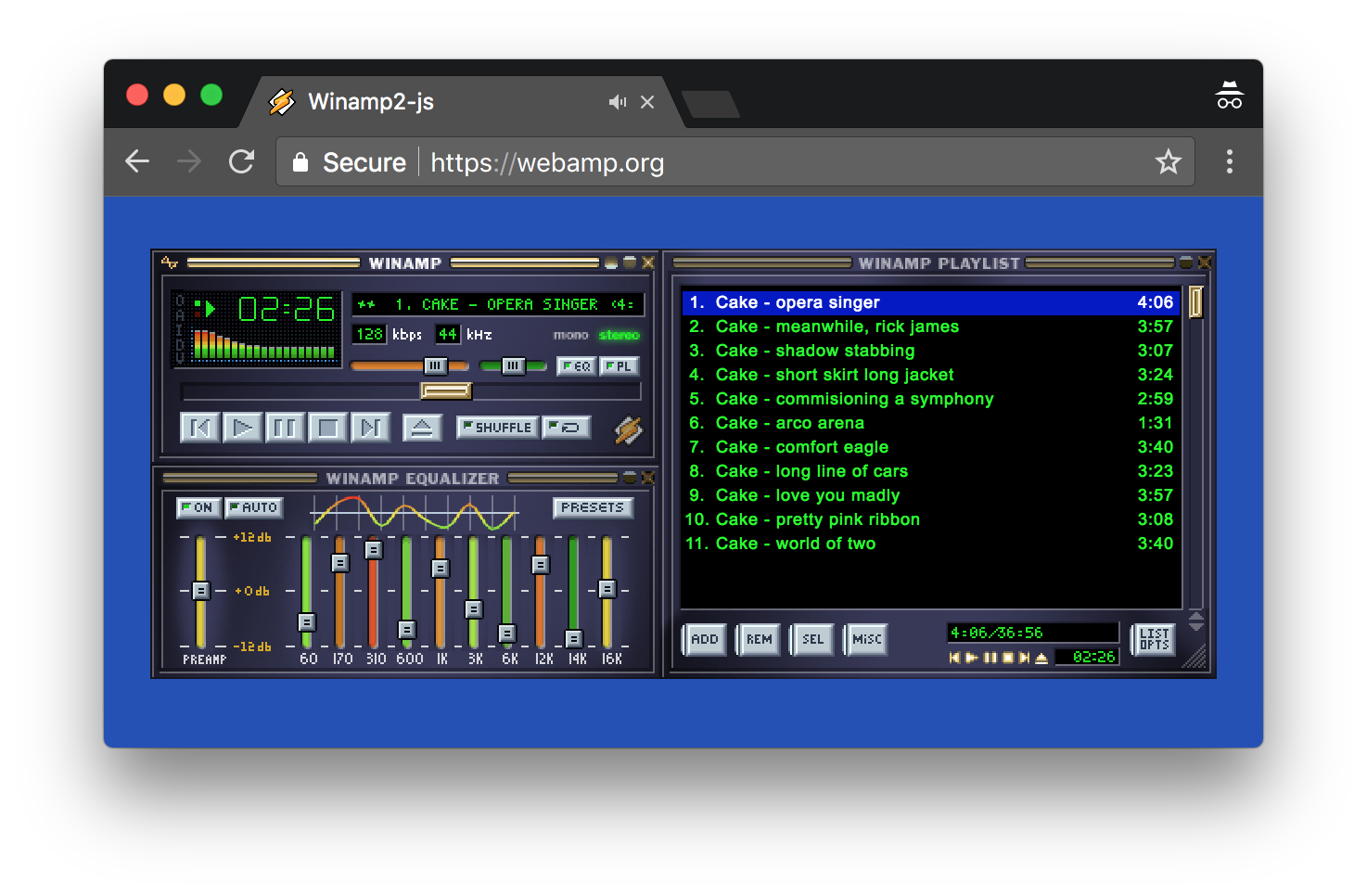
Open local audio in Webamp, use the player, equaliser and playlist, and run the downloadable example with its original melody and classic skins.
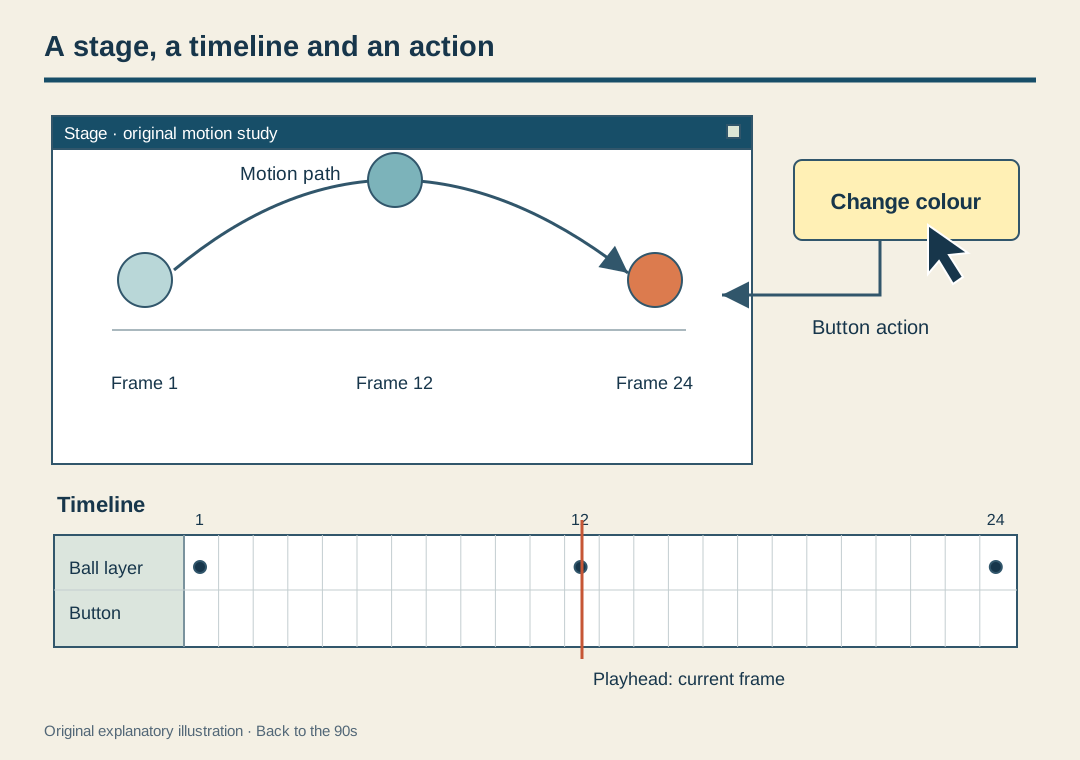
Explore the stage, timeline and buttons behind Flash websites. Follow the 2017–2021 retirement dates and try a small interactive timeline.
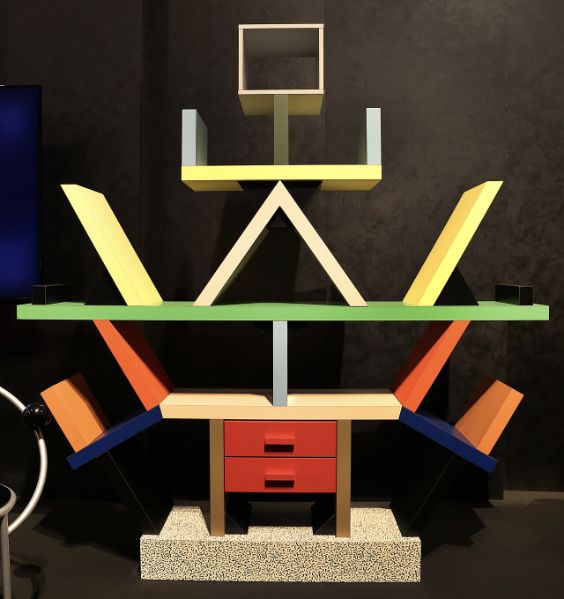
Trace Memphis from its 1981 Milan debut to playful 1990s graphics. Examine Sottsass, structure, color and pattern before making your own composition.
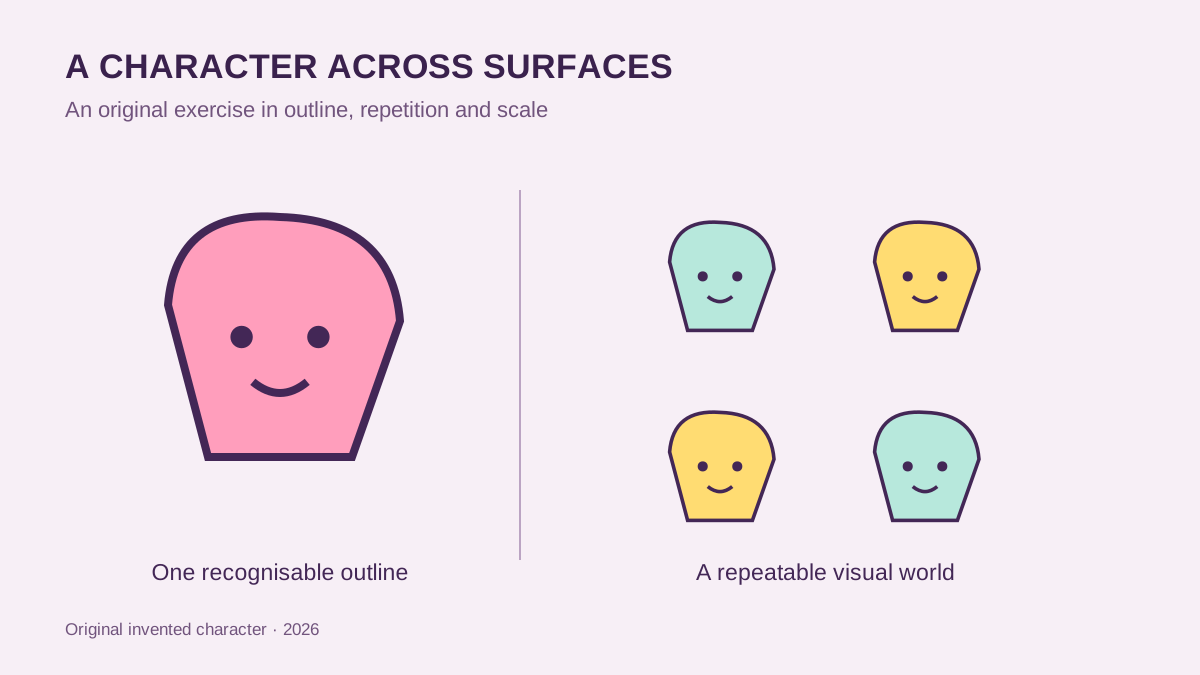
Separate Murakami’s Superflat theory from the later Superflat Pop label. Explore MOCA exhibitions, the 2003 Vuitton collaboration and character systems.
Study grunge typography through David Carson’s Ray Gun work and Barry Deck’s Template Gothic. Learn how layout, texture and legibility interact.
Read original 1990s rave flyers through dated archive records. Examine the event name, imagery, venue details and graphic rhythm before designing a flyer.
Explore Neo-Y2K through Froyo Tam and Terrell Davis. Separate original period references from later remixes and build a new design with a clear purpose.
Examine Corporate Memphis through BUCK’s Alegria system for Facebook. Trace its 2017 commission and learn how modular figures work across illustrations.
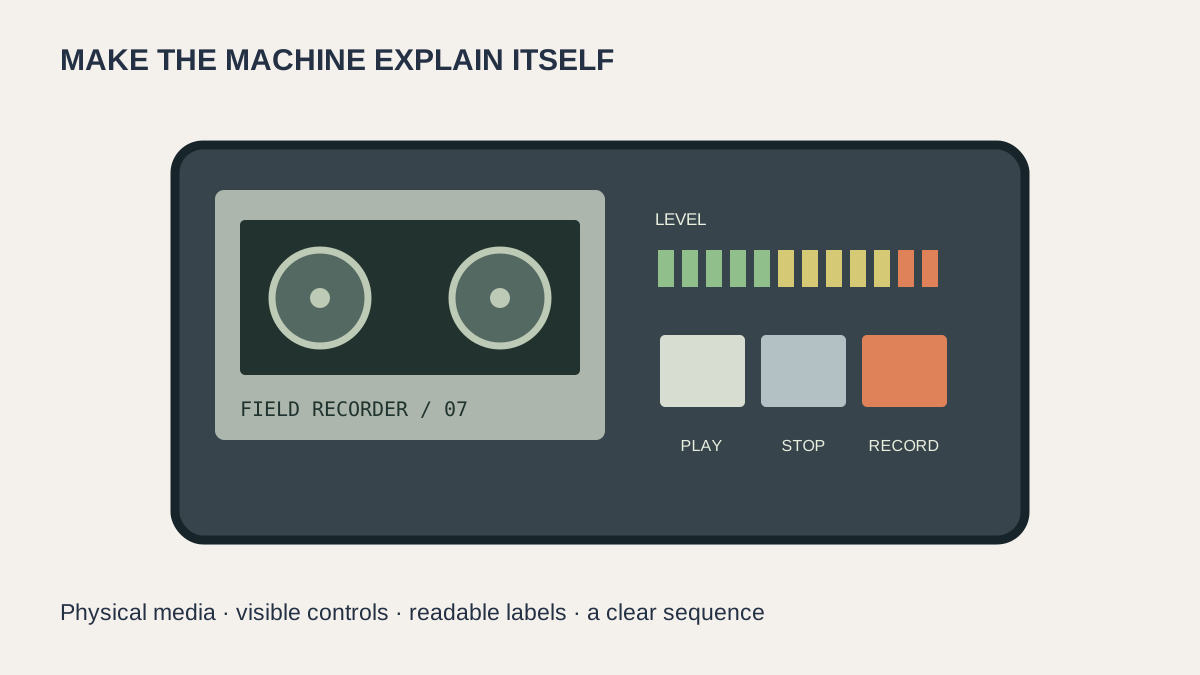
Explore cassette futurism through Sony’s WM-2 and Ron Cobb’s film design. Build a fictional device around clear controls, labels and physical purpose.
Recognize Frasurbane through warm neutrals, classical objects and serif typography. Examine Frasier’s set and compare the look with neighboring styles.
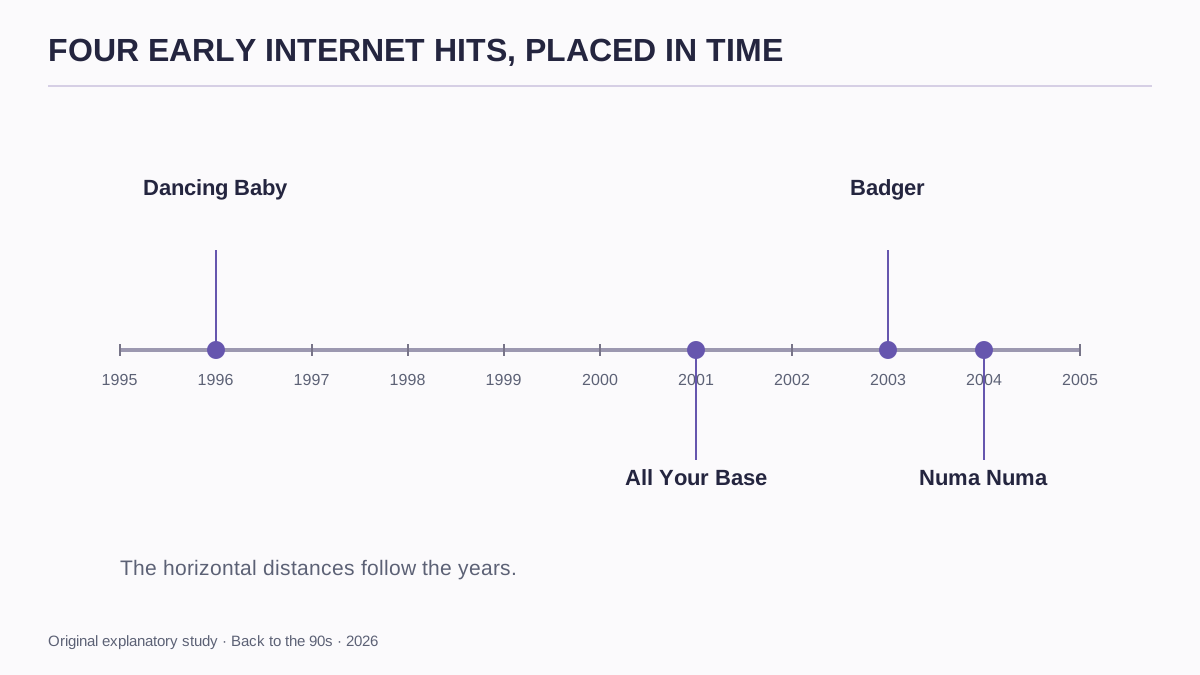
Trace Dancing Baby, All Your Base, Badger and Numa Numa through museum records and creator uploads. Keep original releases separate from later circulation.
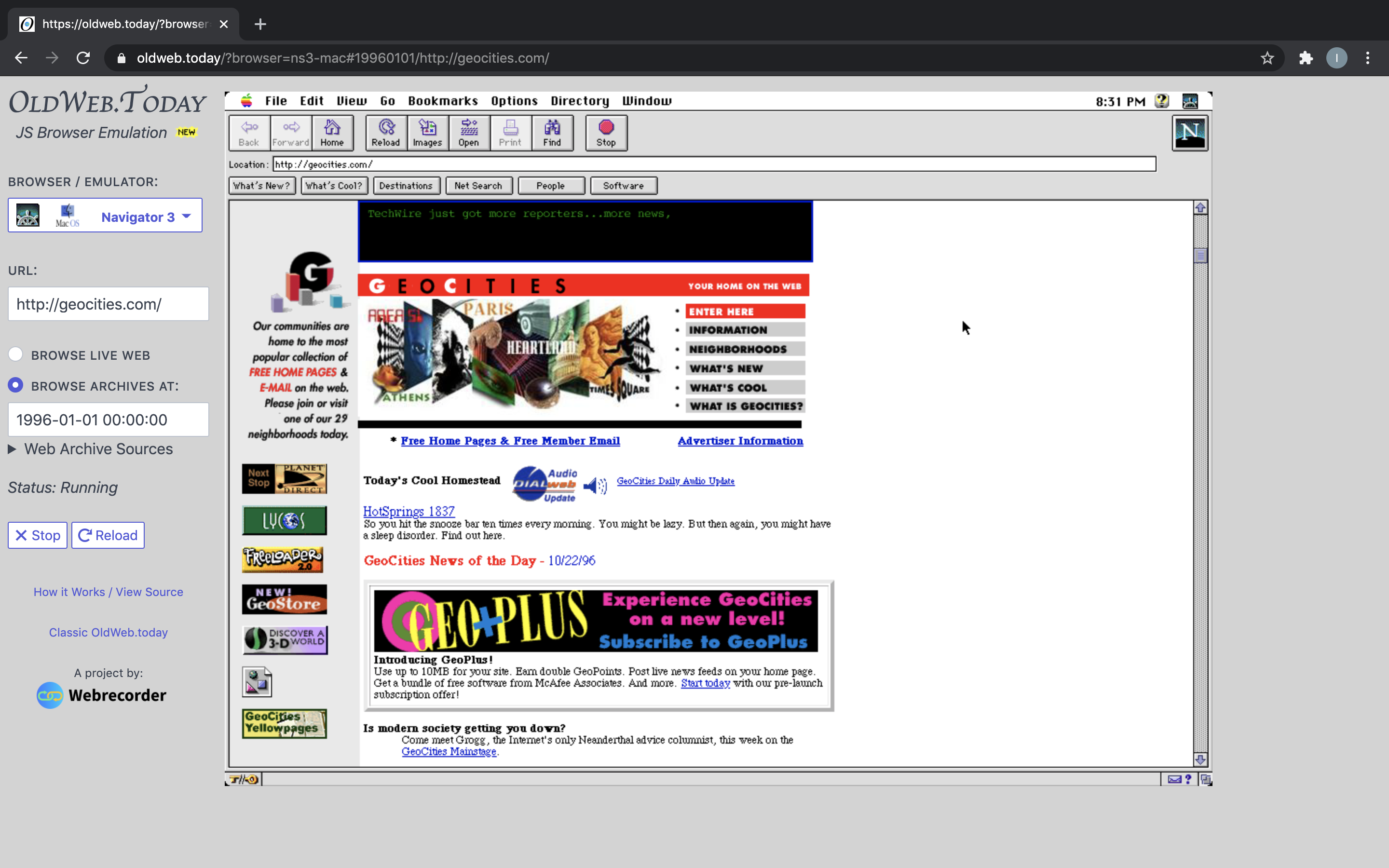
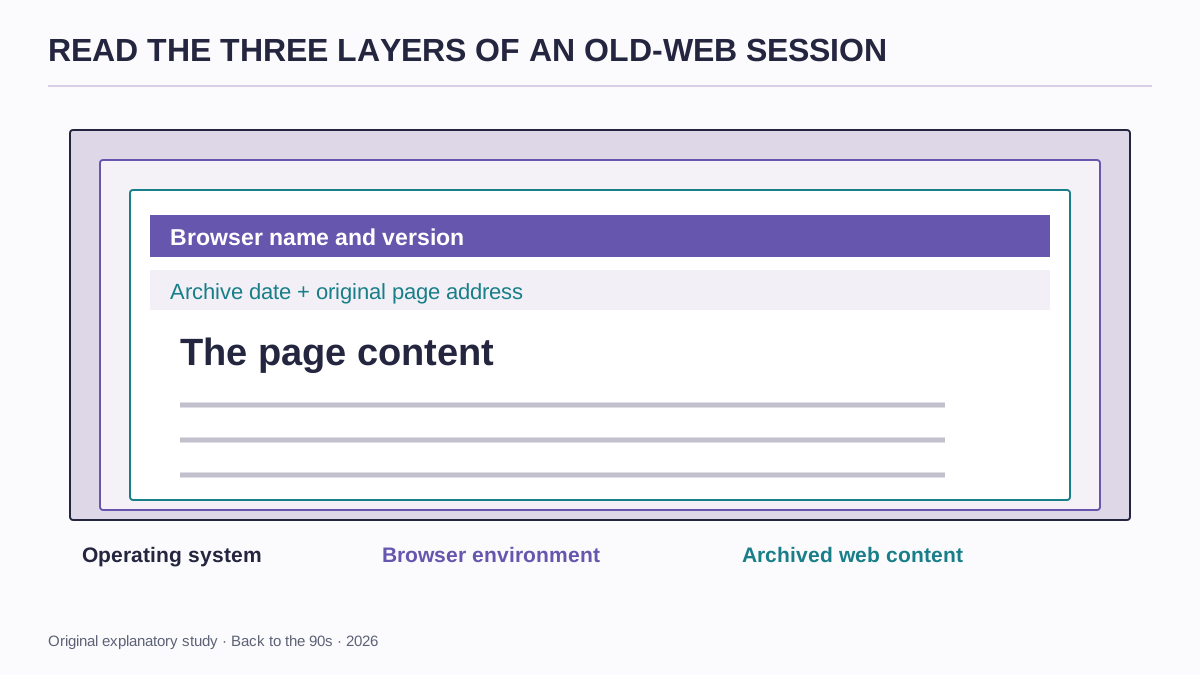
Choose an old browser, URL and archive date in OldWeb.today. Follow exact setup steps and fixes for missing pages, images and plug-in content.
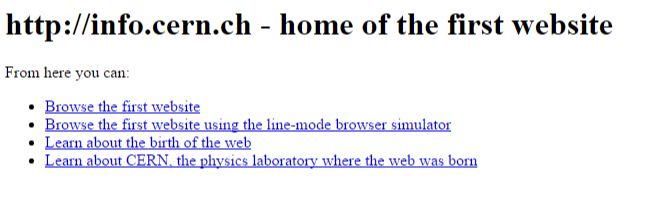
Visit CERN’s restored first website. Follow Tim Berners-Lee’s 1990 server, the early browsers, the 1993 software release and the 2013 restoration.
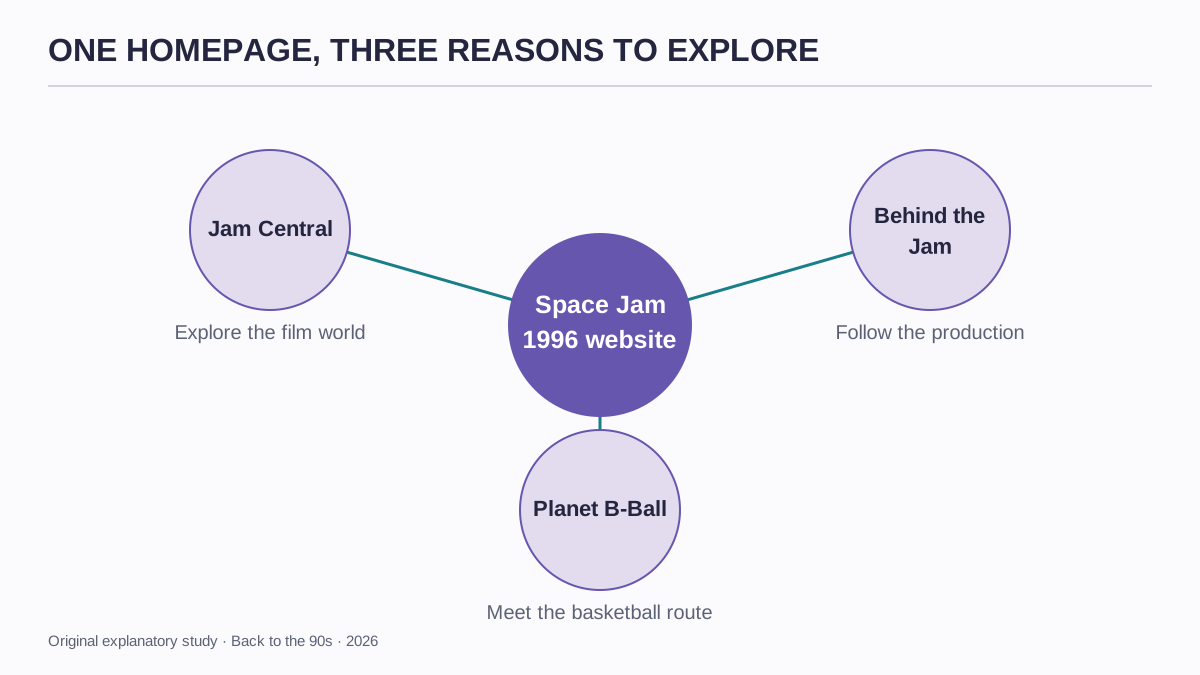
Explore Space Jam’s 1996 website through its planet menu, production pages and basketball links. Build an original constellation menu with our HTML exercise.
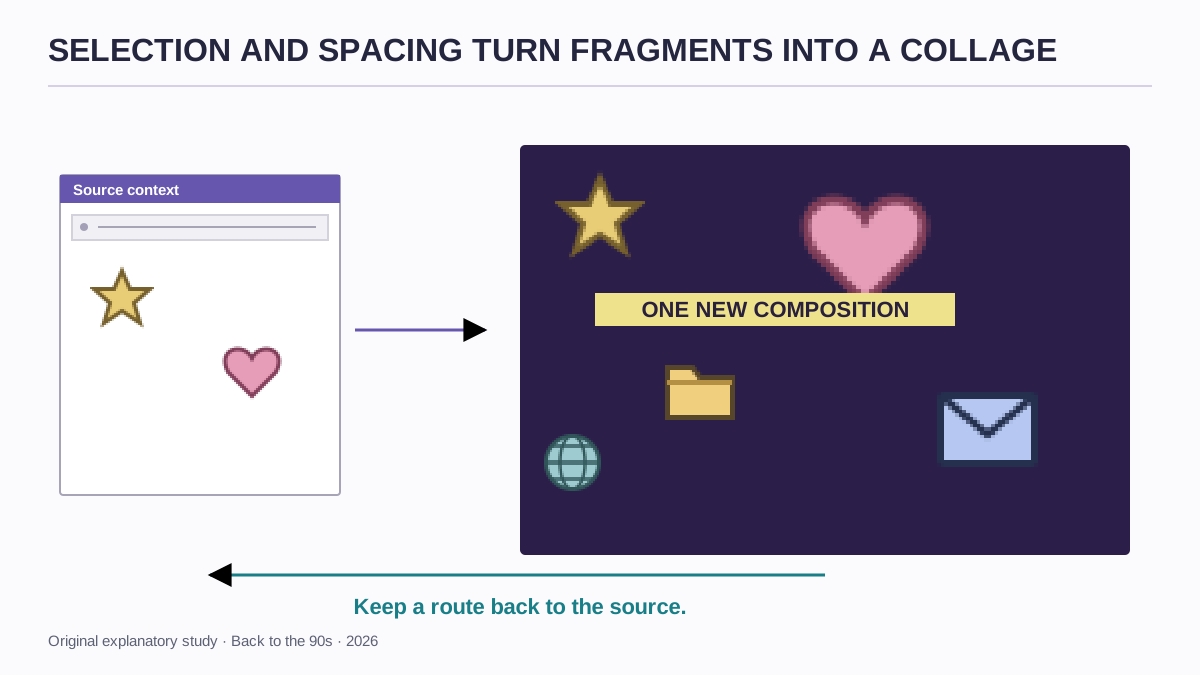
Explore Cameron Askin’s 2015 GeoCities collage, follow its GIFs to archived pages and rearrange an original HTML collage with a downloadable source ledger.
Compare 2Advanced V3’s 2001 Flash design with its 2024 Rive and React rebuild. Study navigation, transitions and the studio’s routes to its Flash archives.
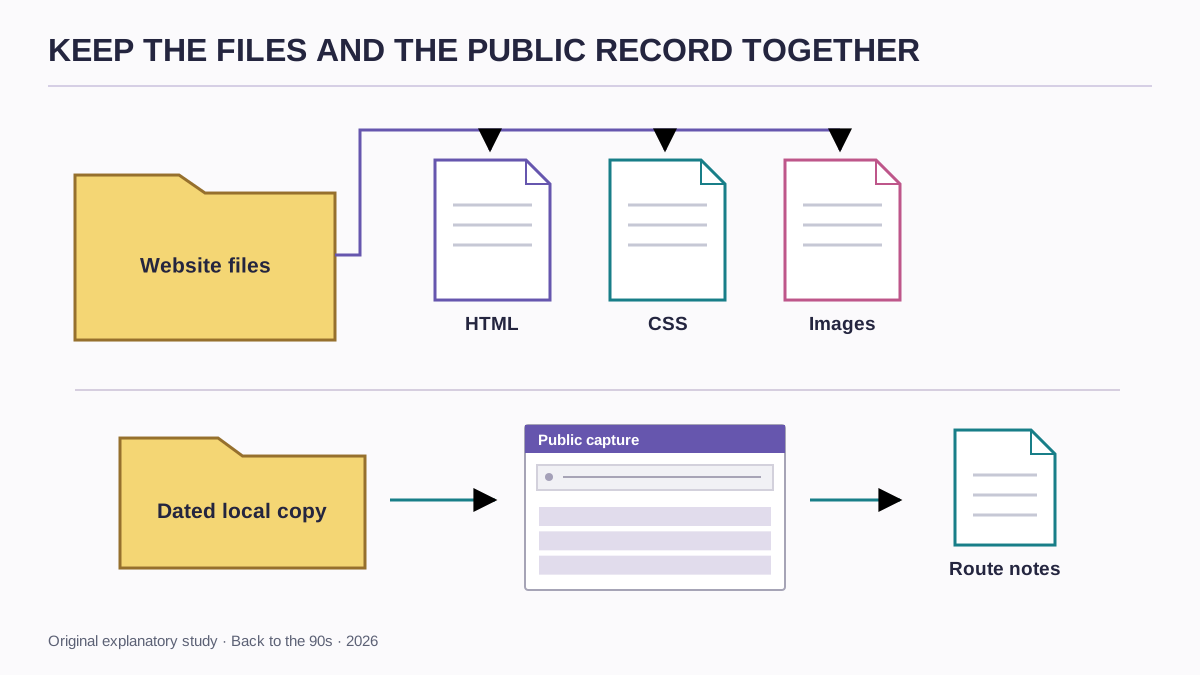
Preserve your website with a complete file copy, dated archive captures and an inventory. Understand Save Page Now, repository snapshots and browser recordings.
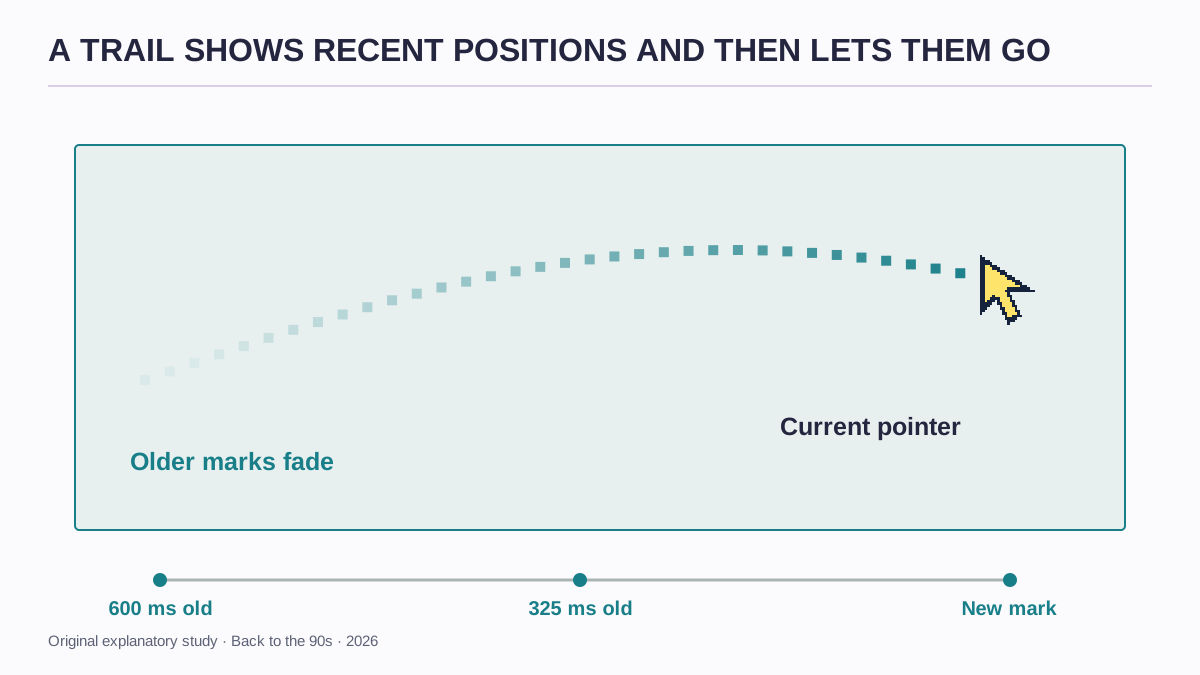
Turn on Windows pointer trails or customize a JavaScript cursor trail. Change its duration, square size and color in the downloadable example.
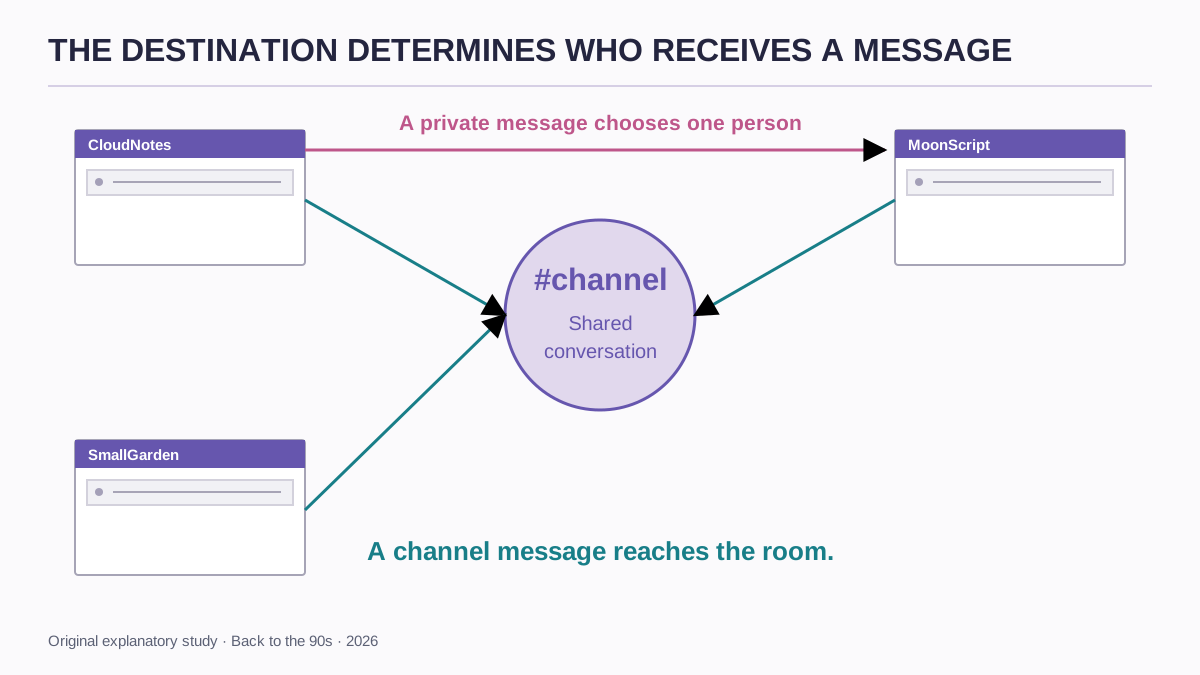
Understand IRC clients, networks, nicknames and channels. Follow a local conversation demo, learn four commands and use Libera.Chat’s current connection guide.
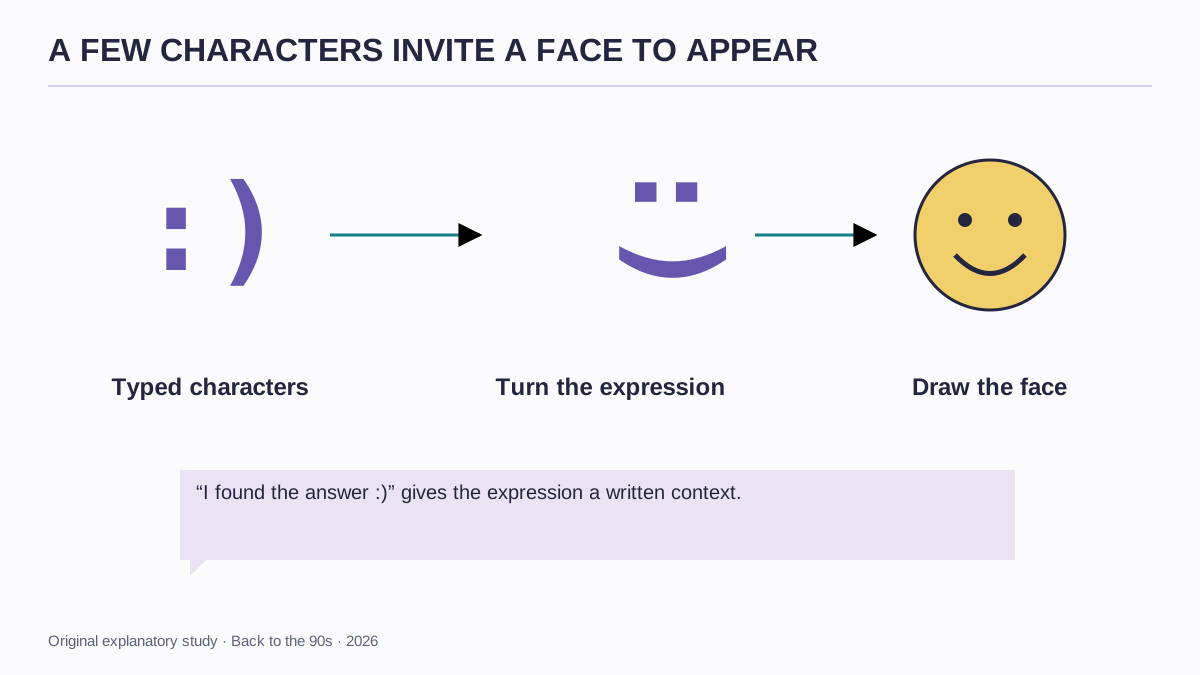
Follow Scott Fahlman’s 1982 smiley proposal, 1995 netiquette and Messenger 6’s animated graphics. See how typed faces and images change a message’s tone.
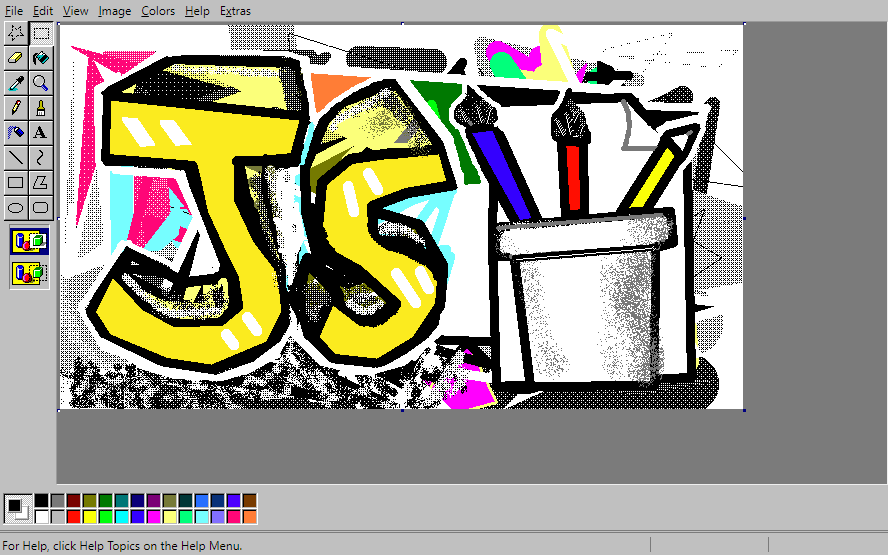
Try classic Paint tools in JS Paint, historical Windows machines in PCjs and Winamp-style playback in Webamp. Know which route recreates or emulates the software.
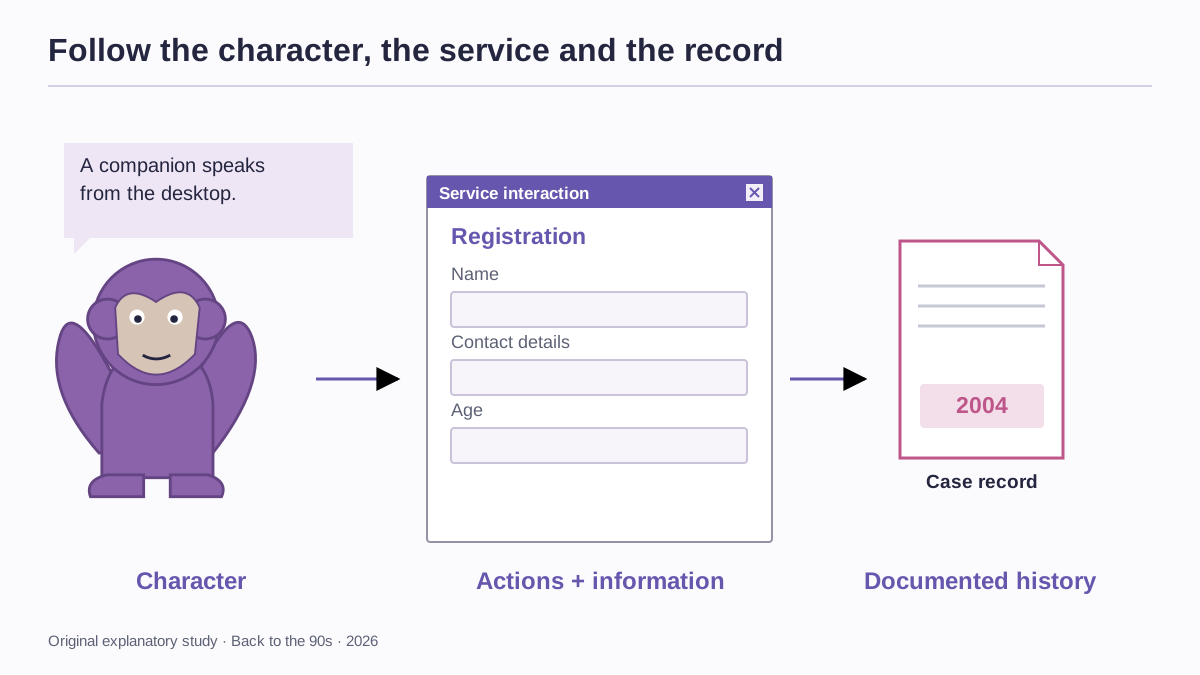
Explore BonziBuddy’s animated gorilla, jokes and shopping advice, then follow the registration practices behind its $75,000 FTC settlement in 2004.
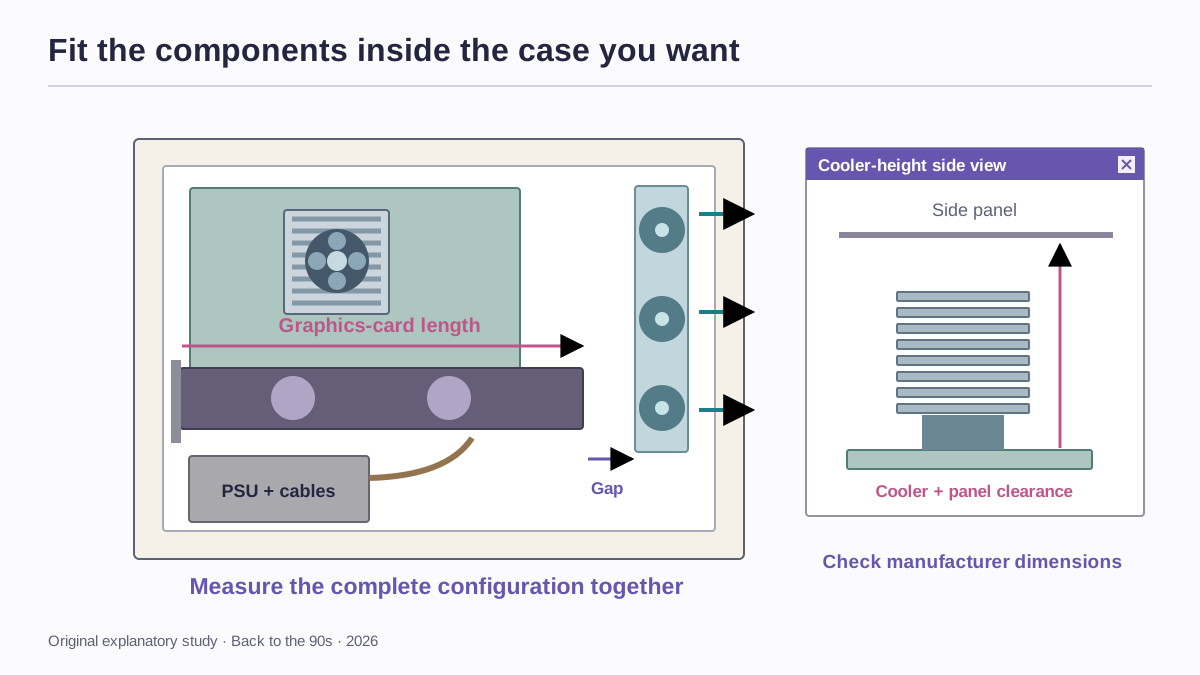
Compare a beige SilverStone FLP02 with the compact Fractal Terra. Check GPU, cooler, drive-cage and power-supply clearances for your exact parts.
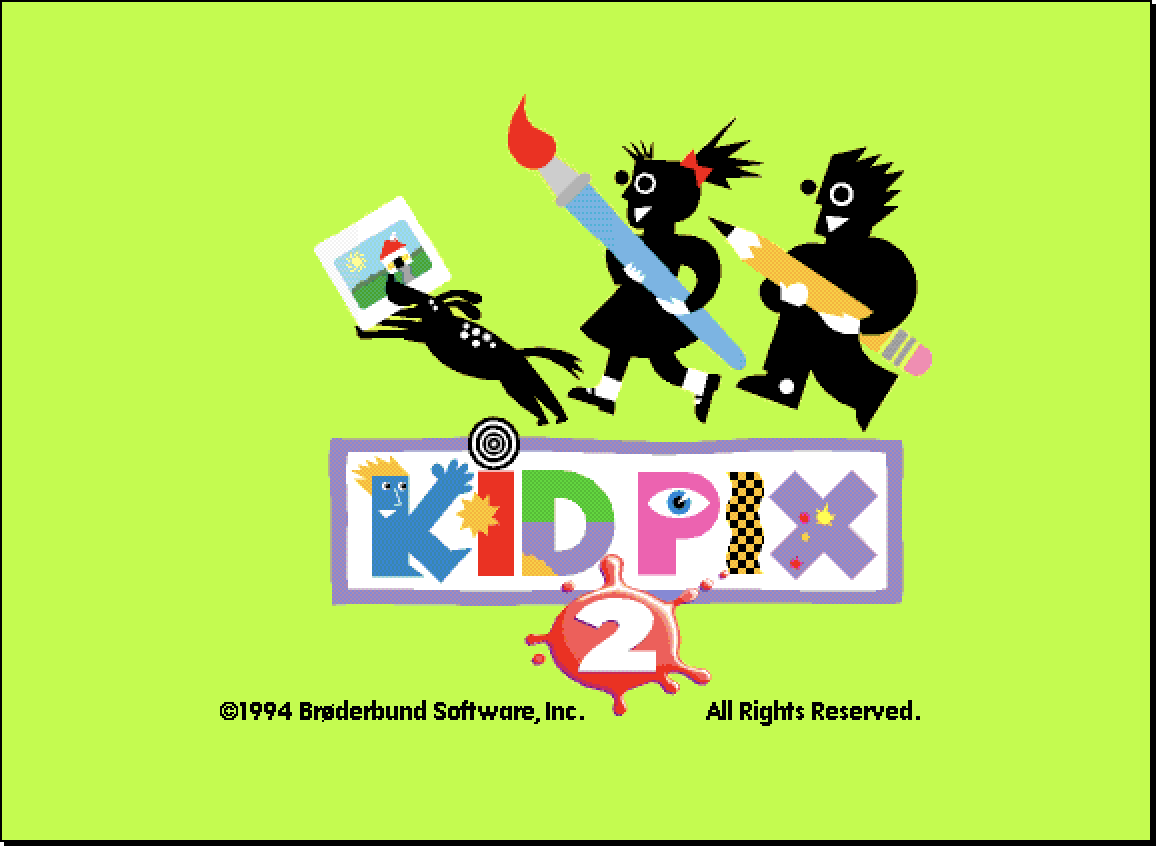
Identify Oregon Trail, Carmen Sandiego, Living Books and Kid Pix from classroom memories. Compare editions and find creator, publisher or playback sources.
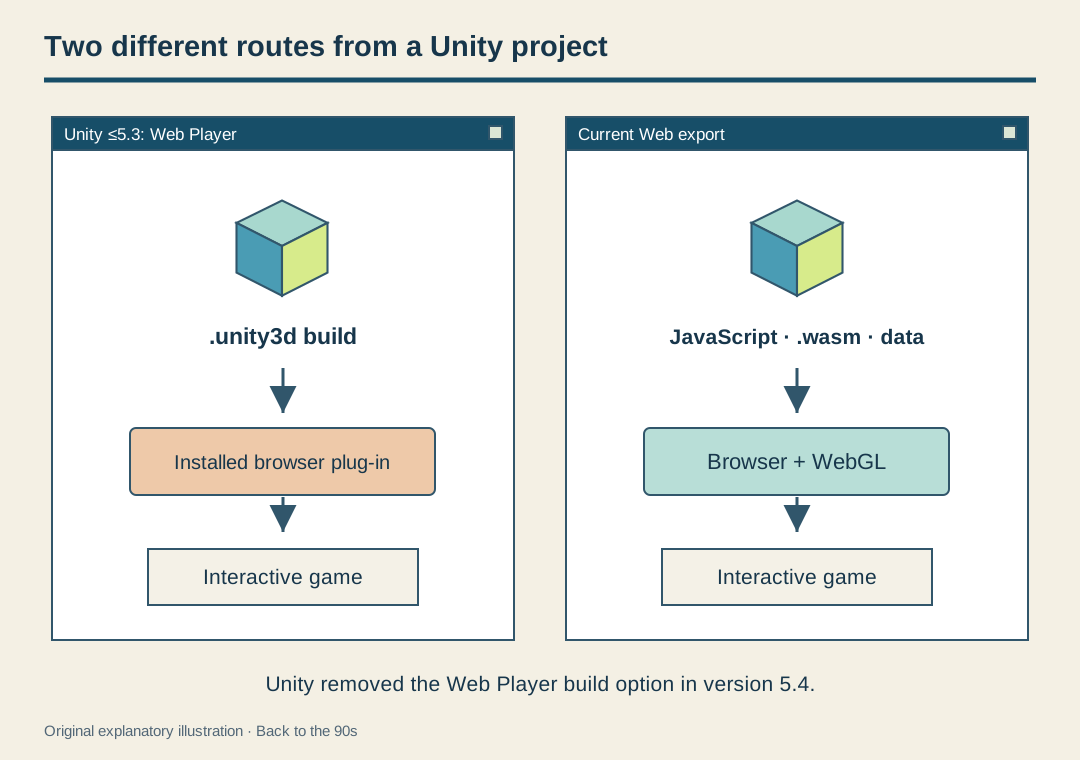
Find a route back to Unity Web Player games. Distinguish old .unity3d builds from current web exports, creator rebuilds and preserved archive entries.
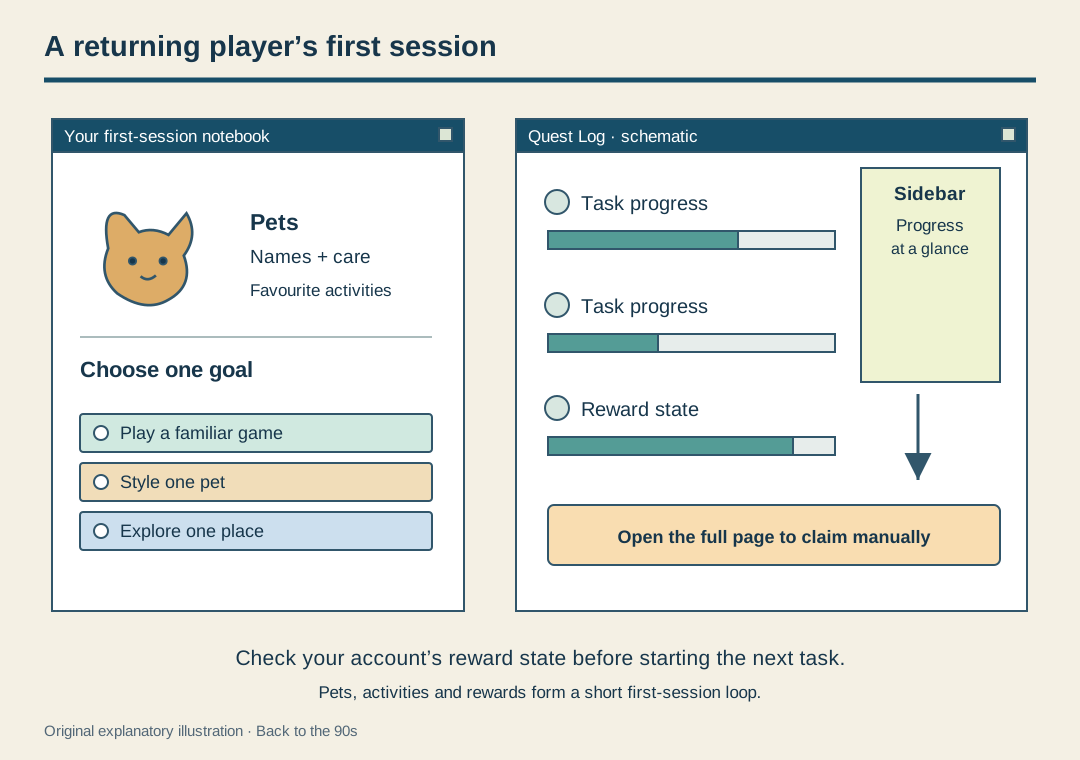
Recover your Neopets or NeoPass login, use the updated Quest Log, claim rewards and follow the right daily reset clock when returning to Neopia.
Return to Habbo’s 2005-style hotel through Origins. Set up the right account, walk and sit, whisper to another player and choose room access.
Choose Webkinz Classic or Next, recover an old account where possible, understand adoption codes and find the controls for your first visit.
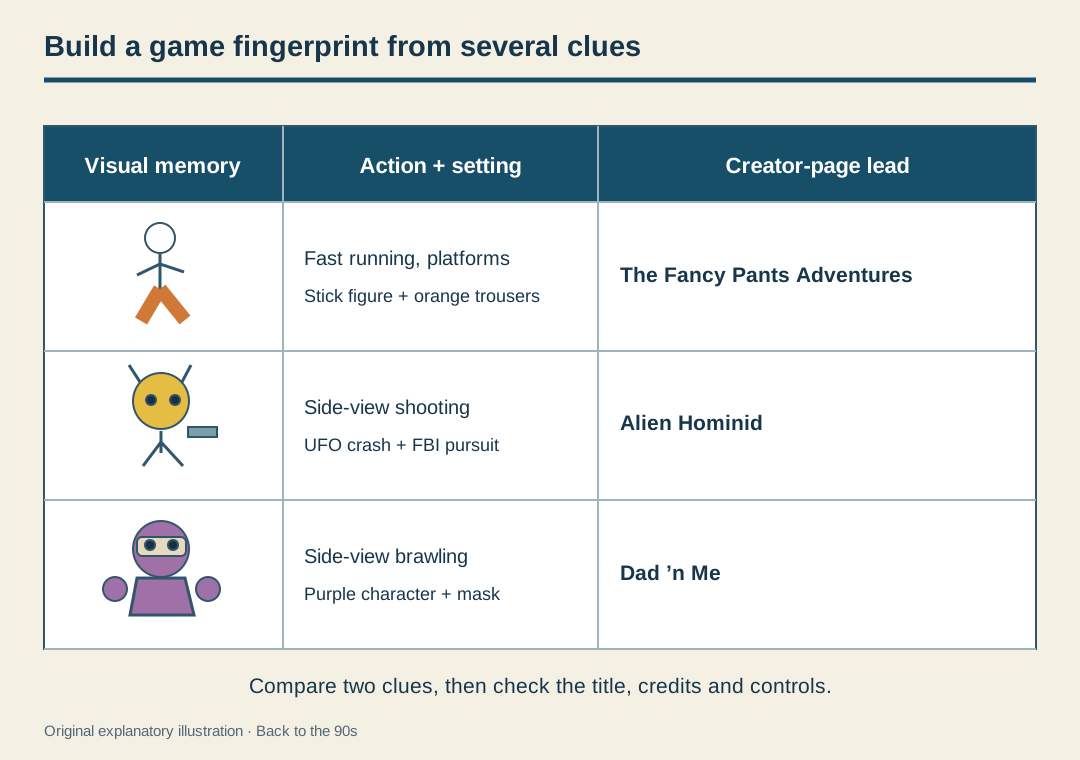
Find a forgotten Flash game using its character, action and setting. Try three worked searches, compare original upload dates and save the matching edition.
Discover why Newgrounds automated its Flash Portal in April 2000. Follow the creators, dates and audience response behind Alien Hominid and Dad ’n Me.
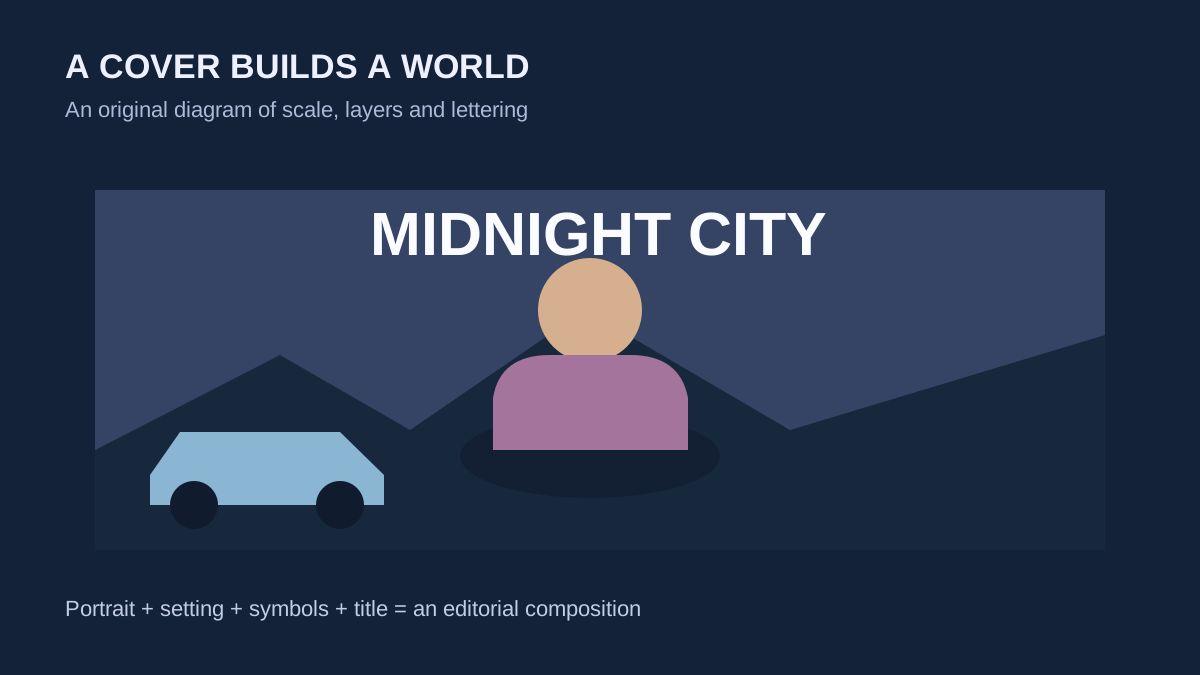
Explore Pen & Pixel’s 1990s rap artwork through its University of Houston archive. Learn how portrait, lettering and layered scenes build a cover.
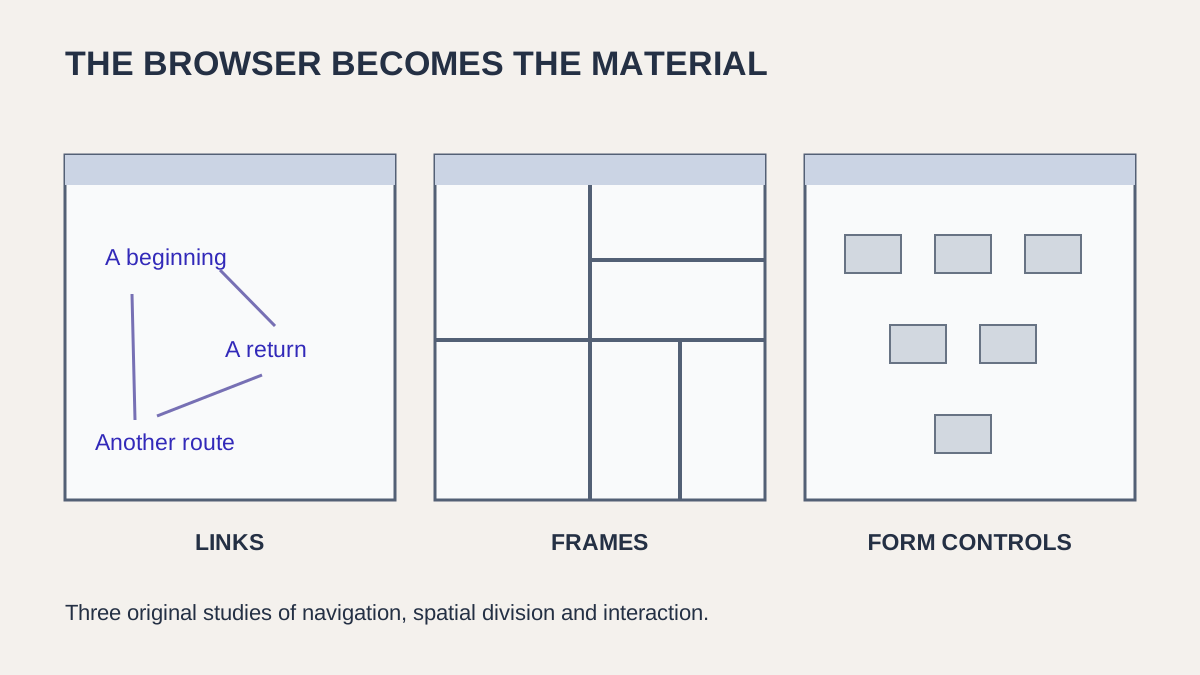
Explore net art through Olia Lialina, Alexei Shulgin and JODI. Learn how links, HTML controls and desktop actions become the material of an artwork.
Understand the demoscene through Second Reality and Limbo. Learn how code, music, hardware limits and competitions shape real-time audiovisual work.
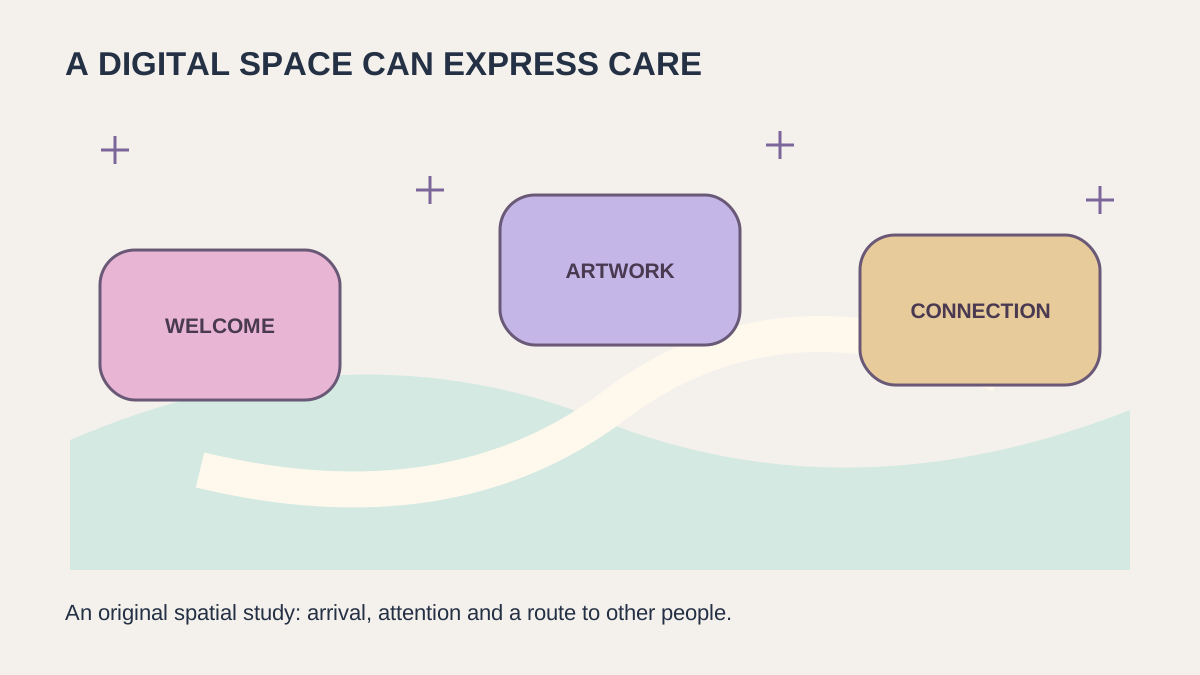
Meet the Cybertwee collective through its 2014 manifesto and virtual gallery. Examine softness, online space and the relationship between art and community.
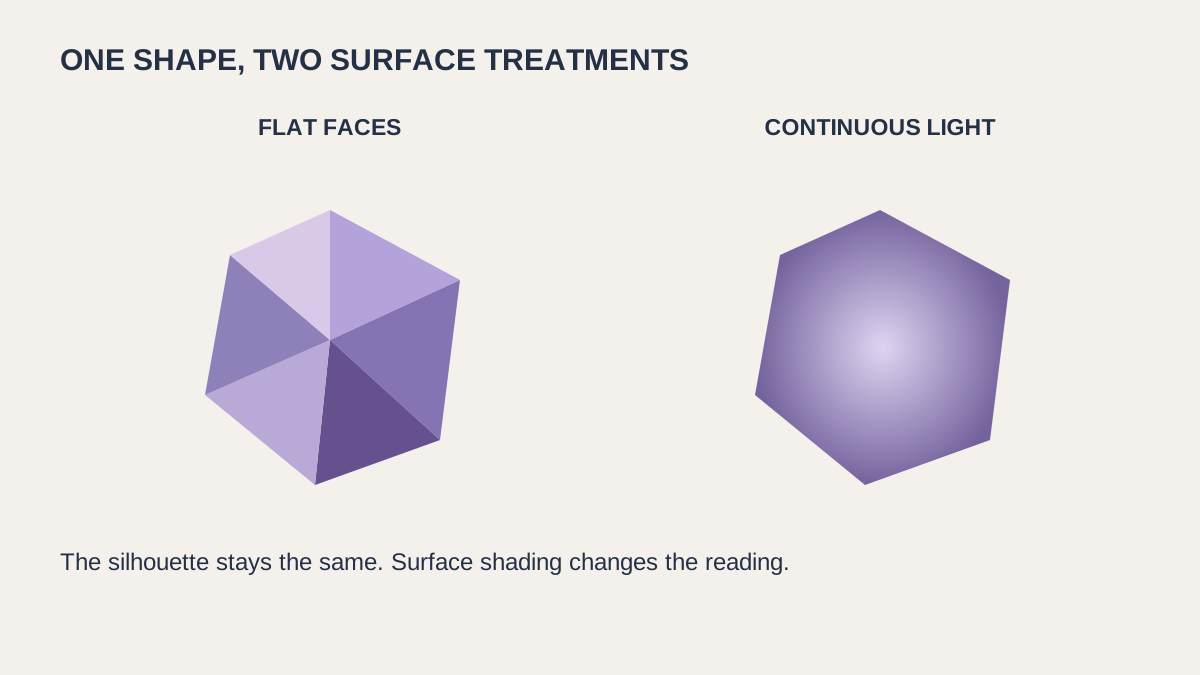
Build a low-poly rock while separating mesh shape, shading and texture. Learn why visible facets and a low polygon count are different design choices.
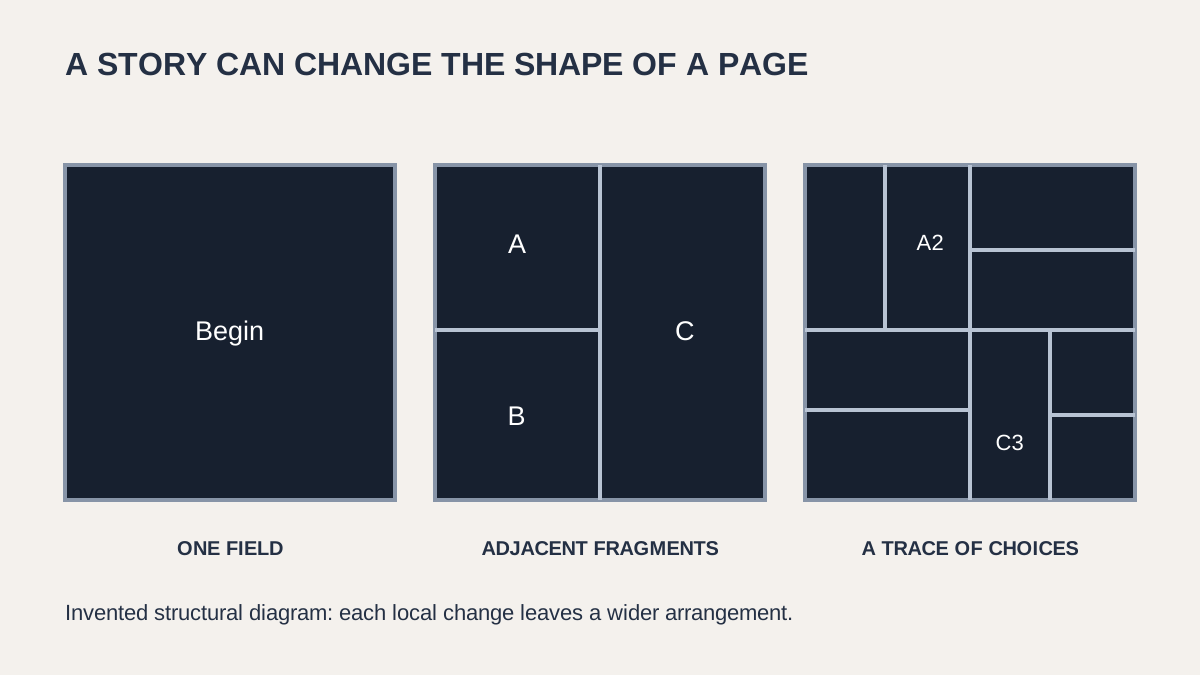
Read Olia Lialina’s 1996 My Boyfriend Came Back from the War through frames, clicks and pauses. Learn how the browser creates space for its conversation.
Examine JODI’s 2002 My%Desktop as a four-channel video work. Follow windows, sound and repeated actions to see how a familiar desktop becomes performance.
Try another word or choose every subject.