MySpace layouts: how HTML and CSS shaped profile culture
Published
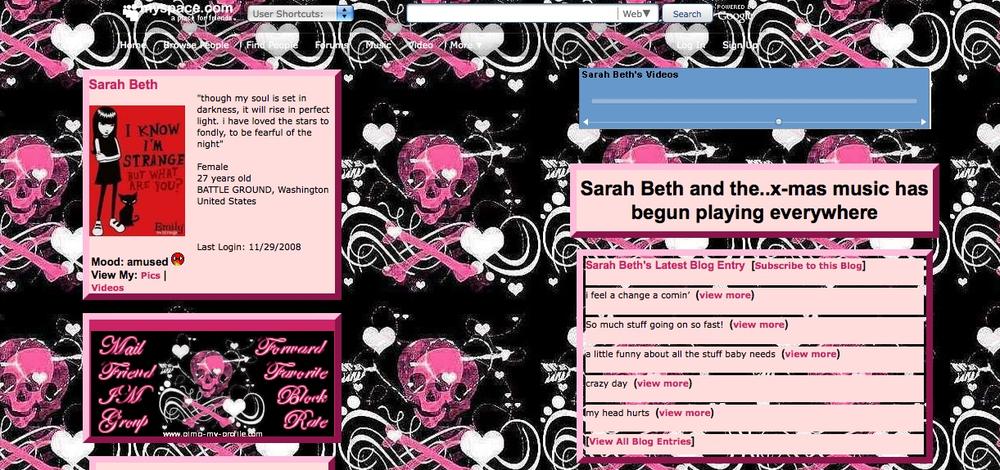
MySpace users pasted code into profile fields: HTML for the page’s content and CSS for its look. They chose backgrounds, colors and images. Music and a visible friends list also showed what they liked and who they knew. Researcher danah boyd documented these choices and the exchange of layout code in her study of young people’s profile creation.
On this page
A common framework invites comparison
A profile page brings several kinds of information together: a name, a picture, interests, an introduction and connections to other people. When many pages use a recognizable structure, visitors learn where to look.
A bold background could make a profile stand out. If the name, introduction and friends stayed in familiar places, visitors could still find what they wanted.
Open our original profile-layout study to see how those parts fit together. The fictional owner, PaperBoat, shares interests, a short introduction and a visible circle of contacts. Numbered labels identify the job each area performs.
The background sets the scene
A background fills much of the page. You could repeat a small pattern, choose one strong color or use an image of a favorite subject or place.
In the downloadable study, a blue dotted pattern surrounds a cream content panel. The panel keeps text readable, while the pattern gives the page a distinct setting.
In the study, change the background while keeping the panel color fixed, then change the panel. Compare the area around the words with the area behind them.
Code traveled through a community
Boyd’s study describes people finding a layout they liked and copying its code into their profile. Helper sites and friends taught them how. The finished page reflected both their own choices and what they had learned from others.
Look for what the owner changed in a shared layout: a photograph, a color, a phrase or the friends shown on it. These details can make the same pattern feel personal.
A visible layout credit can identify the code’s author or helper site. Follow that credit when tracing a profile: the design may belong to a shared template that the owner adapted.
Friends became part of the page
In her 2006 study of MySpace’s Top Friends, boyd looks at what ordered friend lists meant. The section linked to other profiles and showed relationships. A 2006 X-Men promotion let users expand the usual Top 8 to 12, 16, 20 or 24 friends. Larger lists then became more widely available. The number of places could affect who felt left out.
The layout study uses four fictional contacts to make that idea visible. Rearrange them and ask what a visitor might think about the friendships. Add more and see how much of the page the list takes up.
A comment puts someone else’s words on the owner’s page. The profile then shows a conversation as well as how the owner describes themselves. Read the example comment in the study and consider how it changes your impression of PaperBoat.
Try a three-change experiment
Download the HTML file and make three deliberate changes:
- Choose a background that supports one interest.
- Rewrite the introduction in a recognizable personal voice.
- Arrange the fictional connections around a clear theme.
Open the file after each change. Keep the text easy to read and preserve the labels while you compare versions.
We made the study’s content for this guide. Its layout adjusts to the screen’s width.
Try the profile approach today
The SpaceHey profile themes provide CSS for today’s separate service, where profile fields accept HTML and CSS. Use the blinkie and button guide for small graphics, or personal website ideas when you want several pages of your own.
Compare AIM away messages, where just a few lines could show friends something about your personality.