AIM away messages: history, meaning and original examples
Published
An away message on AIM (AOL Instant Messenger) told friends you had stepped away and left them something to read: a return time, an inside joke, a mood or a hint aimed at one person. Friends could read it beside your screen name, the name you used on AIM.
On this page
AIM’s team remembered carefully chosen away messages in its 2017 farewell, reproduced by WIRED. AOL had launched the free service in 1997, as its account in a WIPO decision records. We wrote the examples below to demonstrate that brief, personal form.
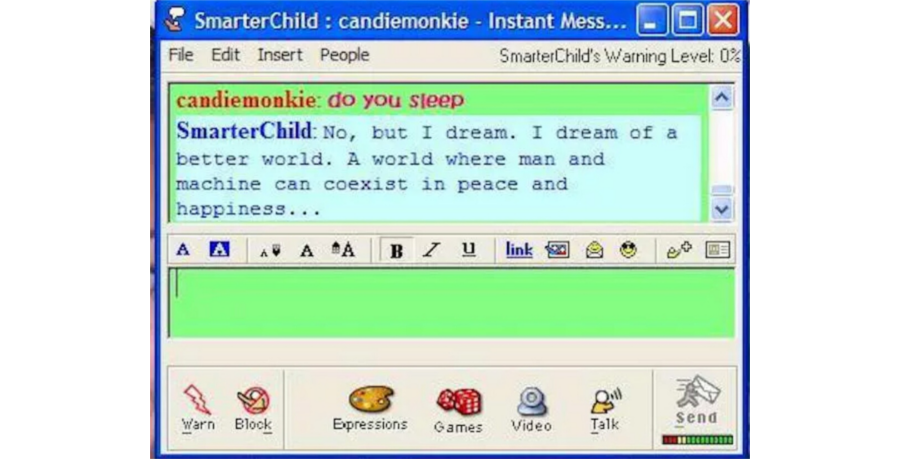
A status with two jobs
The message told friends when to expect you back. “Back after dinner” helped them decide whether to wait, leave a message or try again later. It also showed your personality: you could sound organized, distracted, funny, thoughtful or mysterious.
One line could do both jobs. A sentence about revising for an exam explained an absence and gave friends a conversation starter. The two jobs could also conflict. A poetic line might communicate a mood while leaving the return time completely open. Friends used what they knew about the writer to make sense of the words.
An ordinary line could address two audiences: everyone saw “out walking”, while one friend recognized the place or private reference. That context helped a very short message carry more meaning than its literal words.
Three original examples
Open the downloadable away-message study to see the examples in large type and write a version of your own.
Practical: “At the library. Back after six. Leave me your best book recommendation.” The first sentence names an activity, the second says when the writer will return, and the third opens the next conversation.
Playful: “doing homework. allegedly. brb.” The joke comes from the second sentence; brb means “be right back”. Lower-case typing suits the casual voice.
Reflective: “took the long way home. needed the extra song.” A small action suggests the mood without explaining it. Someone who knows the writer can read it differently from a casual contact.
Use lettering to set the mood
Try the practical example in a plain font such as Arial. Then try the reflective example in a larger font with small strokes on the letters, such as Georgia. Change one thing at a time: size, color, alignment or line spacing. Read the words again after each change.
A centered message can feel like a notice or a small poem. Left alignment makes a longer sentence easy to scan. Color can draw attention to a return time. A whole paragraph in bright color can make the message feel louder.
For a quick variant, write the same words in lower case, sentence case and capitals. Keep the wording fixed while comparing how loud or casual each version feels.
Write a message in four passes
- Name the situation. Choose an activity: cooking, traveling, drawing, studying or taking a break.
- Choose the audience. Decide whether you are addressing every contact, a close circle or one person who will recognize a reference.
- Add a useful detail. Say when you will be back, ask a question or describe a small detail.
- Read it aloud. Shorten anything that slows the sentence or changes the tone you intended.
The AIM-style message generator lets you choose an activity, add a detail and copy or download an original variation.
Where the away message fits
The AIM history follows the buddy list, screen names and service closure. The guide to MySpace layouts shows how people used whole profile pages to express themselves, while the chat comparison explains the differences between AIM, MSN, ICQ and IRC.