Clear Tech: translucent computers and visible design
Published
Clear Tech makes an electronic device’s case part of the attraction. Translucent plastic lets light through but blurs the parts inside. Clear plastic lets you see each part. Apple’s iMac and clamshell iBook show how color, curves, handles and seams turn that material into a recognizable object.
On this page
Start with the iMac as an object
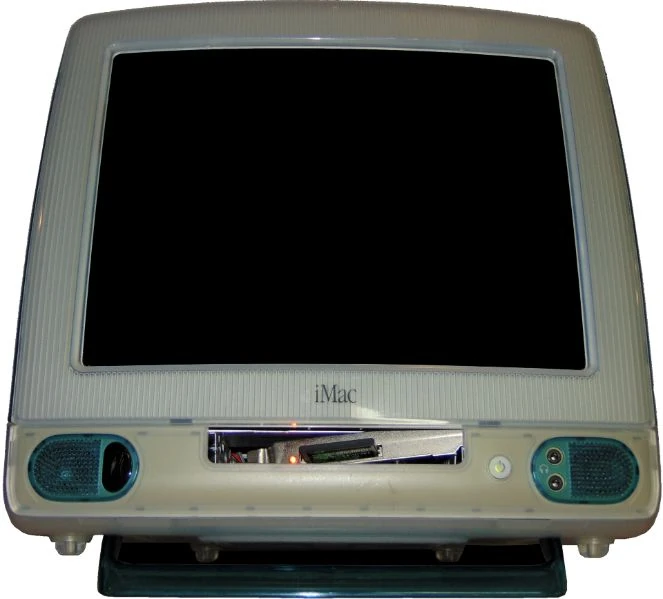
MoMA dates Apple’s iMac Desktop Computer to 1998 and names polycarbonate, a type of plastic, among its materials. Look at the Bondi Blue case. Its colored lower body curves into a pale upper shell. The screen sits inside a rounded frame, with the computer and display in one large case.
The color works with the shape. Blue-green plastic makes the bulky computer seem lighter. Curved edges make the shell look smooth and unbroken. The dark screen forms a rectangle inside those curves.
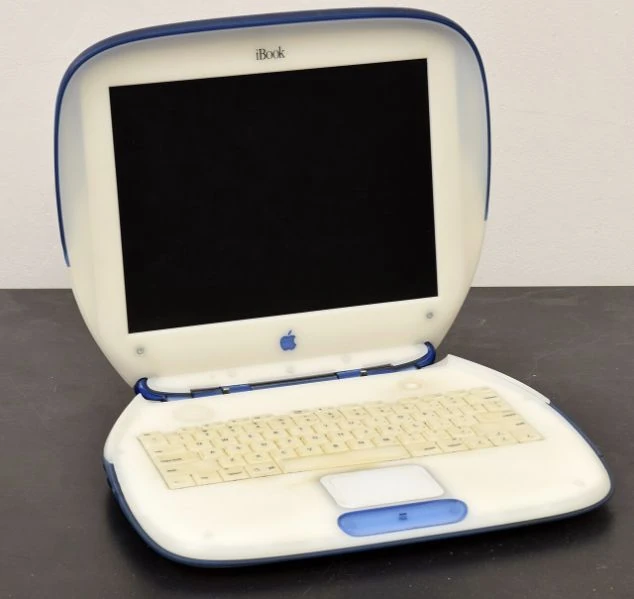
Apple carried the family resemblance into the iBook, which it introduced in July 1999. The company’s January 2000 account describes a rubber-coated, partly see-through case, a pull-out handle and a lid that closes without a latch. The case helps people carry, open and use the laptop.
Compare the iMac and iBook
Set an iMac reference beside an iBook reference. Mark the screen, the grip or supporting base, the solid area around the controls and the colored shell. For a drawing based on these shapes, try the broad colored frames in our Y2K wallpapers.
Compare how much each case lets you see
Transparent plastic lets you inspect distinct shapes behind the surface. Screws, circuits and supports become part of the design. When the parts inside are tidy, a clear case makes them easy to inspect.
Translucent plastic scatters light and blurs the parts inside. You see their outlines and soft changes in color and brightness.
Opaque plastic blocks the view inside. You see only the outside color, seams, controls and texture.
Draw the same object with an opaque case, a translucent case and a transparent case. Compare the three drawings at a small size. Decide which version is easiest to recognize, which reveals its parts and which makes its color stand out.
Connect the material to the controls
A high-contrast power button, a distinct handle and a readable label help the playful shell support a practical task. On a web page, keep the background behind text plain. Use partly see-through effects on the frame or a few controls.
Apple announced Aqua in January 2000, describing glowing, partly transparent controls. A plastic case reveals real parts inside. On screen, layers of color and highlights create the look of depth. Our skeuomorphism guide explains how those details help people see how to use a control.
For a wider view of millennium-era surfaces, pair this article with Y2K aesthetics. Follow Frutiger Aero when your interest moves towards glossy interfaces, blue skies and the later optimism of connected devices.
Make a small Clear Tech study
Choose one ordinary object: a desk clock, a calculator or an imaginary music player. Draw its outline and place three controls that serve a clear purpose. Then create a simple internal structure behind them.
Make three versions using the same outline. Give one an opaque shell, one a milky colored shell and one a clear shell. Keep the background and lighting the same so you can compare the materials. Add a bright edge where light catches the case and a darker seam where two pieces meet.
Finish by naming the effect you want. “A calm clock that reveals its mechanism” gives you a clearer goal than “make it nostalgic”. Check that the drawn controls remain visible through each version of the case.
Explore related styles in the 90s and 2000s aesthetics collection.