Vaporwave: music, visual style and digital nostalgia
Published
Vaporwave repeats and rearranges music and digital images. A repeated phrase can make familiar music feel strange. A cover can put advertising graphics beside an ancient-style statue or an empty computer-made room. Start with a release and listen while you examine its artwork.
On this page
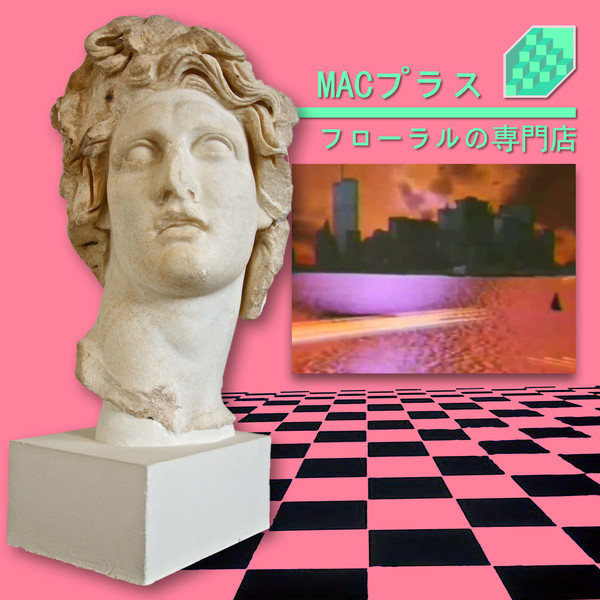
Start with Floral Shoppe
Vektroid’s own Floral Shoppe page names Macintosh Plus as the artist. It gives 9 December 2011 as the release date.
The Consumer Aesthetics Research Institute’s Corporate Vaporwave entry dates the look to the 2010s. Artists rework images from the 1980s and 1990s.
Listen for what repetition changes
Choose one track and notice the length of the phrase that returns. Does the repetition make it feel reassuring, stuck, awkward or insistent? Listen again for the gaps between sounds. Those gaps can shape the atmosphere as strongly as the melody.
Then listen to how each sound begins. A sharp start feels different from a soft fade-in. Echoes can make the music sound as though it fills a large room. A sudden cut makes the edit easy to hear.
Write down what you hear in concrete terms before you reach for a mood word. “A short phrase returns with a long gap” gives you a useful observation. You can then explain why that pattern makes the track feel distant or oddly familiar to you.
Look at the cover as part of the experience
Open the release artwork at a size that lets you inspect its separate elements. Identify the largest object, the background and the lettering. Ask where each element seems to belong, then consider what their combination changes.
A shop or advert can suggest comfort or plenty. An ancient-style statue brings the distant past into the picture. A computer-window frame makes the cover look like something open on a screen.
Keep the neighboring styles visible
Webcore draws on personal websites and the people who made them. Digital Y2K explores the look of technology around 2000. Vaporwave reworks older music and advertising images for a later audience.
A browser window, an empty room or a computer-made product image can appear in several styles. Record the artist and the work beside the image so you can discuss that artist’s choices.
Make a small listening-and-looking notebook
Choose three releases from the Vektroid catalog. For each, note one repeated phrase, one change in the sound and one striking detail in the artwork. Add the artist name and release date, then write one sentence connecting the sound with the artwork.
For a creative response, make an original twenty-second loop from a sound you record yourself. Photograph or draw one ordinary object, place it in a simple invented setting and use the image as a cover. Keep the audio and the image together while you revise them.
Explore related styles in the 90s and 2000s aesthetics collection.