Superflat Pop: Murakami, characters and commerce
Published
Superflat Pop follows bright characters and repeated designs across art, animation and products. Takashi Murakami is a central example. His Superflat theory and shows explore Japanese art and popular culture more widely. Superflat Pop is a later label for one look in adverts and products.
On this page
Follow two related histories
The Museum of Contemporary Art, Los Angeles (MOCA), held its Superflat exhibition in 2001. It included paintings, photos, animation, fashion and other art forms. Murakami organized the show. The museum links his theory to older Japanese art, manga comics and anime films and series.
The Consumer Aesthetics Research Institute’s Superflat Pop entry uses that narrower label. It links the look to Murakami’s work on products and bright pop graphics.
A collaboration across art and products
Marianne Boesky Gallery’s 2003 show announcement records Murakami’s work with Louis Vuitton and Marc Jacobs. It describes how he brought those designs and characters into another gallery show.
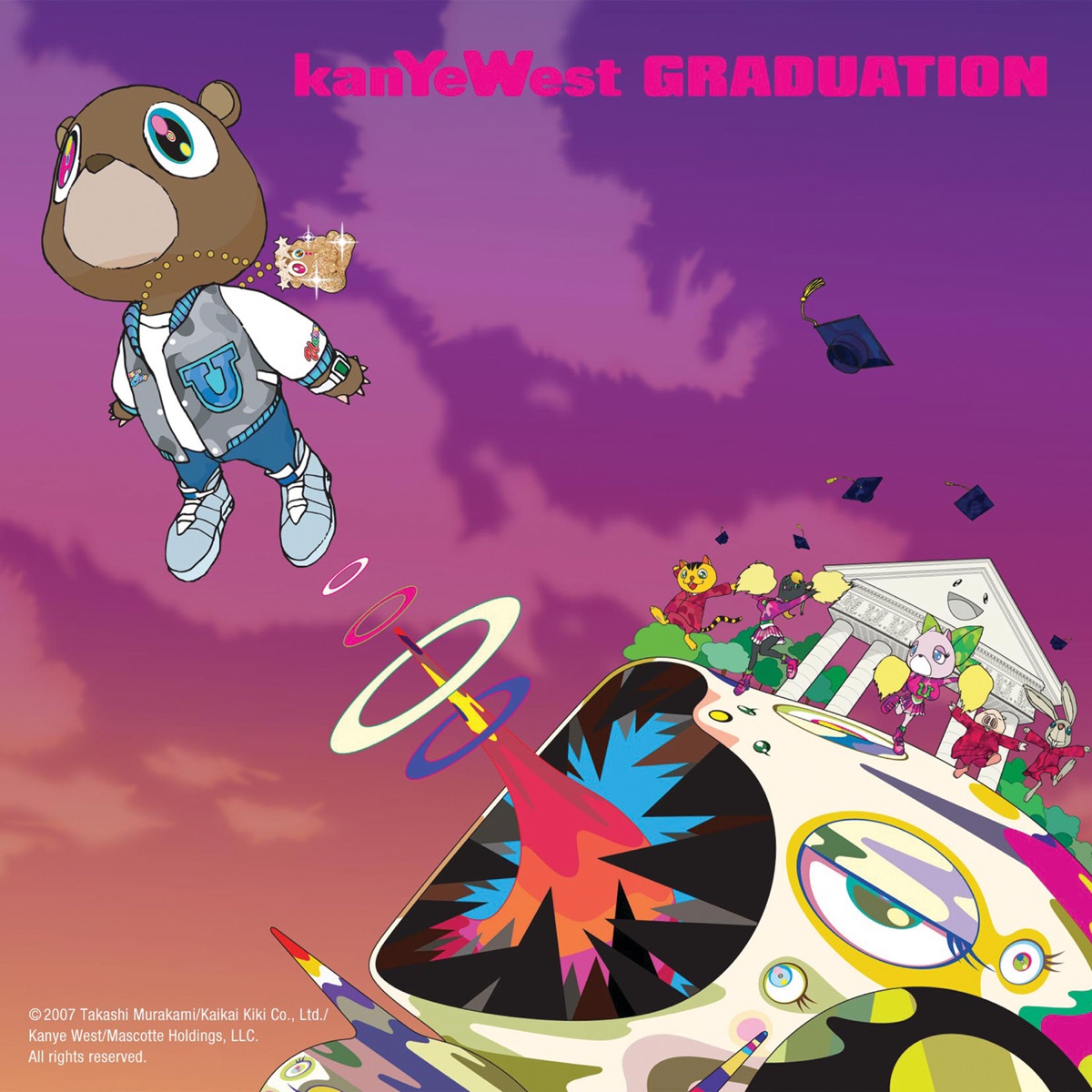
MOCA’s later ©MURAKAMI career survey, which opened in 2007, included a working Louis Vuitton shop. Visitors could see art and buy branded products in the same show. Murakami also made Kanye West’s Graduation cover in 2007, as Kaikai Kiki’s Studio Poncotan records.
Which parts stay easy to recognize when the image appears in a gallery, an animation or on a product? Look at the outline, repeating shapes, colors and frame around the image.
Look beyond one famous character
MOCA’s 2001 show included nineteen artists. Its account describes groovisions’ Chappie, a figure that appears in different clothes. Which features stay the same so you still recognize the character? Which can change?
For a related study of repeated commercial figures, compare Corporate Memphis. Track which parts of each character remain fixed and which change between scenes.
See what the outline does
A clear outline helps you recognize a character at different sizes. It separates the figure from the background and gives the eye a shape to remember. Details give it character: where the eyes sit, how the mouth curves and how large the head looks beside the body.
First draw your own simple character as one solid shape. Check whether you can recognize it without facial details. Then add two or three features and test it at a much smaller size. Keep the features that make its expression clear.
Study repetition as an arrangement
Repeat a character to cover a surface or surround a central figure. Close spacing makes the repeat feel crowded. Wider gaps let each character stand out.
Try neat rows, offset every other row, then make a version with one much larger character. Compare the way your eye moves through each version.
Choose a few colors for your character and decide which parts can change. Keep its outline and main colors the same so people can recognize it on different objects.
Read the commercial context
A bag, an album package and a gallery work each reach their audience differently. Ask what the object invites someone to do: carry it, listen with it, collect it or stand in front of it. The setting changes how people use the image.
McBling shows how decoration makes objects look glamorous. Vaporwave explores later art that reworks advertising images.
Make a three-format character study
Place your original character on a square image, a repeating strip and a simple product outline. Keep its main features consistent. Change its size and the space around it to fit each shape.
Check the smallest version first. If the expression disappears, enlarge the gap between the eyes or simplify the mouth before adding more detail. Then return to the repeating strip and inspect the spacing between figures.
Explore related styles in the 90s and 2000s aesthetics collection.