GeoCities history: neighborhoods, Yahoo and the archives
Published
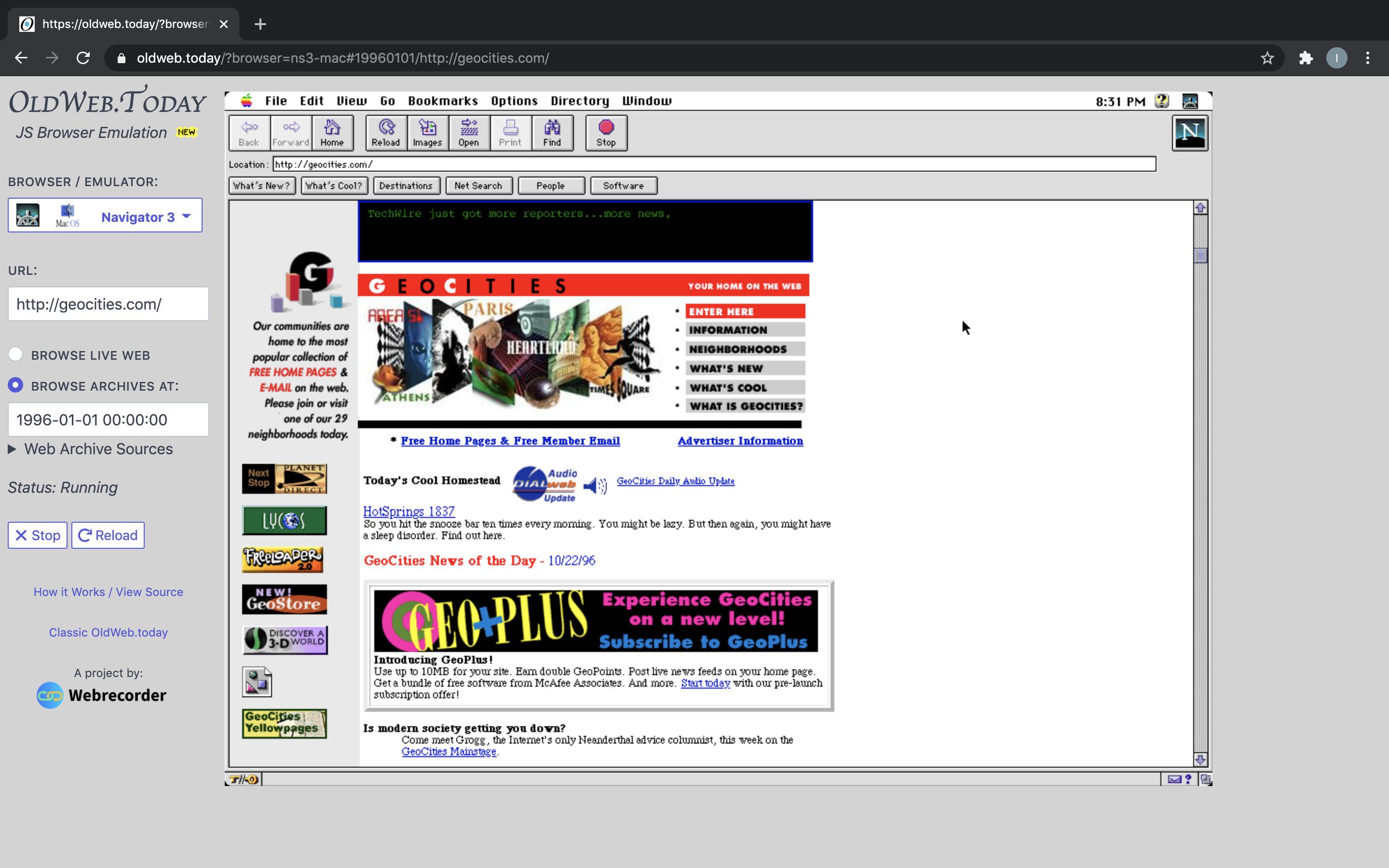
GeoCities let people build personal websites in themed groups called neighborhoods, with names such as SiliconValley and Paris. Each author had a page and address within the group. The service began as Beverly Hills Internet in 1994. Yahoo bought it in 1999 and closed the main service in October 2009.
On this page
Saved pages hold fan writing, family stories, hobby collections and the links people used to introduce one another.
GeoCities in three dates
David Bohnett and John Rezner started Beverly Hills Internet in 1994. The Computer History Museum traces GeoCities to that company. The neighborhoods first showed webcam views from real places in Los Angeles. Members then added themed homepages. Yahoo bought GeoCities in 1999 and set 26 October 2009 as the main service’s closing date. Archive Team records the rescue and the shutdown.
Names such as Paris and SiliconValley gave visitors a clue to a page’s theme before they opened it.
An address could tell a story
The address geocities.com/Paris/Gallery/2122/ names a neighborhood, a smaller area within it and a numbered space. One Terabyte of Kilobyte Age keeps original addresses beside its screenshots, so a picture can lead back to a particular site.
Read the date label as well as the date. In a 2025 project update, Olia Lialina reports a date error in roughly 50,000 pages. Their records showed when the archive saved the pages instead of when their owners last changed them. The project relabeled those records “archived on”. A screenshot’s posting date tells you something else: when the project shared that picture.
The site’s surroundings also supply clues. A link page can reveal another website service, a changed username or a later project. A guestbook can show how visitors addressed the author. A group of small link buttons can identify a circle of friends.
The graphics did useful work
Olia Lialina’s A Vernacular Web asks what the early web’s pictures and sounds meant to the people who used them.
An under-construction sign invited a return visit. A mail graphic offered a way to respond. A repeated background could establish a mood before the reader reached the first sentence. A list of favorite links revealed the author’s tastes and gave somebody else a place to go next.
Try reading one page in three passes. First, follow the written content. Next, find the links and ways to reply. Finally, look at the decoration. One graphic may do all three jobs. A sparkling name can introduce its owner, link to an email address and set the mood.
The 2009 rescue created several routes into the material
Archive Team’s GeoCities record describes how the group saved pages in April–October 2009. It links to the files and other projects that keep them online.
Olia Lialina and Dragan Espenschied made One Terabyte of Kilobyte Age. It turns saved homepages into screenshots. Each post keeps the old web address and labels when the owner changed the page or the archive saved it.
Arquivo.pt’s GeoCities search lets you search by a word or address. Browse screenshots to spot patterns across many pages; search an address to find one particular site.
Where to explore the archive
Find an address beside a promising screenshot. Paste it into the Wayback Machine’s search, then open a saved copy and try its links.
For a particular lost page, follow the GeoCities recovery guide. For individual images, use the GeoCities GIF archive route. The small web guide connects this publishing history with current sites, and the Neocities guide explains how to publish your own.