90s websites to explore: originals, archives and homages
Published
Start with the planets on Space Jam, the plain blue links at CERN and the campus view at FogCam. Then browse saved GeoCities pages and new sites built around people’s interests.
On this page
- Pick your first stop
- 1. Space Jam: choose a planet
- 2. CERN: follow one blue link
- 3. FogCam: look out of somebody else’s window
- 4. DPGraph: watch the maths move
- 5. One Terabyte of Kilobyte Age: meet the personal web
- 6. Cameron’s World: get gloriously lost
- Neocities: find people making personal websites today
- Follow a longer route
Pick your first stop
| Place | What you are visiting | Go for |
|---|---|---|
| Space Jam | Warner Bros.’ official 1996 film website | Starfields and picture links |
| CERN | CERN launched its early-web restoration project in 2013 | Words, links and the web’s first steps |
| FogCam | A webcam project that began in 1994 | A live view of one campus |
| DPGraph | A software site’s history stretches back to 1999 | Animated mathematical graphics |
| One Terabyte of Kilobyte Age | Researchers turn Archive Team’s GeoCities collection into screenshots | Everyday people making their own web |
| Cameron’s World | Cameron Askin published his GeoCities collage in 2015 | Text and pictures from saved GeoCities pages |
| Neocities | A personal-site community that launched in 2013 | Finding the people still building this way |
1. Space Jam: choose a planet
Start with the official 1996 Space Jam website. Its starfield fills the screen. Small pictures serve as links, making each click part of the fun. Warner Bros. identifies the original site at its dedicated /1996/ address. Source
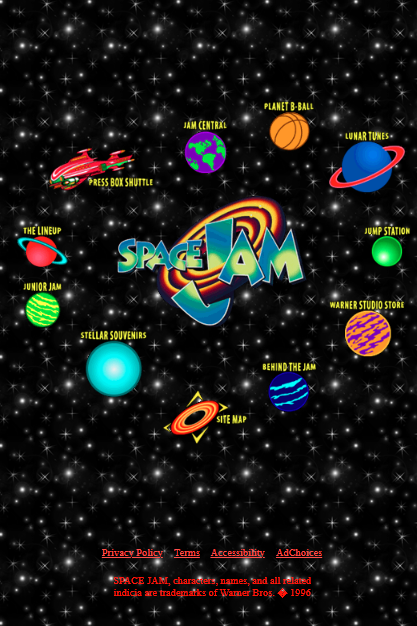
Open Behind the Jam to see how the team made the film. Planet B-Ball covers basketball. The Site Map lists the pages in text.
A record shelf can do the same job for a music page: each visible record becomes a labeled link to its review.
Visit the original Space Jam site
2. CERN: follow one blue link
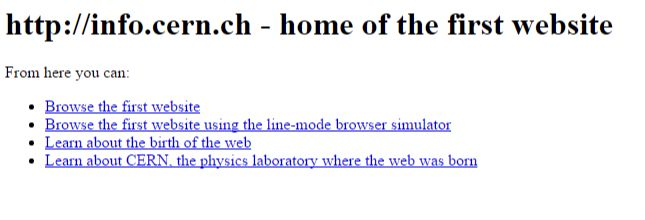
CERN’s early World Wide Web page explains the project through linked text: what exists, who contributes and how to get the software. CERN launched its restoration project in 2013; W3C also preserves a November 1992 copy. Follow those links to explore the project’s early documents. CERN history · W3C’s 1992 copy
Start at What’s out there?, then follow a subject that catches your eye.
3. FogCam: look out of somebody else’s window
Jeff Schwartz and Dan Wong started FogCam at San Francisco State University in 1994. Their student project let people view the campus online. The site credits the university’s Academic Technology team as its operator. Source
Visit FogCam and look for small details in the campus scene.
4. DPGraph: watch the maths move
DPGraph surrounds its software information with mathematical shapes and animated previews. Its dated news archive includes a 31 March 2000 entry about adding animated thumbnails of moving graphs. Homepage · Dated news archive
Give the previews a moment. Follow the curves as a shape turns and watch how motion helps explain its structure.
5. One Terabyte of Kilobyte Age: meet the personal web
Archive Team rescued a huge collection of GeoCities homepages in 2009. Olia Lialina and Dragan Espenschied explore that material through One Terabyte of Kilobyte Age. Their Photo Op project turns saved pages into screenshots. You can browse personal websites from across GeoCities’ history. Project description
Look for the little decisions: a favorite color, a fan-page title, an update note, a row of links. Choose one page and ask what its owner wanted you to know about them.
Browse the GeoCities screenshots
6. Cameron’s World: get gloriously lost
Cameron Askin assembled Cameron’s World from text and graphics in GeoCities archives and published the collage in August 2015. Its links lead into the Wayback Machine’s copies of the original pages. About the project · Publication date
Scroll slowly, choose something odd and follow it.
For the old web details used in this kind of collage, see our Webcore guide.
- Neocities: find people making personal websites today
Neocities launched in 2013 and lets people publish their own websites. Its directory lists people who build pages about art, music, daily life and favorite books, games or bands. About Neocities
Open the directory, choose a tag you care about and visit a few sites. Follow an author’s links and see where their interests take you.
Follow a longer route
The Space Jam design tour explores the film site’s links and souvenirs. CERN’s first-website history separates the early web milestones, while the GeoCities recovery guide helps find a particular lost page.
For the surrounding culture, use the 90s internet hub or the digital Y2K guide. To apply a favorite look to everyday browsing, explore Back to the 90s.