Memphis design: 1980s origins and its 90s afterlife
Published
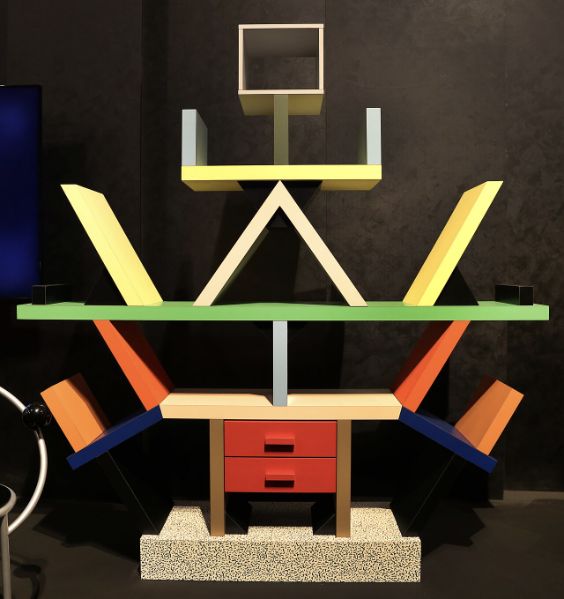
Memphis began with furniture and objects that stand out through color, pattern and shape. A bookcase may have diagonal shelves and clashing surfaces. The group first showed its work in Milan in 1981. The playful shapes many people link with 1990s graphics came later.
On this page
Begin in 1981
The Design Museum’s history of Memphis names Ettore Sottsass as the group’s leader. The group worked in Milan and made its debut in 1981. The V&A’s postmodern design guide shows drawings for Sottsass’s Carlton and Casablanca. Both date from that year.
The Consumer Aesthetics Research Institute’s Memphis Jr. entry shows later playful designs, especially those made for children.
Explore the 1981 Memphis exhibition
The Design Museum traces the group’s first exhibition to the Arc ’74 showroom in Milan on 18 September 1981. Its account describes thin sheets of colored plastic, called laminates, alongside printed glass and sheet metal. The group used color and pattern to change how a whole object looked in a room.
A later graphic might borrow only a squiggle from these designs. Compare a photo of furniture, a pattern sample and one of our original 90s geometric wallpapers. Ask what makes each one stand out: an unusual structure, clashing surfaces or a repeating shape.
Look at structure before decoration
Memphis Milano describes Sottsass’s Carlton as both a bookcase and a room divider. At 196 cm high, its wood frame covered in laminate stands taller than many people. Trace the horizontal shelves and diagonal supports in a photograph, then look at the gaps they leave open. Those gaps matter when the object divides a space.
Then examine the surfaces. A patterned area can make one element feel separate from its neighbor. A solid color can turn a support into a strong shape. A narrow edge can connect several parts of the object.
Arrange the shapes first. Add a pattern where it makes one part stand out or links several parts.
Choose a small set of shapes and colors
Choose three kinds of mark: a circle, an angled bar and a short zigzag. Give each a different job. The circle can draw attention, the bar can point across the page and the zigzag can form a repeating pattern.
Repeat some decisions and vary others. Keep the zigzag’s line thickness the same while changing its position. Use the same circle size in several places, then enlarge one circle to make it stand out.
Compare the later labels through examples
Use Memphis Jr. and Memphis Lite to find examples, then compare actual objects. For each, record its maker, date and intended audience. Identify the shapes and patterns it shares with another reference, then describe what changes.
Corporate Memphis looks at a later style of character illustration. Global Village Coffeehouse uses rough marks and warm colors.
Explore related styles in the 90s and 2000s aesthetics collection.